“Where Protestantism becomes vicious” (ch. VI § 19, p. 188)
English: London 1838, p. 188, scan. Highlighted: Lecky’s quotation.
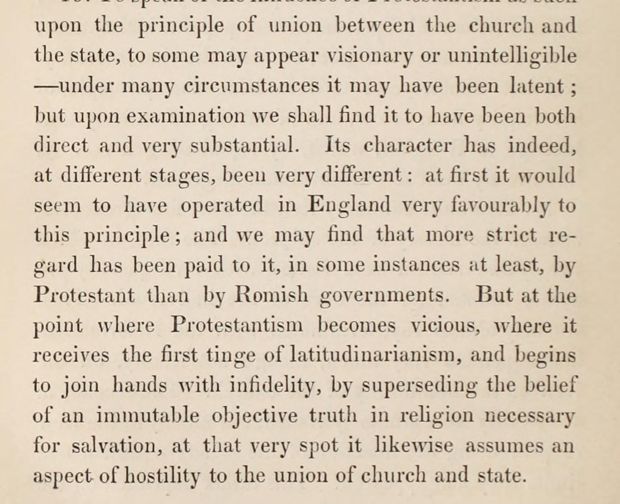
19. To speak of the influence of Protestantism as such upon the principle of union between the church and the state, to some may appear visionary or unintelligible—under many circumstances it may have been latent; but upon examination we shall find it to have been both direct and very substantial. Its character has indeed, at different stages, been very different: at first it would seem to have operated in England very favourably to this principle; and we may find that more strict regard has been paid to it, in some instances at least, by Protestant than by Romish governments. But at the point where Protestantism becomes vicious, where it receives the first tinge of latitudinarianism, and begins to join hands with infidelity, by superseding the belief of an immutable objective truth in religion necessary for salvation, at that very spot it likewise assumes an aspect of hostility to the union of church and state.
Further down the rabbit hole
Sources that Lecky cites in the notes next to the ones that cite this page.
- Buckle, History of Civilization in EnglandWeather and credulity, and the Scottish clergy’s Devil who had been studying for five thousand years
- Grotius, De jure belli ac pacisWhy the early Christians did not resist: Grotius’s witnesses, and a footnote that doubts one
- Ventura, Le pouvoir politique chrétienOne religious journal in Catholic Austria
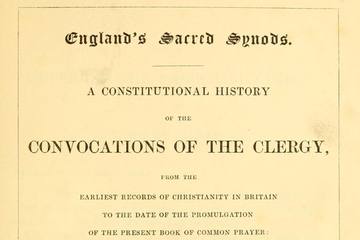
- Joyce, England’s Sacred SynodsHow many abbots left the House of Lords? Twenty-seven, twenty-eight or twenty-nine
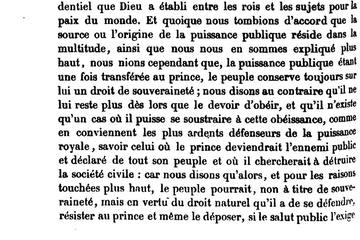
- Bianchi, Traité de la puissance ecclésiastiqueAn Ultramontane friar on when a people may depose its king, and the Scot who ‘sold his pen’ to James I
- The Life of the Rev. Joseph Blanco WhiteSouthey explains the Whigs: Fox “is said to have died an unbeliever”
Backlinks
Every place in Rationalism in Europe that links to this page (generated automatically when the site is built).
- Chapter V: note 27