§ 3, I and II
Latin: Vix pervenit, § 3 (Latin Wikisource). Highlighted: Lecky’s quotations.
§ 3. These things they approved by unanimous consent: I. That kind of sin which is called usury, and which has its proper seat and place in the contract of loan, consists in this, that a man, from the loan itself, which by its own nature requires that only as much be returned as was received, wishes more to be returned to him than was received; and so contends that something is owed to him over and above the principal, by reason of the loan itself. Every such gain, therefore, which exceeds the principal, is unlawful and usurious. II. Nor can any help be summoned to purge this stain, whether from the fact that the gain is not excessive and too great, but moderate; not large, but small; or from the fact that he from whom the gain is demanded solely on account of the loan is not a poor man but rich; and is not going to leave the sum lent to him idle, but to spend it most profitably to enlarge his fortunes, whether by buying new estates or by driving profitable business. For he is convicted of acting against the law of loan, which necessarily consists in an equality of what is given and returned, who, that equality once established, still does not fear to exact something more from anyone, by virtue of the loan itself, to which satisfaction has already been made by an equal return …
Original Latin
§ 3. Porro haec unanimi consensu probaverunt: I. Peccati genus illud, quod usura vocatur, quodque in contractu mutui propriam suam sedem et locum habet, in eo est repositum, quod quis ex ipsomet mutuo, quod suapte natura tantundem dumtaxat reddi postulat, quantum receptum est, plus sibi reddi velit, quam est receptum; ideoque ultra sortem, lucrum aliquod, ipsius ratione mutui, sibi deberi contendat. Omne propterea hujusmodi lucrum, quod sortem superet, illicitum, et usurarium est. II. Neque vero ad istam labem purgandam, ullum arcessiri subsidium poterit, vel ex eo, quod id lucrum non excedens, et nimium, sed moderatum; non magnum, sed exiguum sit; vel ex eo, quod is, a quo id lucrum solius causa mutui deposcitur, non pauper, sed dives existat; nec datam sibi mutuo summam relicturus otiosam, sed ad fortunas suas amplificandas, vel novis coemendis praediis, vel quaestuosis agitandis negotiis, utilissime sit impensurus. Contra mutui siquidem legem, quae necessario in dati atque redditi aequalitate versatur, agere ille convincitur, quisquis, eadem aequalitate semel posita, plus aliquid a quolibet, vi mutui ipsius, cui per aequale jam satis est factum, exigere adhuc non veretur …
Lecky’s abstract of the doctrine in the text is faithful. Concina’s page (p. 14) is not checked. Lecky’s “Epistola” is the encyclical letter; the date (1745) is not given by Lecky.
Editor’s notes on this page
Lecky’s two Latin quotations are the opening sentences of paragraphs I and II of § 3 of the encyclical, where Benedict XIV reports the unanimous judgement of the theologians he consulted in 1745. Note 56 agrees with the text word for word as far as it goes (it stops at “plus sibi reddi velit quam est receptum”); the OCR of Lecky’s page read “mutui” as “nratui”, corrected in this edition’s transcript. Note 57 differs in one word from the Wikisource text, “poterit” for “potent” (apparently a typo there), and in “impensuras” for “impensurus”. Lecky’s text says the doctrine of the Church is that usury is a sin that “consists of any sum that is exacted beyond what had been lent”, and “that the fact of this interest being moderate, or being exacted only from a rich man, or in order to further a commercial undertaking, in no degree alters its character”: the encyclical says exactly that.
Further down the rabbit hole
Sources that Lecky cites in the notes next to the ones that cite this page.
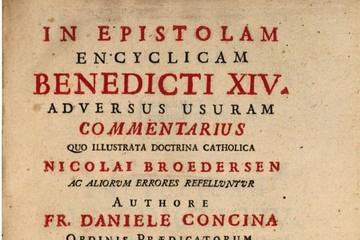
- Concina, Adversus usuram and De spectaculisA Dominican against interest and against the stage: the pope’s own polemicist
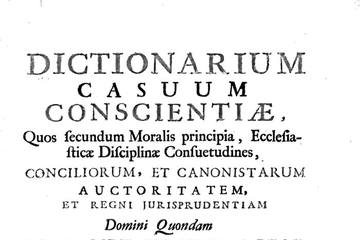
- Lamet and Fromageau, Dictionnaire des cas de conscienceThe Sorbonne answers: three per cent is usury, and every actor is in mortal sin
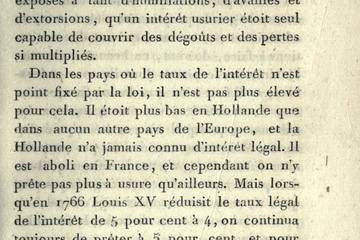
- Storch, Cours d’économie politiqueA tutor to the Russian grand dukes on usury laws that backfire
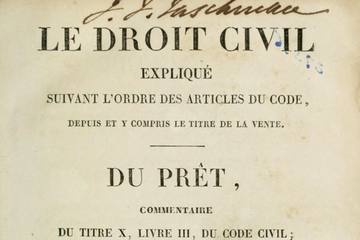
- Troplong, Du prêt: the history of lending at interest“The people cannot live without loans”: a French judge’s history of usury, Lecky’s source for Nicaea and St Louis
- Pecchio, Storia della economia pubblica in ItaliaNo manuscript of Roman laws on this page
- Augustine, Enarratio in Psalmum XXXVI, sermo 3, § 6More than given, even in wheat or wine, is usury
Backlinks
Every place in Rationalism in Europe that links to this page (generated automatically when the site is built).