“Le mépris de Locke est le commencement de la sagesse” (p. 452)
French: p. 452, scan.
… However, since in the study of philosophy contempt for Locke is the beginning of wisdom, the English would act in a manner worthy of themselves, and would render a real service to the world, if they had the wisdom to break for themselves a reputation they have no need of. …
Original French
… Cependant comme dans l’étude de la philosophie le mépris de Locke est le commencement de la sagesse, les Anglais se conduiraient d’une manière digne d’eux, et rendraient un véritable service au monde, s’ils avaient la sagesse de briser eux-mêmes une réputation dont ils n’ont nul besoin. …
The Essay on the Human Understanding (p. 437)
French: p. 437, scan.
… Bacon, as a moral philosopher, and even as a writer in a certain sense, will always have claims to the admiration of connoisseurs; whereas the Essay on the Human Understanding is most certainly, whether one denies it or admits it, all that the absolute lack of genius and style can beget that is most crushing [or crushingly dull]. If Locke, who was a very honest man, came back into the world, he would weep bitterly at seeing his errors, sharpened by the French method, become the shame and the misfortune of an entire generation. …
Original French
… Bacon, comme philosophe moraliste, et même comme écrivain en un certain sens, aura toujours des droits à l’admiration des connaisseurs ; tandis que l’Essai sur l’entendement humain est très-certainement, et soit qu’on le nie ou qu’on en convienne, tout ce que le défaut absolu de génie et de style peut enfanter de plus assommant. Si Locke, qui était un très-honnête homme, revenait au monde, il pleurerait amèrement en voyant ses erreurs, aiguisées par la méthode française, devenir la honte et le malheur d’une génération entière. …
Lecky’s quotation (note 45): “l’Essai sur l’Entendement Humain est très-certainement, et soit qu’on le nie ou qu’on en convienne, tout ce que le défaut absolu de génie et de style peut enfanter de plus assommant.” Exact. The two passages are 15 pages apart in the book, as Lecky’s “and that” suggests; his “Bacon, he calmly terms ‘un charlatan’” is not on either page.
Bacon: “un ouvrage parfaitement nul et méprisable” (Examen de la philosophie de Bacon, vol. 2, p. 100)
French: Examen de la philosophie de Bacon, vol. 2 of the 1844 edition (a different work from the Soirées), Conclusion, p. 100, scan (Internet Archive examendelaphi02mais, image = page + 9).
The book On the Dignity and Advancement of Learning is therefore a perfectly null and contemptible work, 1st because the author is quite incompetent …; 2nd because all his desiderata bear manifest signs of a sick imagination and a disordered head; 3rd, finally, because the means he gives for arriving at truth seem to have been invented to produce the contrary effect and to lead us astray without return. As for the Novum Organum, it is far more condemnable still, since, independently of the particular errors with which it swarms, the general aim of the work makes it worthy of a Bedlam. …
Original French
Le livre de la Dignité et de l’Accroissement des sciences est donc un ouvrage parfaitement nul et méprisable, 1° parce que l’auteur est tout à fait incompétent … ; 2° parce que tous ses desiderata portent des signes manifestes d’une imagination malade et d’une tête altérée ; 3° enfin parce que les moyens qu’il donne pour arriver à la vérité paraissent avoir été inventés pour produire l’effet contraire et nous égarer sans retour. Quant au Novum Organum, il est bien plus condamnable encore, puisque, indépendamment des erreurs particulières dont il fourmille, le but général de l’ouvrage le rend digne d’un Bedlam. …
Lecky (ch. IV, note 45): “‘Le livre De la Dignité et de l’Accroissement des Sciences est donc un ouvrage parfaitement nul et méprisable. . . . Quant au Novum Organon, il est bien plus condamnable encore, puisque, indépendamment des erreurs particulières dont il fourmille, le but général de l’ouvrage le rend digne d’un Bedlam.’ (Examen de la Philosophie de Bacon.)” Exact apart from his “Organon” for “Organum” and the omission of the three reasons (his ellipsis). The word “charlatan” is not on this page (Lecky’s “un charlatan” was searched for in the volume only by the OCR and not found; De Maistre’s “charlatanisme” occurs on another page, n103, in a different sense).
Editor’s notes on this page
Both Locke quotations are accurate. On p. 452: “Cependant, comme dans l’étude de la philosophie le mépris de Locke est le commencement de la sagesse” (the last words in italics in the book, echoing the Psalmist’s “fear of the Lord is the beginning of wisdom”), said ironically of the English, who would do the world a service by breaking Locke’s reputation themselves. On p. 437: “l’Essai sur l’entendement humain est très-certainement, et soit qu’on le nie ou qu’on en convienne, tout ce que le défaut absolu de génie et de style peut enfanter de plus assommant.” De Maistre adds: “Si Locke, qui était un très-honnête homme, revenait au monde, il pleurerait amèrement en voyant ses erreurs, aiguisées par la méthode française, devenir la honte et le malheur d’une génération entière.”
Further down the rabbit hole
Sources that Lecky cites in the notes next to the ones that cite this page.
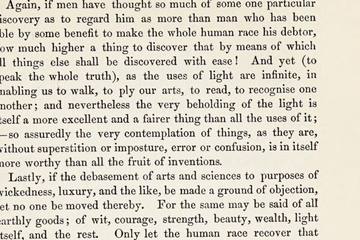
- Bacon, Novum OrganumTruth for its own sake: “more worthy than all the fruit of inventions”
- Buckle, History of Civilization in EnglandWeather and credulity, and the Scottish clergy’s Devil who had been studying for five thousand years
- Augustine, Contra mendaciumAugustine rejects lying even to catch heretics
- Bossuet, Histoire des variations des Églises protestantesWhat Lecky leaves out of Bossuet on punishing heretics
- Chrysostom, On the PriesthoodNot praise of lying, but defence of deceit for good ends
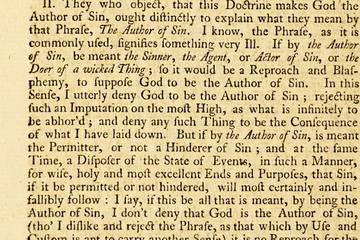
- Edwards, Freedom of the WillThe great Calvinist concedes that God is “the Author of Sin”, in a sense
Backlinks
Every place in Rationalism in Europe that links to this page (generated automatically when the site is built).
- Chapter IV, Part I: note 45