“Alors il est vraiment redoutable” (p. 262)
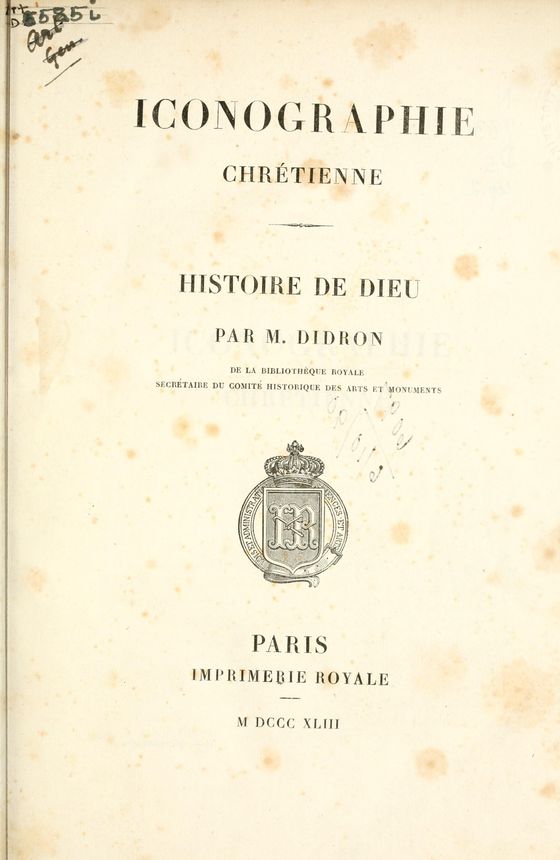
French: p. 262, scan. Highlighted: the sentences Lecky translates.
… However, one does not pass without transition from portraits almost always young to portraits constantly aged; in certain localities, milder in manners or further behind the ruling custom, one still sometimes meets smiling and young Jesuses. From the twelfth century these exceptions become rarer and rarer. Jesus grows sadder and shows himself above all at his passion and at the last judgment. Then he is truly redoubtable; it is indeed the “Rex tremendae majestatis” of our Dies irae; it is almost the God of the Jews, wanting fear to be the beginning of wisdom¹. In the Last Judgments carved in the archivolts and painted in the rose windows of our cathedrals, Christ seems insensible to the prayers of his mother, who is placed at his right; of St John the Evangelist, his friend, or of St John the Baptist, his forerunner, who are placed at his left. He crushes the wicked by showing them the holes of his hands, his feet and his side; he drowns them in the blood that flows from his wounds. The Greeks, more Hebraising than the Latins, have a Christ more terrible still. …
¹ “The fear of the Lord is the beginning of wisdom.” Psalm cx [cxi], v. 10.
Original French
… Cependant on ne passe pas sans transition des portraits presque toujours jeunes aux portraits constamment âgés ; dans certaines localités, plus douces de mœurs ou plus en retard sur la coutume régnante, on rencontre quelquefois encore des Jésus souriants et jeunes. À partir du XIIe siècle, ces exceptions deviennent de plus en plus rares. Jésus s’attriste davantage et se montre surtout à sa passion et au dernier jugement. Alors il est vraiment redoutable ; c’est bien le « Rex tremendæ majestatis » de notre Dies iræ ; c’est presque le Dieu des Juifs voulant que la crainte soit le commencement de la sagesse¹. Dans les Jugements derniers sculptés aux voussures et peints aux rosaces de nos cathédrales, le Christ semble insensible aux prières de sa mère, qui est placée à sa droite ; de saint Jean évangéliste, son ami, ou de saint Jean-Baptiste, son précurseur, qui sont placés à sa gauche. Il écrase les méchants en leur montrant les trous de ses mains, de ses pieds et de son côté ; il les noie dans le sang qui coule de ses plaies. Les Grecs, plus hébraïsants que les Latins, ont un Christ plus terrible encore. …
¹ « Initium sapientiæ timor Domini. » Psaume cx, v. 10.
Collation with Lecky’s note 52: “‘Christ appears more and more melancholy, and often truly terrible. It is, indeed, the rex tremendæ majestatis of our Dies iræ. It is almost the God of the Jews making fear the beginning of wisdom.’” Lecky renders “Jésus s’attriste davantage” as “Christ appears more and more melancholy” and drops “de plus en plus rares”, “à sa passion et au dernier jugement”; “truly terrible” is Didron’s “vraiment redoutable” (“redoubtable”, “fearsome”), and “often” is Lecky’s. Lecky’s sentence introducing the quotation (“About the twelfth century, this change became almost universal”) is consistent with “à partir du XIIe siècle, ces exceptions deviennent de plus en plus rares”, a little stronger. The preceding page (p. 261) tells, from Orderic Vitalis, the story of two knights’ dreams, one of a terrible and one of a smiling Christ on the cross; Lecky does not use it.
The souls of the just in the hand of God (p. 216)
French: p. 216, scan, with the engraving no. 56.
… Finally, all these texts of the Old and New Testament seem to sum themselves up in this motif, which the painting of the Greek churches offers so frequently, and which represents the souls of the just, little naked human beings, praying with joined hands, in the great hand of God. This hand comes out of the clouds; after having gone to take these souls of the just from the earth, it lifts them back to heaven, into paradise².
56. — The souls of the just in the hand of God. Greek fresco of the eighteenth century. … ² This drawing is taken from a fresco at Salamis, which is in the church of the great convent. “The souls of the just are in the hand of the Lord.” — These paintings of the principal church of the great convent of Salamis have supplied us with several drawings, although they date only from 1735 …
Original French
… Enfin tous ces textes de l’Ancien et du Nouveau Testament semblent se résumer dans ce motif que la peinture des églises grecques offre si fréquemment, et qui représente les âmes des justes, petits êtres humains nus, priant à mains jointes, dans la grande main de Dieu. Cette main sort des nuages ; après avoir été prendre sur la terre ces âmes des justes, elle les remonte au ciel, dans le paradis².
56. — Les âmes des justes dans la main de Dieu. Fresque grecque du XVIIIe siècle. … ² Ce dessin est tiré d’une fresque de Salamine, qui est dans l’église du grand couvent. « Animæ justorum in dextra Domini. » — Ces peintures de l’église principale du grand couvent de Salamine nous ont fourni plusieurs dessins, bien qu’elles datent seulement de 1735 …
Lecky’s note 169 (chapter III): “In the Greek churches the souls of the blest were sometimes represented as little children clasped in the mighty hand of God. (Didron, Iconographie, p. 216.)” Didron says “petits êtres humains nus, priant à mains jointes” (little naked human beings, praying with joined hands), not “children”, and says the motif is frequent, not occasional; and the engraving he gives is from an eighteenth-century (1735) fresco, though he explains that Greek art had stood still since the eleventh or twelfth century. “Clasped” is Lecky’s; Didron’s hand takes them up to heaven.
Editor’s notes on this page
Lecky gives, in quotation marks, as a translation of Didron: “Christ appears more and more melancholy, and often truly terrible. It is, indeed, the rex tremendæ majestatis of our Dies iræ. It is almost the God of the Jews making fear the beginning of wisdom.” The substance is on p. 262, but the English is a free rendering, not a literal one: Didron has “Jésus s’attriste davantage et se montre surtout à sa passion et au dernier jugement. Alors il est vraiment redoutable”. Lecky’s “often truly terrible” turns “at his Passion and the Last Judgment” into “often”; the sentence about the Last Judgment is Didron’s main point.
Further down the rabbit hole
Sources that Lecky cites in the notes next to the ones that cite this page.
- Maury, Essai sur les légendes pieuses du moyen âgeThe stag that sucks serpents out of their holes, and the angel who carried the star of Bethlehem
- Maury, Croyances et légendes de l’antiquitéPious frauds “fair play against heretics”, and the woman Simon Magus called the Thought of God
- Raoul-Rochette, Cours d’archéologieWhy Greek statues were naked: “God is naked”, and emperors stripped for apotheosis
- Rio, De l’art chrétienHow oil painting reached Italy, and why its bringer preferred Venice
- Vitet, Études sur l’histoire de l’artWhy the saints in Rome’s mosaics grew ugly: Lecky blames the monks, his source blames the barbarians
- Augustine, De civitate DeiSeventy reports, not miracles, and a town, not a province
Backlinks
Every place in Rationalism in Europe that links to this page (generated automatically when the site is built).