XXII.8: The Miracles of St. Stephen (cols. 767–768)
Latin: Migne, PL 41, cols. 767–768, De civitate Dei XXII.8 (scan). Spelling regularised (j as i, æ as ae); editors’ footnotes and variants omitted. Paragraph numbers are Migne’s (15–20). Highlighted: the five cases of a person restored to life, and the sentences that give the figures Lecky uses.
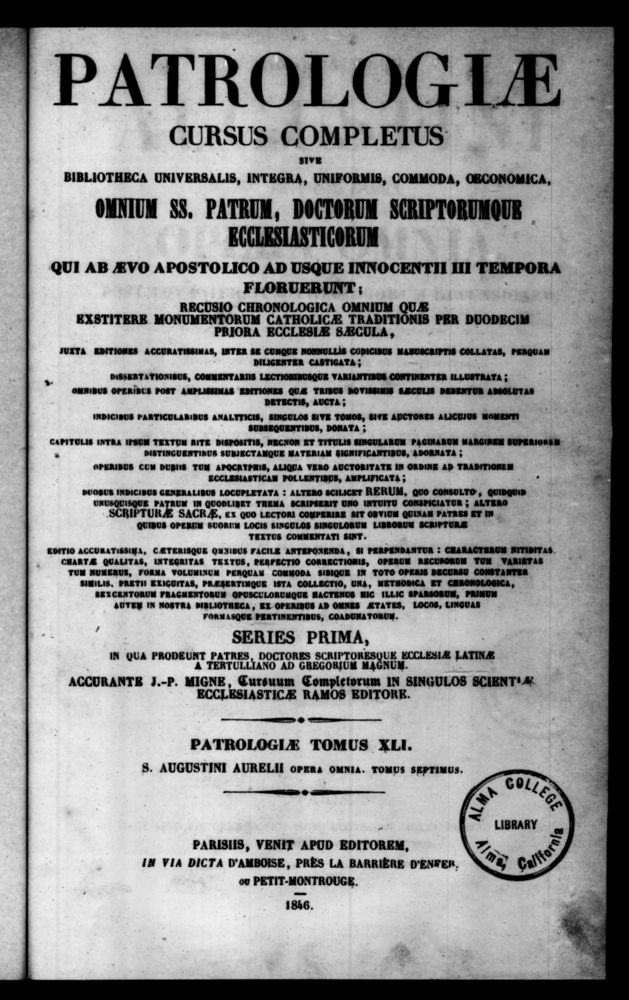
15. Audurus is the name of an estate, where there is a church, and in it a shrine of the martyr Stephen. A small boy, while playing in the yard, was run over by the wheel of a cart drawn by oxen that had strayed, and at once gasped out his last breath. His mother caught him up and laid him at the same shrine; and he not only came back to life, but appeared unhurt.
16. A certain nun, on a neighbouring estate called Caspaliana, was ill and despaired of; her tunic was brought to the same shrine: but before it could be got back, she was dead. Yet her parents covered her corpse with this tunic, and, her breath returned, she was made well.
17. At Hippo a certain Bassus, a Syrian, was praying at the shrine of the same martyr for his sick and endangered daughter, and had brought with him her garment: when behold, servants ran from the house to tell him she was dead. But when, as he prayed, they were met by his friends, these forbade them to tell him, lest he should lament in public. When he came home, which already rang with the wailing of his household, and threw over her the garment he was carrying, she was given back to life.
18. Again, among us in the same place, the son of one Irenaeus, a tax-collector, died of illness. As the body lay lifeless and the funeral was being prepared by the mourners and lamenters, one of his friends, among the words of the other comforters, suggested that the body be anointed with the oil of the same martyr. It was done, and he came back to life.
19. Likewise among us the tribunician Eleusinus laid his little son, dead of illness, on the shrine of the Martyr which is in his suburb: and after the prayer which he poured out there with many tears, he lifted him up alive.
20. What shall I do? The promise to finish this work presses, so that I cannot recount here all that I know; and no doubt many of our people, when they read this, will be sorry that I have passed over so many things which they know with me. I ask them now to forgive me, and to consider how long a labour it would be to do what the need of the work I have undertaken forbids me to do here. For if I wished to write down only the miracles of healing, to say nothing of the rest, which were wrought by this martyr, the most glorious Stephen, in the colony of Calama and in ours, very many books would have to be made: and even so not everything could be collected, but only the cases of which petitions (libelli) were handed in to be read out to the people. For we wished that done, when we saw that signs of divine power like those of old were also frequent in our times, and that they ought not to be lost to the knowledge of many. It is not yet two years since this shrine began to be at Hippo Regius, and, though many, as is quite certain to us, did not hand in petitions about what was wonderfully done, those that were handed in had reached nearly seventy in number when I wrote this. At Calama, where the shrine began earlier and petitions are given more often, they exceed this by an incomparable number.
Original Latin
15. Audurus nomen est fundi, ubi ecclesia est, et in ea memoria Stephani martyris. Puerum quemdam parvulum, cum in area luderet, exorbitantes boves qui vehiculum trahebant, rota obtriverunt, et confestim palpitavit exspirans. Hunc mater arreptum ad eamdem memoriam posuit; et non solum revixit, verum etiam illaesus apparuit.
16. Sanctimonialis quaedam in vicina possessione, quae Caspaliana dicitur, cum aegritudine laboraret, ac desperaretur, ad eamdem memoriam tunica eius allata est: quae antequam revocaretur, illa defuncta est. Hac tamen tunica operuerunt cadaver eius parentes, et recepto spiritu salva facta est.
17. Apud Hipponem Bassus quidam Syrus ad memoriam eiusdem martyris orabat pro aegrotante et periclitante filia, eoque secum vestem eius attulerat: cum ecce pueri de domo cucurrerunt, qui ei mortuam nuntiarent. Sed cum, orante illo, ab amicis eius exciperentur, prohibuerunt eos illi dicere, ne per publicum plangeret. Qui cum domum redisset iam suorum eiulatibus personantem, et vestem filiae quam ferebat, super eam proiecisset, reddita est vitae.
18. Rursus ibidem apud nos Irenaei, cuiusdam collectarii filius, aegritudine exstinctus est. Cumque corpus iaceret exanime, atque a lugentibus et lamentantibus exsequiae pararentur, amicorum eius quidam inter aliorum consolantium verba suggessit, ut eiusdem martyris oleo corpus perungeretur. Factum est, et revixit.
19. Itemque apud nos vir tribunitius Eleusinus super memoriam Martyris, quae in suburbano eius est, aegritudine exanimatum posuit infantulum filium: et post orationem, quam cum multis lacrymis ibi fudit, viventem levavit.
20. Quid faciam? Urget huius operis implendi promissio, ut non hic possim omnia commemorare quae scio: et procul dubio plerique nostrorum, cum haec legent, dolebunt me tam multa praetermisisse, quae utique mecum sciunt. Quos iam nunc, ut ignoscant, rogo; et cogitent quam prolixi laboris sit facere, quod me hic non facere suscepti operis necessitas cogit. Si enim miracula sanitatum, ut alia taceam, ea tantummodo velim scribere, quae per hunc martyrem, id est, gloriosissimum Stephanum, facta sunt in colonia Calamensi, et in nostra, plurimi conficiendi sunt libri: nec tamen omnia colligi poterunt, sed tantum de quibus libelli dati sunt, qui recitarentur in populis. Id namque fieri voluimus, cum videremus antiquis similia divinarum signa virtutum etiam nostris temporibus frequentari; et ea non debere multorum notitiae deperire. Nondum est autem biennium, ex quo apud Hipponem Regium coepit esse ista memoria, et multis, quod nobis certissimum est, non datis libellis, de iis quae mirabiliter facta sunt, illi ipsi qui dati sunt ad septuaginta ferme numerum pervenerant, quando ista conscripsi. Calamae vero, ubi et ipsa memoria prius esse coepit, et crebrius dantur, incomparabili multitudine superant.
Doubtful points
Libellus (pl. libelli) is a short written document: here a written statement of a miracle, handed in to the bishop to be read to the congregation. I translate it as “petitions” in the last paragraph only because the modern translations I have seen use that word; the Latin sense is closer to “reports” or “statements”, and I use “reports” in the commentary. “Vir tribunitius” is “a man of tribunician rank”, which I have not tried to define. Migne’s editor, in a footnote on this page, infers from “nondum est biennium” that this book was written near the end of 426; I have not checked that. The rest of chapter 8 (cols. 760–772) was not read in full.
XIX.6: The Judge Who Tortures the Innocent (col. 633)
Latin: Migne, PL 41, col. 633, De civitate Dei XIX.6 (scan). Conventions as above. The extract begins in the middle of a sentence carried over from col. 632, which is not transcribed. Highlighted: the words Lecky quotes.
… when a man is tortured in his own case; and when it is asked whether he is guilty, he is tormented, and the innocent man pays, for an uncertain crime, the most certain penalties; not because it is found that he committed it, but because it is not known that he did not commit it? And so the ignorance of the judge is for the most part the calamity of the innocent. And what is more intolerable, and more to be lamented, and, if it could be, watered with fountains of tears: when the judge tortures the accused for this reason, lest in ignorance he kill an innocent man, it comes about, through the wretchedness of ignorance, that he kills both a tortured man and an innocent one, whom he had tortured lest he kill an innocent. For if, by the wisdom of these people, [the accused] has chosen to flee from this life rather than endure those torments longer, he says he committed what he did not commit. When he has been condemned and killed, the judge still does not know whether he killed a guilty or an innocent man, whom he tortured lest in ignorance he kill an innocent: and so he tortured an innocent man in order to know, and killed him while not knowing. In these darknesses of social life, will that wise judge sit, or will he not sit? He will sit, plainly. For human society constrains him and draws him to this office, which he thinks it a sin to desert.
Original Latin
… cum in sua causa quisque torquetur; et cum quaeritur utrum sit nocens, cruciatur, et innocens luit pro incerto scelere certissimas poenas; non quia illud commisisse detegitur, sed quia non commisisse nescitur? Ac per hoc ignorantia iudicis plerumque est calamitas innocentis. Et quod est intolerabilius, magisque plangendum, rigandumque, si fieri possit, fontibus lacrymarum; cum propterea iudex torqueat accusatum, ne occidat nesciens innocentem, fit per ignorantiae miseriam, ut et tortum et innocentem occidat, quem ne innocentem occideret torserat. Si enim secundum istorum sapientiam delegerit ex hac vita fugere, quam diutius illa sustinere tormenta; quod non commisit, commisisse se dicit. Quo damnato et occiso, utrum nocentem an innocentem iudex occiderit, adhuc nescit, quem ne innocentem nesciens occideret torsit: ac per hoc innocentem et ut sciret torsit, et dum nesciret occidit. In his tenebris vitae socialis, sedebit iudex ille sapiens, an non sedebit? Sedebit plane. Constringit enim eum, et ad hoc officium pertrahit humana societas, quam deserere nefas ducit.
Doubtful points
The sentence in col. 632 that governs “cum in sua causa quisque torquetur” is not transcribed, so the first clause is left unfinished. The passage continues (not transcribed here) with the torture of innocent witnesses in other men’s cases. “Istorum sapientiam” (“the wisdom of these people”) refers to a view, stated earlier in the chapter, that I have not traced.
XV.23: Sylvans, Fauns and the Dusii (cols. 467–468)
Latin: Migne, PL 41, col. 468 (right column; the page is cols. 467–468, scan), De civitate Dei XV.23, § 1. Conventions as above. The chapter’s heading reads “An credendum sit angelos substantiae spiritualis, amore speciosarum mulierum captos, earumdem iniisse coniugia, ex quibus gigantes sint creati.” Highlighted: the two phrases Lecky quotes in Chapter I, note 21.
And since the report is very frequent, and many affirm that they have experienced it, or have heard it from those who had, whose good faith is not to be doubted, that Sylvans and Fauns, whom the common people call incubi, have often been wanton towards women, and sought and accomplished intercourse with them; and since very many and such persons assert that certain demons, whom the Gauls call Dusii, constantly attempt and effect this uncleanness, so that to deny it seems impudence: I do not venture to define anything on this point, whether some spirits embodied in the element of air (for this element, even when stirred by a fan, is perceived by the sense and touch of the body) can also suffer this lust, so as to mingle, in whatever way they can, with women who feel it. But I could in no way believe that God’s holy angels could at that time have so fallen …
Original Latin
Et quoniam creberrima fama est, multique se expertos, vel ab eis qui experti essent, de quorum fide dubitandum non est, audisse confirmant, Silvanos et Faunos, quos vulgo incubos vocant, improbos saepe exstitisse mulieribus, et earum appetisse ac peregisse concubitum; et quosdam daemones, quos Dusios Galli nuncupant, hanc assidue immunditiam et tentare et efficere, plures talesque asseverant, ut hoc negare impudentiae videatur: non hinc aliquid audeo definire, utrum aliqui spiritus elemento aerio corporati (nam hoc elementum etiam cum agitatur flabello, sensu corporis tactuque sentitur), possint etiam hanc pati libidinem, ut quomodo possunt, sentientibus feminis misceantur. Dei tamen Angelos sanctos nullo modo illo tempore sic labi potuisse crediderim …
Doubtful points
The sentence is long and its grammar loose (“audisse confirmant … plures talesque asseverant”); I have given it as two parallel clauses. I read only § 1 of the chapter. Migne’s footnotes (“Silvanos” and the note (a)) are not transcribed.
Lecky’s Statements Compared
| Lecky | Augustine | Comment |
|---|---|---|
| Ch. II, note 15: “in his own diocese of Hippo, in the space of two years, no less than seventy miracles had been wrought by the body of St. Stephen, and … in the neighbouring province of Calama, where the relic had previously been, the number was incomparably greater.” | XXII.8, § 20: “It is not yet two years”; the petitions or reports (libelli) handed in “had reached nearly seventy”; “many” miracles had been reported without a libellus; at Calama they exceed this “by an incomparable number”. | Close, with three points. Augustine counts libelli (written reports) rather than miracles, so “seventy miracles” is an understatement: some reports may cover more than one wonder, and many are said not to have been written up at all. “Under two years”, not “two years”. And Calama is a colonia (a town), not a province; the “relic had previously been” there is “where the shrine began earlier”. |
| “He gives a catalogue of what he deems undoubted miracles, which he says he had selected from a multitude so great, that volumes would be required to relate them all.” | § 20: “very many books would have to be made” just to record the miracles of healing at Calama and Hippo. | Accurate; “undoubted” is Lecky’s word, not Augustine’s on this page. |
| “In that catalogue we find no less than five cases of restoration of life to the dead (De Civ. Dei, lib. xxii. c. 8).” | §§ 15–19: five cases on this page, of a boy run over by a cart, a nun, Bassus’s daughter, the son of Irenaeus, and Eleusinus’s son. | Confirmed: exactly five, all on this one page, each in terms of coming back to life (revixit, “reddita est vitae”, “recepto spiritu”, “viventem levavit”). I did not read the other columns of the chapter, so I cannot say there are no others. |
| Ch. III, note 161: “St. Augustine perceived very clearly the evil of torture, and stated the case against it with his usual force and terseness: ‘Cum quæritur utrum sit nocens cruciatur et innocens luit pro incerto scelere certissimas pœnas’ (De Civ. Dei, lib. xix. cap. 6); but he concluded that it was necessary.” | XIX.6: the same words, in a longer sentence with commas and a following clause (“non quia illud commisisse detegitur, sed quia non commisisse nescitur?”); then “He will sit, plainly. For human society constrains him.” | Accurate. The Latin is word for word the same; Lecky has no commas and starts at “cum” (the print has “et cum”). “Concluded that it was necessary” is a fair reading of “sedebit plane”: the wise judge will go on sitting, because society needs him, even though he will sometimes torture and kill the innocent. Augustine calls it “calamity”, “miseria”, and “more to be lamented … with fountains of tears”. |
| Ch. I, note 21: “‘Hoc negare impudentiæ videatur’ (St. Aug. De Civ. Dei, lib. xv. cap. 23). The Saint, however, proceeds to say, ‘Non hic aliquid audeo temere definire.’” | XV.23: “ut hoc negare impudentiae videatur: non hinc aliquid audeo definire”. | The first quotation is exact (a clause cut from a longer sentence). The second is not in Migne’s words: Migne has “hinc” where Lecky has “hic” and has no “temere” (“rashly”). Lecky’s reading may be that of another edition (I believe, but have not checked, that the critical text has “temere”); it is not in this one. The sense is the same. Lecky is right that the sentence follows at once. |
The peacock’s flesh that did not rot (XXI.4)
Latin: Migne PL 41, col. 712 (book XXI, chapter IV, § 1; the heading of the chapter is “De naturalibus exemplis, quorum consideratio doceat posse inter cruciatus viventia corpora permanere”), image n355.
For who but God, the creator of all things, gave to the flesh of the dead peacock that it should not putrefy? When this seemed incredible on hearing, it happened that this bird was set before us cooked at Carthage; from its breast we ordered a piece of the flesh, as much as seemed fit, to be cut off and kept; after as many days as any other cooked flesh would have putrefied in, it was brought out and offered, and offended our sense of smell in nothing. And again, put by for more than thirty days, it was found the same; and the same after a year, except that it was somewhat drier and shrunken.
Original Latin
Quis enim nisi Deus creator omnium dedit carni pavonis mortui ne putresceret? Quod cum auditu incredibile videretur, evenit ut apud Carthaginem nobis cocta apponeretur haec avis: de cujus pectore pulparum, quantum visum est, decerptum servari jussimus: quod post dierum tantum spatium, quanto alia caro quaecumque cocta putresceret, prolatum atque oblatum, nihil nostrum offendit olfactum. Itemque repositum post dies amplius quam triginta, idem quod erat inventum est: idemque post annum, nisi quod aliquantum corpulentiae siccioris et contractioris fuit.
Lecky’s note (ch. III, note 8): “[That its flesh never decayed] which St. Augustine said he had ascertained by experiment to be a fact, and which he seemed to regard as a miracle. (De Civ. Dei, lib. xxi. c. 4.)” The experiment is Augustine’s own and is reported accurately. But Augustine does not call it a miracle: he gives it, with the salamander, Etna and the effects of fire, as one of the natural examples (“naturalibus exemplis”) that show that a living body can endure torment without being destroyed: God, who gave the peacock’s flesh this property, can give the same to the bodies of the damned. “Regard as a miracle” is Lecky’s gloss, and a loose one; the chapter’s word for the things in it is mira (wonders).
The Sibyl’s acrostic and the fish (XVIII.23)
Latin: Migne PL 41, cols. 579–580 (book XVIII, chapter XXIII, § 1), image n289. The Greek letters on the page are partly illegible at this scan’s resolution.
… If you join the first letters of these five Greek words, Iesous Christos Theou Huios Soter, which in Latin is Jesus Christus Dei Filius Salvator (Jesus Christ, Son of God, Saviour), there will be ichthys, that is “Fish”, in which name Christ is mystically understood, because in the abyss of this mortality, as in the depth of waters, he was able to live, that is, without sin.
Original Latin
… Horum autem graecorum quinque verborum, quae sunt, Ἰησοῦς Χριστὸς Θεοῦ Υἱὸς Σωτήρ, quod est latine, Jesus Christus Dei Filius Salvator, si primas litteras jungas, erit ἰχθύς, id est Piscis, in quo nomine mystice intelligitur Christus, eo quod in hujus mortalitatis abysso velut in aquarum profunditate vivus, hoc est sine peccato, esse potuerit.
Augustine introduces the acrostic with the story that the proconsul Flaccianus produced a Greek codex of verses of the Erythraean Sibyl in which the initial letters of the verses spell the five words; he then gives the twenty-seven Latin verses (“Judicii signum, tellus sudore madescet …”), of which the first letters, with Υ in the places where no Latin letter would do, were meant to reproduce the Greek. Lecky’s note (ch. III, note 14): “Ἰχθύς. Ἰησοῦς Χριστὸς Θεοῦ υἱὸς Σωτήρ. The initial letters of the prophetic verses of the Sibyl of Erythra (St. Aug. De Civ. Dei, lib. xviii. cap. 20).” The acrostic is correct, but in Migne the passage is chapter 23 of book XVIII (cap. 20 is not the Sibyl); I did not check whether another edition numbers it 20. Lecky’s sentence that “the dolphin was especially selected because of its tenderness to its young” is not Augustine’s.
Editor’s notes on this page
Lecky uses the City of God twice here. In Chapter II he says Augustine reports that “in the space of two years” seventy miracles were wrought at the shrine of St. Stephen in Hippo, a far larger number in the neighbouring Calama, and that among the miracles he lists are “five cases of restoration of life to the dead” (XXII.8). In Chapter III he quotes Augustine’s account of the judge who tortures an innocent man in his ignorance (XIX.6), saying Augustine saw the evil of torture but “concluded that it was necessary”.
Both statements are accurate in substance. The five restorations are all on one page (cols. 767–768, §§ 15–19). But Augustine says that about seventy written reports (libelli) had been handed in at Hippo in less than two years, not “seventy miracles”, and that many more miracles had been wrought without any report being handed in; and Lecky’s “province of Calama” is a town (a colonia). See the comparison.
Further down the rabbit hole
Sources that Lecky cites in the notes next to the ones that cite this page.
- Maury, La magie et l’astrologieRoman laws against diviners, the first medieval doubters, and the praying heretics
- Marangoni, Delle cose gentilesche e profaneOrpheus as Christ on p. 45; two other notes not there
- Sprenger, Malleus MaleficarumThe witch-hunters’ handbook of the fifteenth century
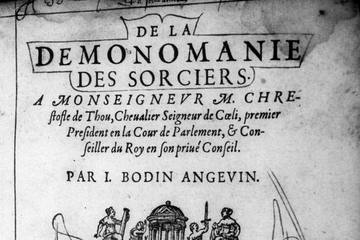
- Bodin, Démonomanie des SorciersThe great lawyer who wrote the witch-hunters’ handbook
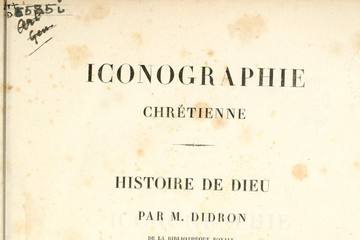
- Didron, Iconographie chrétienneHow medieval art pictured Christ the Judge
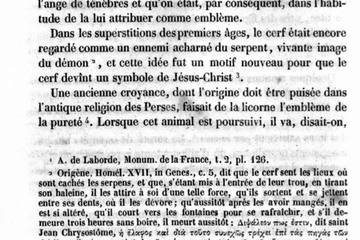
- Maury, Essai sur les légendes pieuses du moyen âgeThe stag that sucks serpents out of their holes, and the angel who carried the star of Bethlehem
Backlinks
Every place in Rationalism in Europe that links to this page (generated automatically when the site is built).