“It pulls down that monarchy also” (ch. VI §§ 9–10)
English: Works, 1771, pp. 474–475, scan; § 9 from the OCR of the previous page, § 10 read on the image. Long s modernised; Harrington’s own spelling (“coms”, “wherfore”) kept. Highlighted: Lecky’s quotation.

9. Democracy being nothing but intire liberty, and liberty of conscience without civil liberty, or civil liberty without liberty of conscience being but liberty by halves, must admit of liberty of conscience both as to the perfection of its present being, and as to its future security … because this excludes absolute monarchy, which cannot stand with liberty of conscience in the whole, and regulated monarchy, which cannot stand safely with it in any part.
10. If it be said that in France there is liberty of conscience in part, it is also plain that while the hierarchy is standing this liberty is falling, and that if ever it coms to pull down the hierarchy, it pulls down that monarchy also: wherfore the monarchy or hierarchy will be beforehand with it, if they see their true interest.
“Where civil liberty is intire” (Political Aphorisms 21–25, p. 484)
English: Works, London 1771, Political Aphorisms, p. 484, scan n537. Long s modernised; spelling kept. Highlighted: the two aphorisms Lecky quotes in the text at note 87.
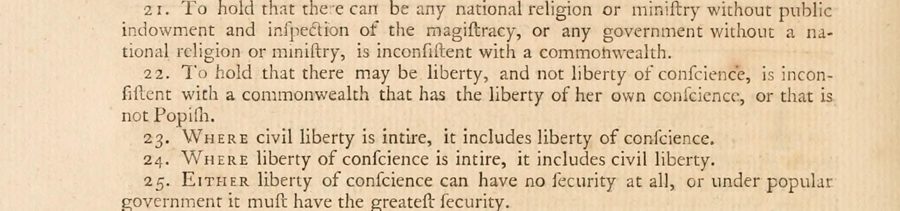
21. To hold that there can be any national religion or ministry without public indowment and inspection of the magistracy, or any government without a national religion or ministry, is inconsistent with a commonwealth.
22. To hold that there may be liberty, and not liberty of conscience, is inconsistent with a commonwealth that has the liberty of her own conscience, or that is not Popish.
23. Where civil liberty is intire, it includes liberty of conscience.
24. Where liberty of conscience is intire, it includes civil liberty.
25. Either liberty of conscience can have no security at all, or under popular government it must have the greatest security.
Lecky (vol. II, ch. IV, text at note 87) quotes 23–24 exactly, with “entire” for Harrington’s “intire”, as evidence that Harrington “alone among his contemporaries anticipated the doctrines of the nineteenth century”. Aphorism 21 shows the limits of that anticipation: Harrington wanted a national religion and an endowed ministry under the magistrate, with liberty of conscience beside it, not a separation of Church and State.
Further down the rabbit hole
Sources that Lecky cites in the notes next to the ones that cite this page.
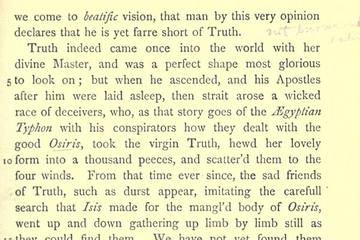
- Milton, AreopagiticaTruth torn to pieces like Osiris, and why the search must not be licensed
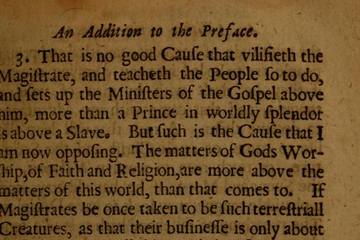
- Baxter, A Holy CommonwealthA Puritan’s syllogism against toleration
- Milton, Of True ReligionMilton’s last pamphlet: toleration for every Protestant, none for the Mass
- Neal, The History of the PuritansA boy king signs a death warrant in tears, and the Presbyterians’ heresy law of 1648
- Chillingworth, The Religion of ProtestantsWhy an honest error needs no pardon
- Annuaire des Deux Mondes, 1857–1858Exiled from Sweden in the 1850s for becoming Catholics
Backlinks
Every place in Rationalism in Europe that links to this page (generated automatically when the site is built).