The Puritans and bear-baiting (History, ch. 2)
English: Gutenberg 1468 (History, vol. i, chapter II, on the Puritan sabbath and amusements). Highlighted: the sentence Lecky quotes.
… Their antipathy to this sport had nothing in common with the feeling which has, in our own time, induced the legislature to interfere for the purpose of protecting beasts against the wanton cruelty of men. The Puritan hated bearbaiting, not because it gave pain to the bear, but because it gave pleasure to the spectators. Indeed, he generally contrived to enjoy the double pleasure of tormenting both spectators and bear. …
Lecky (ch. III, note 132): “As Macaulay, with characteristic antithesis, says:—‘If the Puritans suppressed bull-baiting, it was not because it gave pain to the bull, but because it gave pleasure to the spectators.’” Lecky puts the sentence in quotation marks, but it is not Macaulay’s wording: “bull-baiting … bull” for “bearbaiting … bear”, “If the Puritans suppressed” for “The Puritan hated”. The context is Lecky’s own (Spanish bull-fighting). The chapter number is from the Gutenberg split (I did not check the printed page).
The Church of England, “servile handmaid of monarchy”
English: Gutenberg 2332 (Essays vol. i), in the essay on Hallam’s Constitutional History (1828).
… But, on the other hand, she continued to be, for more than a hundred and fifty years, the servile handmaid of monarchy, the steady enemy of public liberty. The divine right of kings, and the duty of passively obeying all their commands, were her favourite tenets. She held those tenets firmly through times of oppression, persecution, and licentiousness; while law was trampled down; while judgment was perverted; while the people were eaten as though they were bread. Once, and but once, for a moment, and but for a moment, when her own dignity and property were touched, she forgot to practise the submission which she had taught.
Lecky’s version (ch. V, note 86, “Essays, vol. i. p. 60: ed. 1861”): “The Church of England continued to be for more than 150 years the servile handmaid of monarchy …”, with “judgement”, “Once, and but once — for a moment, and but for a moment — when her own dignity and property were touched, she forgot to practise the submission she had taught.” Macaulay’s sentence begins “she continued to be”; Lecky’s subject is supplied. Lecky’s word “150” and the dashes and “judgement” are his or his printer’s; “the submission she had taught” omits “which”.
The Low Church clergy (History, ch. 11)
English: Gutenberg 2612 (History vol. iii, chapter XI, on the Declaration of Indulgence and the clergy, 1687–88).
… The Low Church clergymen were a minority, and not a large minority, of their profession: but their weight was much more than proportioned to their numbers … We should probably overrate their numerical strength, if we were to estimate them at a tenth part of the priesthood. Yet it will scarcely be denied that there were among them as many men of distinguished eloquence and learning as could be found in the other nine tenths. …
Lecky (ch. III, note 87): “Shortly after the accession of William III., the Low Church clergy, according to Macaulay (History of England, vol. iii. p. 741) scarcely numbered a tenth part of the priesthood.” Macaulay’s passage concerns the clergy in the reign of James II (the Declaration of Indulgence, 1687–88) and says that a tenth would be too high; “scarcely a tenth” is a fair reading of that; “shortly after the accession of William III” is not Macaulay’s date.
The Associate Presbytery and witchcraft (History, ch. 16, note)
English: Gutenberg 2612, chapter XVI (Scotland after the Revolution), Macaulay’s footnote 785, appended to a footnote on the Dying Testimony of William Wilson.
[Footnote 785: See the Dying Testimony of William Wilson, mentioned in the last note. It ought to be remarked that, on the subject of witchcraft, the Divines of the Associate Presbytery were as absurd as this poor crazy Dominie. See their Act, Declaration, and Testimony, published in 1773 by Adam Gib.]
Lecky (ch. I, note 167, “Macaulay, Hist. vol. iii. p. 706”, attached to “As late as 1773, ‘the divines of the Associated Presbytery’ passed a resolution declaring their belief in witchcraft, and deploring the scepticism that was general”): Macaulay names the 1773 Act, Declaration, and Testimony and calls its authors “absurd” on witchcraft, but does not call it a “resolution” or say it deplored scepticism; those details are Lecky’s (presumably from the publication itself, which I have not seen). Lecky’s quotation marks around “the divines of the Associated Presbytery” reproduce Macaulay’s “the Divines of the Associate Presbytery” with “Associated” for “Associate”.
Editor’s notes on this page
Two of Lecky’s quotations are not exact. In Chapter III, note 132, he gives “If the Puritans suppressed bull-baiting, it was not because it gave pain to the bull, but because it gave pleasure to the spectators”. Macaulay wrote “The Puritan hated bearbaiting, not because it gave pain to the bear, but because it gave pleasure to the spectators”: a different animal and no “if”. In Chapter V, note 86, the sentences on the Church of England are Macaulay’s, in the essay on Hallam’s Constitutional History, with small changes (“for more than 150 years” for “a hundred and fifty years”, “judgement” for “judgment”, “the submission she had taught” for “the submission which she had taught”, and the punctuation).
The other two are accurate in substance with qualifications. Macaulay’s “a tenth part of the priesthood” (note 87) is a figure he says would overstate the Low Church clergy’s numbers, and he is speaking of 1687–88, before William’s accession. The Associate Presbytery’s witchcraft declaration (ch. I, note 167) is in a footnote of Macaulay’s chapter on Scotland and gives the date 1773 and the author (Adam Gib), but says nothing of a “resolution”.
Further down the rabbit hole
Sources that Lecky cites in the notes next to the ones that cite this page.
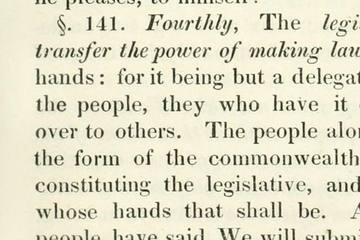
- Locke, Two Treatises of GovernmentNo taxation without consent, and the pulpit’s favourite absolutist
- Hallam, Literature of Europe and Constitutional HistoryHow Lecky quotes Hallam on persecution
- Buckle, History of Civilization in EnglandWeather and credulity, and the Scottish clergy’s Devil who had been studying for five thousand years
- Concina, Adversus usuram and De spectaculisA Dominican against interest and against the stage: the pope’s own polemicist
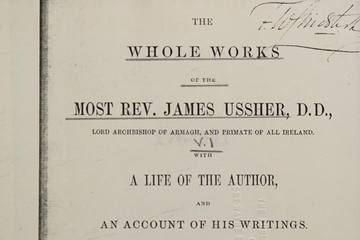
- Elrington, Life of UssherTwelve Irish bishops declare toleration “a grievous sin” (1626)
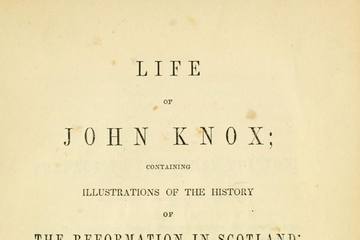
- M’Crie, Life of John Knox“One mass is more fearful to me than ten thousand armed enemies”, and the biographer who excused it
Backlinks
Every place in Rationalism in Europe that links to this page (generated automatically when the site is built).