Jacques Clément, “the eternal honour of France”: a phrase the later editions dropped (1605, pp. 51, 54)
Latin: Mainz 1605, Book I, chapter VI, heading on p. 51 (scan n81) and the passage on p. 54 (scan n84). Abbreviations expanded. Highlighted: what Lecky quotes.
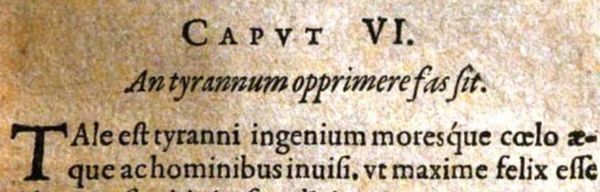
Chapter VI. Whether it is lawful to kill a tyrant.
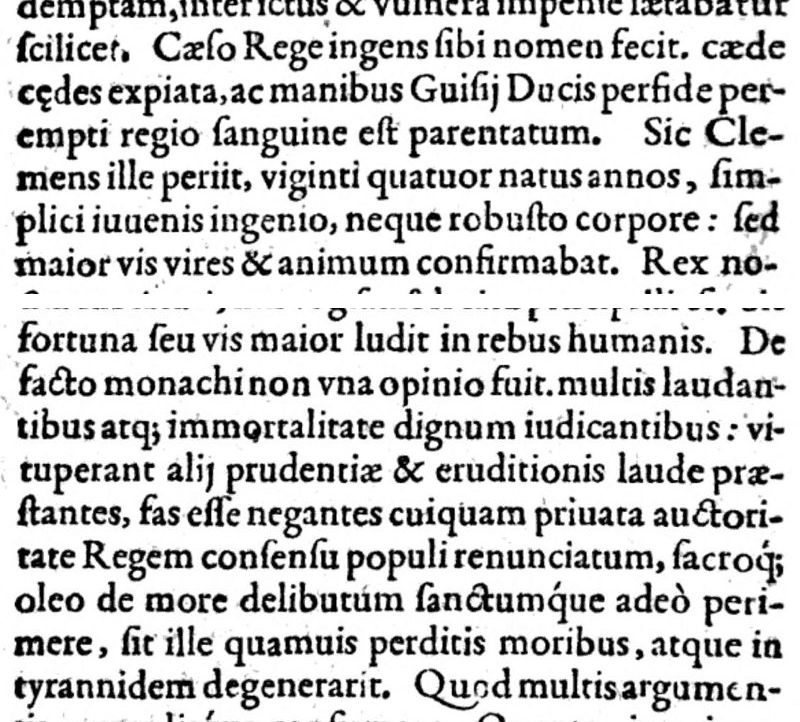
[p. 54] … By killing the king he made himself a great name. Murder was atoned for by murder, and the shade of the Duke of Guise, treacherously slain, received its offering of royal blood. So perished that Clément, twenty-four years old, a youth of simple mind and no strong body: but a greater power strengthened his strength and his courage. …
About the monk’s deed there was more than one opinion. Many praised it and judged it worthy of immortality; others, eminent for prudence and learning, blamed it, denying that anyone may by private authority kill a king proclaimed by the consent of the people and anointed, as custom is, with the sacred oil, and so made holy, however depraved his morals and though he has degenerated into a tyrant.
Original Latin
Caput VI. An tyrannum opprimere fas sit.
[p. 54] … Cæso Rege ingens sibi nomen fecit. cæde cædes expiata, ac manibus Guisii Ducis perfide perempti regio sanguine est parentatum. Sic Clemens ille periit, viginti quatuor natus annos, simplici iuvenis ingenio, neque robusto corpore: sed maior vis vires & animum confirmabat. …
De facto monachi non una opinio fuit. multis laudantibus atque immortalitate dignum iudicantibus: vituperant alii prudentiæ & eruditionis laude præstantes, fas esse negantes cuiquam privata auctoritate Regem consensu populi renunciatum, sacroque oleo de more delibutum sanctumque adeo perimere, sit ille quamvis perditis moribus, atque in tyrannidem degenerarit.
| Mariana (Mainz 1605, p. 54) | Lecky (vol. II, ch. V, text at note 50) |
|---|---|
| Sic Clemens ille periit, | Thus did Clement perish as many deem the eternal honour of France |
| viginti quatuor natus annos, simplici iuvenis ingenio, neque robusto corpore: sed maior vis vires & animum confirmabat. | a youth but four-and-twenty years of age, simple in mind and weak in body: but a higher might confirmed both his courage and his strength. |
Lecky translates the sentence of the first edition (Toledo 1599), which he cites as “p. 69”. In the Mainz printing of 1605 the sentence is on p. 54 and has no “æternum Galliæ decus” (“the eternal honour of France”), which is what Lecky’s own note 50 says, after Hallam: the words “were omitted in the later editions”. The 1599 edition has not been found online, so the omitted words themselves are not checked here. The paragraph that follows shows Mariana setting out both opinions of the deed before giving his own.
The “consent” of philosophers and theologians (pp. 58–59)
Latin: p. 58, scan (notes 53 and 55). Highlighted: Lecky’s quotations.
… Whoever has ever blamed their daring, and has not rather thought it worthy of the highest praise? And there is a common sense, as it were a voice of nature implanted in our minds, a law sounding in our ears, by which we distinguish the dishonourable from the honourable. …
For my part I see that philosophers and theologians agree on this, that a prince who has seized the state by force and arms, with no right besides and no public consent of the citizens, may be killed by anyone, and deprived of life and rule. Since he is a public enemy, and oppresses his country with every evil, and truly and properly takes on the name and nature of a tyrant, let him be removed by any means …
Original Latin
… Quorum audaciam quis unquam vituperavit, ac non potius summis laudibus dignam duxit? Et est communis sensus quasi quædam naturæ vox mentibus nostris indita, auribus insonans lex, qua a turpi honestum secernimus. …
Equidem in eo consentire tum philosophos tum Theologos video, eum Principem qui vi & armis rempublicam occupavit, nullo præterea jure, nullo publico civium consensu, perimi a quocumque, vita & principatu spoliari posse. cum hostis publicus sit, malisque omnibus patriam opprimat, vereque & proprie tyranni nomen & ingenium induat: amoveatur quacumque ratione …
Note 55 quotes from “In eo consentire” on and stops at “posse”. Lecky omits “Equidem” (the sentence begins “Equidem in eo consentire”); otherwise note 55 follows the print, and note 53’s sentence is exactly as printed.
“Si medicinam respuat” (pp. 59–60)
Latin: pp. 59–60, scan p. 59, scan p. 60 (notes 56 and 57). The omitted text is marked with a row of dots as in Lecky.
If he refuses the cure, and no hope of health remains, once sentence has been pronounced it will be lawful for the state first to refuse his rule; and since war will necessarily be stirred up, to lay out plans for its defence, to prepare arms, money for the costs of war … and if things so fall out, and the state cannot otherwise protect itself, by the same right of defence, and with a better and its own authority, to kill the prince, declared a public enemy, with the sword. And let the same power belong to any private man who, giving up hope of impunity and disregarding his own safety, shall have chosen to enter on an attempt to help the state. You may ask what is to be done if the opportunity of a public assembly has been taken away … he who, favouring the public wishes, tries to kill him, I shall judge to have done him no wrong.
Original Latin
Si medicinam respuat, neque spes ulla sanitatis relinquatur, sententia pronunciata licebit reipublicæ ejus imperium detrectare primum. & quoniam bellum necessario concitabitur, ejus defendendi consilia explicare, expedire arma, pecunias in belli sumptus … etsi res feret, neque aliter se respublica tueri possit, eodem defensionis jure ac vero potiori auctoritate & propria, Principem publicum hostem declaratum ferro perimere. Eademque facultas esto cuicumque privato, qui spe impunitatis abjecta, neglecta salute, in conatum juvandi rempublicam ingredi voluerit. Roges quid faciendum, si publici conventus facultas erat sublata … qui votis publicis favens eum perimere tentarit, haudquaquam inique eum fecisse existimabo.
| Lecky, 1865 (notes 56, 57) | Mainz 1605, pp. 59–60 | |
|---|---|---|
| Opening | Si medicinam respuat princeps, neque spes… | Si medicinam respuat, neque spes… (no “princeps”; the print has “Si me-dicinam respuat”) |
| “and if things so fall out” | Et si res feret | etsi res feret |
| “better authority” | ac vero potiore auctoritate | ac vero potiori auctoritate |
Between “pecunias in belli sumptus” and “etsi res feret” the print has a few more words at the foot of p. 59 and the head of p. 60 (the cropped scan cuts off the ends of p. 59’s lines, so I did not transcribe them); Lecky’s dots stand for them.
On poison (pp. 66–67)
Latin: p. 66 (scan) to p. 67 (scan) (note 60, second sentence).
… And it is a voice of nature, the common feeling of men, which blames anyone who attacks others, however much enemies, with poison. …
Original Latin
… Et est naturæ vox communis hominum sensus vituperantium si quis in alios quantumvis hostes veneno grassetur. …
“Nos tamen non quid facturi sint homines” (p. 65)
Latin: foot of p. 65, scan (note 60, first sentence). Found in October 2026 by a full-text search of the OCR by a second language model (Meta’s Muse Spark), then read on the page image; an earlier check had looked only at p. 66, where a different sentence also begins “Nos tamen”.
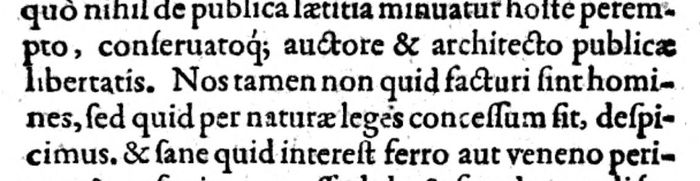
… so that nothing is taken from the public rejoicing when the enemy is killed and the author and architect of public liberty is preserved. We, however, consider not what men are going to do, but what is permitted by the laws of nature. And indeed what difference does it make whether you kill with steel or with poison, especially when leave has been granted to act by guile and deceit?
Original Latin
… quo nihil de publica lætitia minuatur hoste perempto, conservatoque auctore et architecto publicæ libertatis. Nos tamen non quid facturi sint homines, sed quid per naturæ leges concessum sit, despicimus. Et sane quid interest ferro aut veneno perimas? præsertim concessa dolo et fraude agendi facultate.
Lecky’s Latin matches the print word for word. The sentence comes before the passage on pp. 66–67, where Mariana goes on to reject poisoning in food or drink; Lecky’s dots cover more than a page. On p. 66 a second sentence begins “Nos tamen de nostris moribus sublatum videmus …” (poison as a judicial punishment, abandoned in Christian times); that one is not Lecky’s.
Editor’s notes on this page
Lecky uses Mariana as the type of Jesuit teaching on tyrannicide. His Latin quotations in notes 52–60 are accurate to this printing in almost every word. The differences are small: “et si” for “etsi”, “potiore” for “potiori”, the word “princeps” added after “Si medicinam respuat”, and an omitted “Equidem”.
The first sentence of note 60, “Nos tamen non quid facturi sint homines …”, is at the foot of p. 65, more than a page before the second.
The Council of Constance set aside (Book I, ch. VI, p. 62)
Latin: Mainz 1605, p. 62, scan n92. Lecky’s “De Rege, p. 79” is the 1599 Toledo pagination (not seen); his p. 69 for the Clément passage is p. 54 here, so the two printings differ by some fifteen pages at this point. Abbreviations expanded. Highlighted: Mariana’s reason for setting the decree aside.
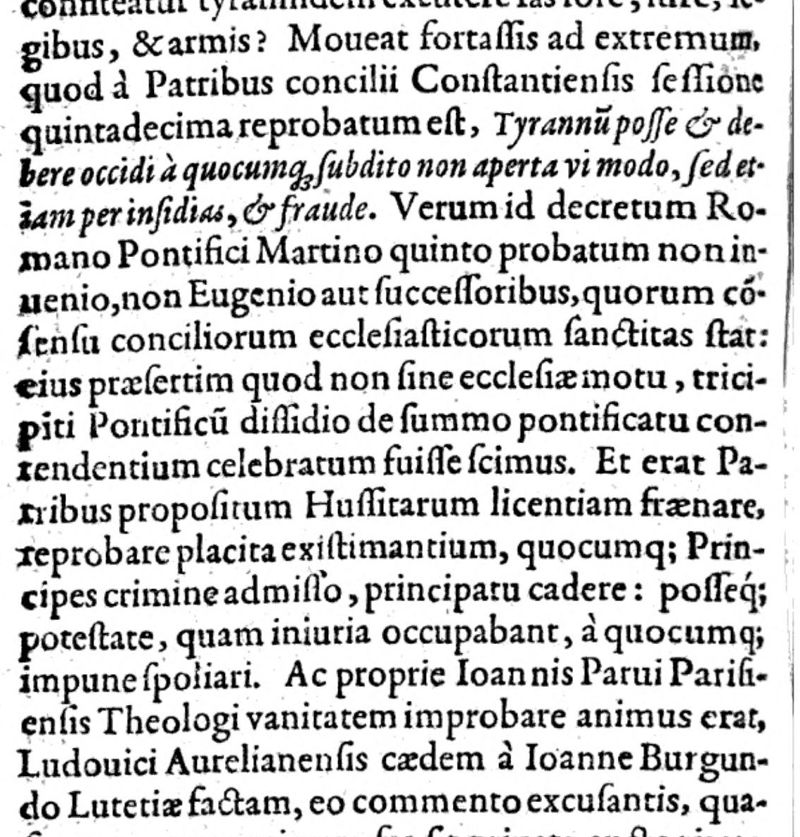
Some may be moved, finally, by the fact that the Fathers of the Council of Constance, in the fifteenth session, condemned the proposition that a tyrant may and ought to be killed by any subject whatever, not only by open force but also by ambush and fraud. But I do not find that this decree was approved by the Roman Pontiff Martin V, nor by Eugenius or his successors, on whose consent the authority of Church councils rests: above all as we know that this council was held amid commotion in the Church, while three pontiffs disputed the papacy. And the Fathers’ purpose was to curb the licence of the Hussites, and to condemn the opinions of those who held that princes who committed any crime whatever fell from their office, and could be stripped with impunity by anyone of the power they held unjustly. And in particular they meant to condemn the folly of Jean Petit, a Paris theologian, who excused the murder of Louis of Orléans, committed in Paris by John of Burgundy, with the pretext that it is lawful to put down a tyrant by private authority. …
Translation: this edition’s draft.
Original Latin
Moveat fortassis ad extremum, quod a Patribus concilii Constantiensis sessione quintadecima reprobatum est, Tyrannum posse et debere occidi a quocumque subdito non aperta vi modo, sed etiam per insidias, et fraude. Verum id decretum Romano Pontifici Martino quinto probatum non invenio, non Eugenio aut successoribus, quorum consensu conciliorum ecclesiasticorum sanctitas stat: eius praesertim quod non sine ecclesiae motu, tricipiti Pontificum dissidio de summo pontificatu contendentium celebratum fuisse scimus. Et erat Patribus propositum Hussitarum licentiam fraenare, reprobare placita existimantium, quocumque Principes crimine admisso, principatu cadere: posseque potestate, quam iniuria occupabant, a quocumque impune spoliari. Ac proprie Ioannis Parvi Parisiensis Theologi vanitatem improbare animus erat, Ludovici Aurelianensis caedem a Ioanne Burgundo Lutetiae factam, eo commento excusantis, quasi tyrannum opprimere fas sit privata auctoritate. …
Lecky (vol. II, ch. V, note 62): “Mariana rejects this decree without hesitation, on Ultramontane principles, as not having been confirmed by the Pope.” That is exactly Mariana’s argument; he adds two more (the council met during the schism, and its target was the Hussites and Jean Petit’s defence of a private murder).
Further down the rabbit hole
Sources that Lecky cites in the notes next to the ones that cite this page.
- Hallam, Literature of Europe and Constitutional HistoryHow Lecky quotes Hallam on persecution
- Suárez, Defensio fidei catholicae, Book VIMay the Pope release subjects from their oath to a king? The Jesuit reply to James I
- Van Bruyssel, Histoire du commerce et de la marine en BelgiqueThirty kingdoms trading with Flanders, and a friar who called murder ‘meritorious’
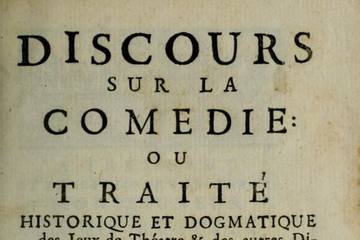
- Concina, Adversus usuram and De spectaculisA Dominican against interest and against the stage: the pope’s own polemicist
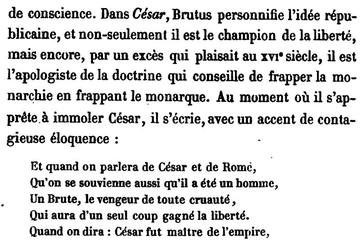
- Chasles, La Comédie en France au seizième siècleA Renaissance Brutus, reprinted when Henri IV was murdered
- Lebrun, Discours sur la comédieWhy actors were buried at night, without priest or prayer
Backlinks
Every place in Rationalism in Europe that links to this page (generated automatically when the site is built).