The “subtilité de l’aliénation du capital” (p. 168)
French: p. 168, scan. Highlighted: Lecky’s words.
However, the most rigid and most popular opinion gradually prevailed, and the greater number of theologians joined it, especially in the ages of ignorance that followed; but, while the cry of the people against lending at interest got it proscribed, the impossibility of abolishing it entirely led to the invention of the subtlety of the alienation of capital, and it is this system which, having become almost general among theologians, has become that of the jurists too, through the far too great influence that the principles of canon law have had on our jurisprudence and our legislation.
Original French
Cependant, l’opinion la plus rigide et la plus populaire prit peu à peu le dessus, et le plus grand nombre des théologiens s’y rangea, surtout dans les siècles d’ignorance qui suivirent ; mais, tandis que le cri du peuple contre le prêt à intérêt le faisait proscrire, l’impossibilité de l’abolir entièrement fit imaginer la subtilité de l’aliénation du capital, et c’est ce système qui, étant devenu presque général parmi les théologiens, est devenu aussi celui des jurisconsultes, par l’influence beaucoup trop grande qu’ont eue, sur notre jurisprudence et notre législation, les principes du droit canon.
| Lecky, 1865 (note 30) | Schelle edition, p. 168 | |
|---|---|---|
| “people” | le cri des peuples | le cri du peuple |
| Adoption | a été adopté aussi par les jurisconsultes, à raison de l’influence beaucoup trop grande qu’ont eue sur notre jurisprudence | est devenu aussi celui des jurisconsultes, par l’influence beaucoup trop grande qu’ont eue, sur notre jurisprudence |
| Rest | same | same |
The two real differences are in wording, not in sense. Because I have not seen the edition Lecky used, they may be genuine variants of that text; I cannot tell. The translation and the page are what a reader can check.
Editor’s notes on this page
Lecky quotes Turgot for the view that the theologians’ “subtlety” of alienating the capital (so that a loan became a sale of an income) was adopted by lawyers under the influence of canon law. The sentence is Turgot’s. Lecky’s version has two wording differences (“des peuples” for “du peuple”, and “a été adopté aussi par les jurisconsultes, à raison de” for “est devenu aussi celui des jurisconsultes, par”), plus punctuation and accents. They may come from an older edition of the text.
Further down the rabbit hole
Sources that Lecky cites in the notes next to the ones that cite this page.
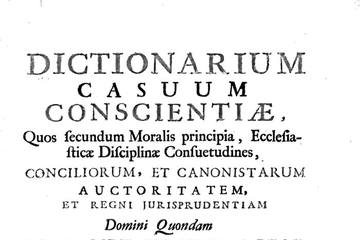
- Lamet and Fromageau, Dictionnaire des cas de conscienceThe Sorbonne answers: three per cent is usury, and every actor is in mortal sin
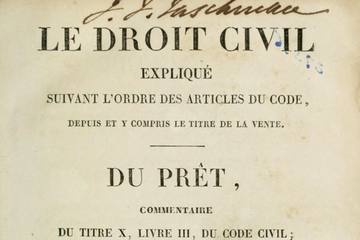
- Troplong, Du prêt: the history of lending at interest“The people cannot live without loans”: a French judge’s history of usury, Lecky’s source for Nicaea and St Louis
- Augustine, Enarratio in Psalmum XXXVI, sermo 3, § 6More than given, even in wheat or wine, is usury
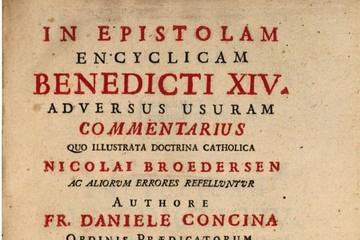
- Concina, Adversus usuram and De spectaculisA Dominican against interest and against the stage: the pope’s own polemicist
- Cibrario, Della economia politica del medio evoTurin, 1388: a heretic who held that the Devil made Adam and Eve, and that usury was no sin
- Bayle, Dictionnaire historique et critiqueWhat Bayle really said about Augustine and Socinus
Backlinks
Every place in Rationalism in Europe that links to this page (generated automatically when the site is built).
- Chapter VI: note 30