“Multo magis haeretici … iuste occidi” (q. 11 a. 3, corpus)
Latin: Summa theologiae II-II q. 11 a. 3, the body of the article (“whether heretics are to be tolerated”), Corpus Thomisticum. Highlighted: the words Lecky quotes.
… On their own side there is the sin by which they have deserved not only to be separated from the Church by excommunication, but also to be shut out from the world by death. For it is a much graver thing to corrupt the faith, through which the soul has life, than to forge money, through which temporal life is supported. Hence, if forgers of money or other malefactors are straightway justly put to death by secular princes, much more may heretics, as soon as they are convicted of heresy, be not only excommunicated but also justly killed. On the Church’s side, however, there is mercy, for the conversion of those who err. And therefore she does not condemn at once, but after a first and second admonition, as the Apostle teaches. After that, if he is still found obstinate, the Church, no longer hoping for his conversion, provides for the salvation of others by separating him from the Church by sentence of excommunication; and further she leaves him to the secular judgment, to be exterminated from the world by death.
Original Latin
… Ex parte quidem ipsorum est peccatum per quod meruerunt non solum ab Ecclesia per excommunicationem separari, sed etiam per mortem a mundo excludi. Multo enim gravius est corrumpere fidem, per quam est animae vita, quam falsare pecuniam, per quam temporali vitae subvenitur. Unde si falsarii pecuniae, vel alii malefactores, statim per saeculares principes iuste morti traduntur; multo magis haeretici, statim cum de haeresi convincuntur, possent non solum excommunicari, sed et iuste occidi. Ex parte autem Ecclesiae est misericordia, ad errantium conversionem. Et ideo non statim condemnat, sed post primam et secundam correctionem, ut apostolus docet. Postmodum vero, si adhuc pertinax inveniatur, Ecclesia, de eius conversione non sperans, aliorum saluti providet, eum ab Ecclesia separando per excommunicationis sententiam; et ulterius relinquit eum iudicio saeculari a mundo exterminandum per mortem.
| Lecky (ch. IV cont., note 1) | Corpus Thomisticum |
|---|---|
| falsarii pecunias | falsarii pecuniae |
| statim, ex quo de haeresi convincuntur | statim cum de haeresi convincuntur |
| possunt | possent |
Lecky quotes the sentence that justifies execution and stops before the Church’s “mercy”, the two admonitions and the handing over to the secular arm, which the article goes on to describe.
“Si non habeant iustum principatum sed usurpatum” (q. 104 a. 6 ad 3)
Latin: Summa theologiae II-II q. 104 a. 6, reply to the third objection (“whether Christians are bound to obey the secular powers”), Corpus Thomisticum. Highlighted: the words Lecky quotes.
To the third it must be said that man is bound to obey secular princes so far as the order of justice requires. And therefore if they have not a just rule but a usurped one, or if they command unjust things, their subjects are not bound to obey them, except perhaps accidentally, to avoid scandal or danger.
Original Latin
Ad tertium dicendum quod principibus saecularibus intantum homo obedire tenetur, inquantum ordo iustitiae requirit. Et ideo si non habeant iustum principatum sed usurpatum, vel si iniusta praecipiant, non tenentur eis subditi obedire, nisi forte per accidens, propter vitandum scandalum vel periculum.
Lecky’s quotation is the whole reply, word for word (he writes “in tantum … in quantum” as separate words).
Further down the rabbit hole
Sources that Lecky cites in the notes next to the ones that cite this page.
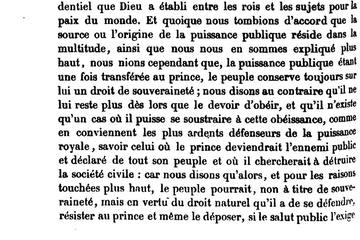
- Bianchi, Traité de la puissance ecclésiastiqueAn Ultramontane friar on when a people may depose its king, and the Scot who ‘sold his pen’ to James I
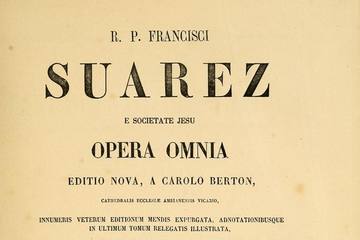
- Suárez, Defensio fidei catholicae, Book VIMay the Pope release subjects from their oath to a king? The Jesuit reply to James I
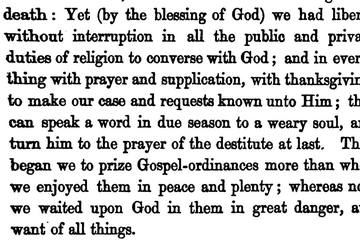
- Clogy, Memoir of Bishop BedellA Protestant bishop, held by Catholic rebels, keeps Gunpowder Day
- Bossuet, Defensio declarationis cleri gallicaniKings as fathers: “Abimelech” means “My father the king”
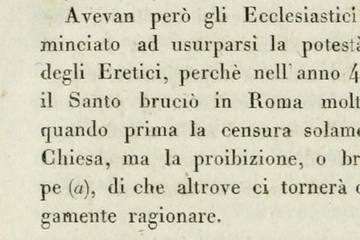
- Giannone, Istoria civile del regno di NapoliThe first pope to burn books on his own authority
- Hallam, View of the State of Europe during the Middle Ages, vol. 1Hallam quoted, with three small changes


Backlinks
Every place in Rationalism in Europe that links to this page (generated automatically when the site is built).