A usurper may be killed by anyone (Book I, § 24)
Latin: scan. Highlighted: Lecky’s quotation. Abbreviations expanded.
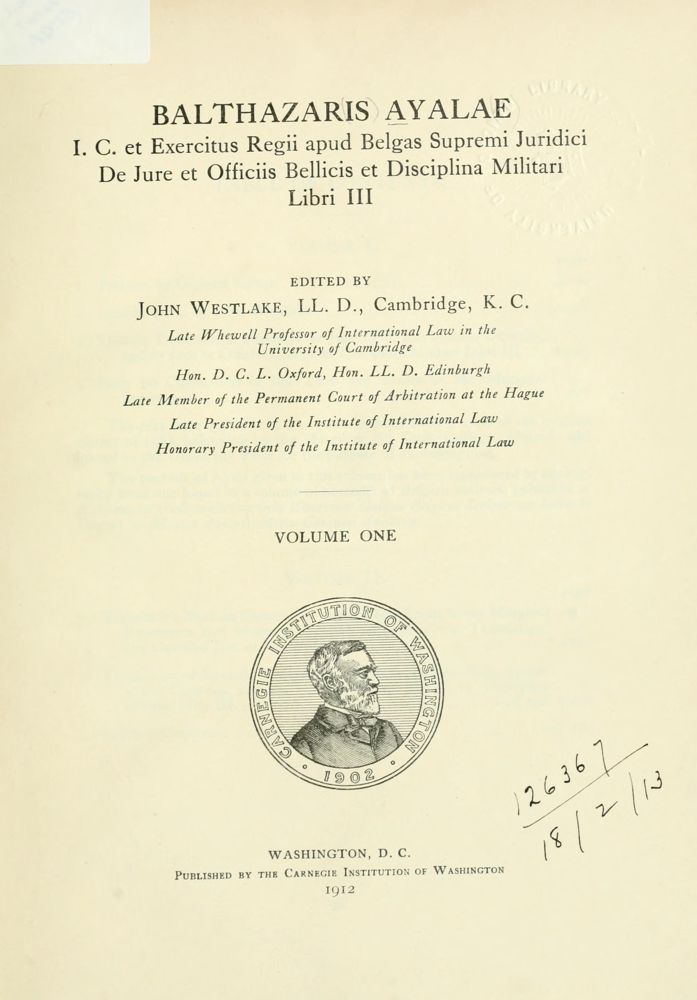
From these things it is certainly clear that, although it is lawful for anyone to kill a tyrant who has seized the principate by force and illegitimately, if the tyranny cannot otherwise be removed, and under the Valerian law the head of the man who had entered on plans of seizing the kingdom, with his goods, was forfeit: yet that one who is prince by right of succession or election, however unjustly and cruelly he acts, it is not lawful for a private man [to kill] …
Original Latin
Ex his certè liquet, quod quamvis tyrannum, qui per vim & illegitimè principatum occupavit, si tyrannis aliter tolli non possit, occidere cuilibet licitum sit: & per legem Valeriam, sacrum esset cum bonis caput ejus, qui consilia regni occupandi iniisset: illum tamen, qui jure successionis, electionisve princeps est, quamvis inique & crudeliter agat, privato non licere …
| Lecky, 1865 | Ayala, 1582 | |
|---|---|---|
| Latin | Tyrannum qui per vim et illegitime principatum occupavit, si tyrannis aliter tolli non possit, occidere cuilibet licitum sit. | tyrannum, qui per vim & illegitimè principatum occupavit, si tyrannis aliter tolli non possit, occidere cuilibet licitum sit |
Lecky’s sentence is verbatim, with the capital letter and full stop that he adds. In Ayala it is the subordinate clause after “quamvis”; the main clause (“illum tamen … privato non licere”) goes the other way for lawful princes, and the page ends in mid-sentence on “licere”. Lecky’s phrase “though utterly repudiating their doctrine concerning tyrants with a lawful title” is a fair summary of it. His wording “cordially embraced” is his own, since Ayala states the rule in one concessive clause.
Editor’s notes on this page
Lecky says Ayala “utterly repudiated” the Jesuits’ doctrine of tyrannicide for lawful rulers but “cordially embraced it in the case of usurpers”. The Latin he quotes in note 68 is exact. The sentence immediately after it, which Lecky does not quote, confirms his gloss: for a prince who rules by right of succession or election, even if he acts unjustly and cruelly, killing him is not lawful for a private man.
Further down the rabbit hole
Sources that Lecky cites in the notes next to the ones that cite this page.
- Molina, De justitia et jureWhat Lecky left out of Molina on killing tyrants
- De Thou, Histoire universelle, book 96A pope praises the murder of a king
- Sá, Aphorismi confessariorumLecky quotes Sá word for word on tyrants
- Lamennais, Affaires de RomeLacordaire’s memorial to the Pope: why the Church in France needed liberty, not privilege
- Toletus, Instructio sacerdotumA usurper may be killed, a lawful tyrant may not
- Suárez, Defensio fidei catholicae, Book VIMay the Pope release subjects from their oath to a king? The Jesuit reply to James I
Backlinks
Every place in Rationalism in Europe that links to this page (generated automatically when the site is built).
- Chapter V: note 68