Law 4: Divination Forbidden (357)
Latin: Leipzig, 1738, vol. III, p. 128 (scan). Spelling regularised: u/v and i/j normalised and capitals reduced; the editors’ footnote letters omitted. The edition’s heading reads “De divinandi curiositate omni prohibita, Constantii lex”; the law is addressed to the people of Rome. Highlighted: the words Lecky quotes.
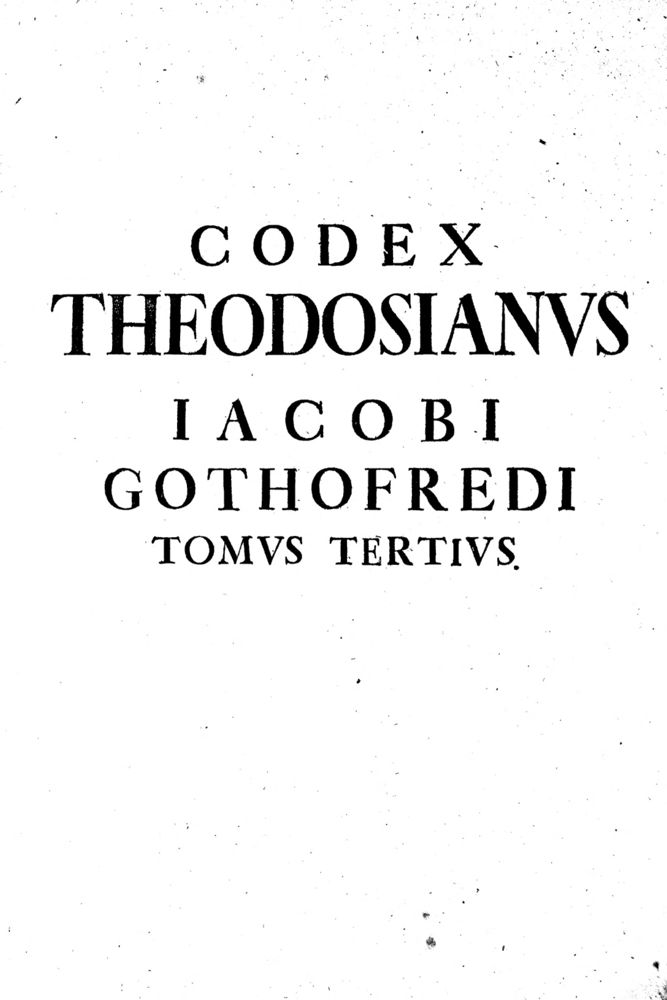
The Emperor Constantius Augustus, and Julian Caesar, to the people.
Let no one consult a haruspex, or an astrologer; let no one consult a soothsayer. Let the wicked utterance of augurs and seers fall silent. Let the Chaldeans and magi and the rest, whom the common people call “malefici” (evildoers) for the magnitude of their crimes, attempt nothing in this direction either. Let the curiosity to divine be silent for all, for ever; for whoever refuses obedience to these commands shall be laid low by the avenging sword and suffer the penalty of death. Given on the eighth day before the Kalends of February, at Milan, in the ninth consulship of Constantius Augustus and the second of Julian Caesar.
Original Latin
Imp. Constantius A. et Iulian. Caes. ad populum.
Nemo haruspicem consulat aut mathematicum, nemo hariolum. Augurum et vatum prava confessio conticescat. Chaldaei ac magi et ceteri, quos maleficos ob facinorum magnitudinem vulgus appellat, nec ad hanc partem aliquid moliantur. Sileat omnibus perpetuo divinandi curiositas: etenim supplicium capitis feret gladio ultore prostratus quicunque iussis obsequium denegaverit. Dat. VIII. Kalendas Febr. Mediol. Constantio A. IX. et Iuliano Caes. II. Coss.
Date, and the edition’s notes on the text
The 1738 edition prints the date as 357. By Roman reckoning the “eighth day before the Kalends of February” is 25 January; this conversion is this edition’s own, not the book’s. The edition’s apparatus notes two variants in this law: a manuscript it calls “G” reads “hariolum, aut augurem, aut vatem” for the sentence about augurs, and the editor notes that Tribonian’s version of the law (in the Justinian Code) reads “supplicio capitis feretur” where this text has supplicium capitis feret, though he judges the printed reading to be the lawful one. Lecky follows the printed reading.
Law 6: Torture for Diviners in the Emperor’s Retinue (358)
Latin: Leipzig, 1738, vol. III, pp. 133–134 (scan), conventions as above. The heading reads “De divinandi curiositate omni in comitatu suo et Iuliani C. prohibita Constantii lex” and the law is addressed to Taurus, praetorian prefect. Highlighted: the words Lecky quotes (the end of the law).
The same Augustus, to Taurus, praetorian prefect.
Although the persons of those endowed with honours are exempt from torture (except, that is, for the crimes the laws specify), and although all magi, in whatever part of the world they may be, are to be reckoned enemies of the human race, nevertheless, since those who are in our retinue all but strike at majesty itself: if any magus, or anyone accustomed to magical spells (whom common usage calls a maleficus), or a haruspex, or a soothsayer, or an augur, or an astrologer as well, or anyone who conceals some art of divination in the telling of dreams, or who practises anything like these, is caught in my retinue or the Caesar’s, let the protection of his rank not save him from racking and torment. If, though convicted, he persists in flatly denying his own crime against those who expose it, let him be handed over to the rack, and let him endure, with his sides furrowed by the claws, punishments worthy of his own crime. Given on the third day before the Nones of July, at Rimini, in the consulship of Datianus and Cerealis.
Original Latin
Idem A. ad Taurum P. P.
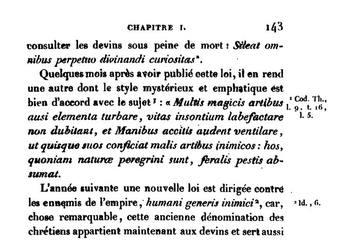
Etsi excepta tormentis sunt corpora honoribus praeditorum (praeter illa videlicet crimina, quae legibus demonstrantur), etsi omnes magi, in quacunque sint parte terrarum, humani generis inimici credendi sunt, tamen quoniam qui in comitatu nostro sunt, ipsam pulsent propemodum maiestatem, si quis magus, vel magicis contaminibus adsuetus (qui maleficus vulgi consuetudine nuncupatur), aut haruspex, aut hariolus, aut certe augur, vel et mathematicus, aut narrandis somniis occultans artem aliquam divinandi, aut certe aliquid horum simile exercens, in comitatu meo, vel Caesaris, fuerit deprehensus, praesidio dignitatis cruciatus et tormenta non fugiat. Si convictus ad proprium facinus detegentibus repugnaverit pernegando, sit eculeo deditus, ungulisque sulcantibus latera perferat poenas proprio dignas facinore. Dat. III. Non. Iul. Arimini, Daciano et Cereale Coss.
The rack and the claws; the date
The eculeus (literally “little horse”) was a rack on which the victim was stretched; the ungulae were iron claws used to tear the flesh of the sides. Gothofredus and Ritter print notes on both on p. 134, immediately after the law; these are the “Commentary on the law” to which Lecky’s note directs the reader, along with Beugnot. The edition dates the law 358; “the third day before the Nones of July” is 5 July by Roman reckoning, this edition’s own conversion. A note in the edition records that Tribonian’s version of the law (in the Justinian Code) reads si vero convictus fuerit (“but if he is convicted”) here; the editor prefers nam si convictus or igitur si convictus. Lecky’s text, like the one printed here, has si convictus.
Lecky’s Quotation Compared
Lecky quotes both laws in note 28 of Chapter I (p. 32 of the book), citing “Cod. Th. lib. ix. t. xvi. l. 4, 5, 6”. Set against the 1738 text, the Latin is word for word the same. The differences are all in punctuation, and likely come from the printer rather than from Lecky:
| Lecky, 1865 | Leipzig, 1738 | |
|---|---|---|
| Law 4, first sentence | Nemo haruspicem consulat, aut mathematicum, nemo hariolum. | Nemo haruspicem consulat aut mathematicum, nemo hariolum. |
| Law 4, “Chaldaei” | Chaldæi ac magi et ceteri quos maleficos … | Chaldaei ac magi et ceteri, quos maleficos … |
| Law 4, last sentence | etenim supplicium, capitis feret gladio ultore prostratus … | etenim supplicium capitis feret gladio ultore prostratus … |
| Law 6 | Si convictus ad proprium facinus detegentibus repugnaverit pernegando sit eculeo deditus, ungulisque sulcantibus latera perferat poenas proprio dignas facinore. | Si convictus ad proprium facinus detegentibus repugnaverit pernegando, sit eculeo deditus, ungulisque sulcantibus latera perferat poenas proprio dignas facinore. |
| Scan | vol. I, p. 32 | p. 128, pp. 133–134 |
Lecky cites laws 4, 5, and 6 together but quotes only 4 and 6; law 5, which sits between them in the 1738 edition, is not quoted.
Laws 1 and 2: Constantine Against Haruspices (319)
Latin: Leipzig, 1738, vol. III, p. 123 (scan). Conventions as for law 4 (the editors’ footnote letters omitted, spelling regularised). The heading for the pair reads “In Haruspices Romae Constantini M. duae leges”. The dates as printed are Kalends of February (law 1) and Ides of May (law 2), both in the consulship of Constantine and Licinius, which the edition glosses as 319. Highlighted: what Lecky’s note 26 and the text above it report.
1. The Emperor Constantine Augustus, to Maximus.
Let no haruspex approach another man’s threshold, nor for any other reason either; but the friendship of such men, however long-standing, is to be rejected: that haruspex who shall have approached another’s house is to be burnt up, and the man who has summoned him by persuasions or rewards is, after the seizure of his goods, to be thrust away to an island: for those who wish to serve their own superstition will be able to practise their own rite in public. But we judge that the accuser of this crime is not an informer, but rather deserves a reward. Posted on the Kalends of February, at Rome, in the fifth consulship of Constantine Augustus and (the consulship of) Licinius Caesar.
2. The same Augustus, to the people.
We forbid haruspices and priests, and those who are accustomed to serve this rite, to approach a private house, or to cross another’s threshold under pretext of friendship, a penalty being set against them if they shall despise the law: but you who think this to be in your interest, go to the public altars and shrines, and celebrate the solemnities of your custom: for we do not forbid the offices of former usage to be performed in the open light. Given on the Ides of May, in the fifth consulship of Constantine Augustus and (the consulship of) Licinius.
Original Latin
I. Imp. Constantinus A. ad Maximum.
Nullus aruspex limen alterius accedat, nec ob alteram causam; sed huiusmodi hominum, quamvis vetus, amicitia repellatur: concremando illo haruspice, qui ad domum alienam accesserit: et illo, qui eum suasionibus vel praemiis evocaverit, post ademptionem bonorum, in insulam detrudendo: superstitioni enim suae servire cupientes, poterunt publice ritum proprium exercere. Accusatorem autem huius criminis non delatorem esse, sed dignum magis praemio arbitramur. PP. Kal. Feb. Romae, Constantino A. V. et Licinio Caes. Coss.
II. Idem A. ad populum.
Haruspices, et sacerdotes, et eos qui huic ritui adsolent ministrare, ad privatam domum prohibemus accedere, vel sub praetextu amicitiae limen alterius ingredi, poena contra eos proposita, si contempserint legem: qui vero id vobis extimatis conducere, adite aras publicas atque delubra, et consuetudinis vestrae celebrate sollemnia: nec enim prohibemus praeteritae usurpationis officia libera luce tractari. Dat. Id. Maji. Constantino A. V. et Licinio Coss.
Lecky quotes the last sentence of law 2 in Chapter IV (continued), note 15, beginning “Addite aras publicas”, “add public altars”: the print has “adite”, “go to”, which is what the sense requires. His “sollemnia” is spelled “solemnia” and “praeteritae” “preteritæ”; otherwise the words are the same.
Doubtful points
“PP.” after law 1’s date is as printed; I have not looked up what the editors take it to mean. The translation “burnt up” renders concremando, which the Latin does not qualify with “alive”. The year 319 is the edition’s, not mine; its own note on the date (note (m)) discusses an uncertainty about the prefect’s term of office, which I have not followed up. The Justinian Code’s version of law 1, which the edition reports at length, adds “nullus sacerdos, nullus eorum, qui huic ritui adsolent ministrare” (“no priest, none of those who are accustomed to serve this rite”) to the opening; that is not in this text.
Law 3: Remedies and Hail Excepted (321)
Latin: Leipzig, 1738, vol. III, p. 125 (scan). Conventions as above. The edition’s heading is “De incantamentis, quatenus ea prohibita sint vel permissa, Constantini M. lex”. The law is addressed “ad Bassum P. V.” (praefectum urbi, presumably). The “Interpretatio” printed after it is a short late summary, included here because it is part of the page. Highlighted: what Lecky’s note 27 reports.
3. The same Augustus and Caesar, to Bassus, Prefect of the City.
Their science is to be punished, and, as it most deservedly should be, avenged by the severest laws, who, girt about with magical arts, are found either to have plotted against the safety of men or to have turned chaste minds to lust: but no accusations are to implicate remedies sought for human bodies, or, in rural places, aids innocently applied so that ripe vintages should not fear the rains, or be beaten down by the stoning of falling hail, aids by which no one’s safety or reputation is injured, but whose operations are of profit, lest the gifts of heaven and the labours of men be laid low. Given on the tenth day before the Kalends of July, at Aquileia, Crispus and Constantius Caesars being consuls.
Interpretation. Sorcerers, or enchanters, or senders of storms, or those who by invocation of demons disturb men’s minds, are to be punished with every kind of penalty.
Original Latin
III. Idem A. et Caes. ad Bassum P. V.
Eorum est scientia punienda, et severissimo merito legibus vindicanda, qui magicis adcincti artibus, aut contra hominum moliti salutem, aut pudicos ad libidinem defixisse animos detegentur: nullis vero criminationibus implicanda sunt remedia humanis quaesita corporibus, aut in agrestibus locis, ne maturis vindemiis metuerentur imbres, aut ruentis grandinis lapidatione quaterentur, innocenter adhibita suffragia, quibus non cuiusque salus aut existimatio laederetur, sed quorum proficerent actus, ne divina munera et labores hominum sternerentur. Dat. X Kalend. Iul. Aquileia, Crispo et Constantio Caess. Coss.
Interpretatio. Malefici, vel incantatores, vel immissores tempestatum, vel hii qui per invocationem daemonum mentes hominum turbant, omni genere poenae puniantur.
Doubtful points
The year 321 is the edition’s. The edition’s apparatus gives a variant “deflexisse” (for “defixisse”) in the Justinian Code and in two manuscripts; the printed reading is used here. Ruentis grandinis lapidatione I take as “the stoning (pelting) of falling hail”. Imbres is “rains”, “showers”.
Law 7: Night Sacrifices Forbidden (364)
Latin: Leipzig, 1738, vol. III, p. 136 (scan). Conventions as above. The edition’s heading is “Adversus nocturna sacrificia ritusque gentilitios Valentiniani Sen. lex”. Highlighted: what Lecky’s note 32 reports.
7. The Emperors Valentinian and Valens Augusti, to Secundus, Praetorian Prefect.
Let no one henceforth attempt to celebrate at night either wicked prayers, or magical apparatus, or deadly sacrifices; we decree, by perpetual authority, that whoever is detected and convicted is to be put to death with fitting punishment. Given on the fifth day before the Ides of September, in the consulship of the deified Jovian Augustus and Varronianus.
Interpretation. Whoever shall celebrate nocturnal sacrifices of demons, or invoke demons by incantations, is to be punished with death.
Original Latin
VII. Impp. Valentinianus et Valens AA. ad Secundum PP.
Ne quis deinceps nocturnis temporibus, aut nefarias preces, aut magicos apparatus, aut sacrificia funesta celebrare conetur; detectum atque convictum competenti animadversione mactare perenni auctoritate censemus. Dat. V. Id. Septemb. Divo Joviano A. et Varroniano Coss.
Interpretatio. Quicunque nocturna sacrificia daemonum celebraverit vel incantationibus daemones invocaverit, capite puniatur.
Doubtful points
The year 364 is the edition’s. Mactare (“to put to death”, literally “to slaughter”) is the printed reading; the edition notes that other manuscripts read mactari or another phrase for the whole clause, which I have not followed. “Funesta” can mean deadly, mournful or funereal.
Lecky’s Notes 26, 27 and 32 Compared
| Lecky (ch. I) | The Code | Comment |
|---|---|---|
| Text: “Constantine enacted an extremely severe law against secret magic. He decreed that any aruspex who entered into the house of a citizen, for the purpose of celebrating his rites, should be burnt alive; the property of his employers confiscated, and the accuser rewarded.” Note 26: “Cod. Th. lib. ix. tit. xvi. c. 1, 2.” | Law 1: the haruspex who approaches another’s house is “burnt up” (concremando); his summoner loses his goods and is banished to an island; the accuser is “not an informer” but deserves a reward. Law 2: haruspices barred from private houses, but public rites at the altars are left alone. | Substance right. Differences: “alive” is not in the Latin; the employer is also exiled, not only dispossessed; and the law forbids the haruspex to approach a house “nor for any other reason” (Lecky’s “for the purpose of celebrating his rites” is his gloss). Law 2, which Lecky also cites, is the one that confines the rites to public view, which is what his “secret magic” description rests on. Zosimus and Eusebius, also cited in note 26, are not checked. |
| Text: “a proclamation was issued, which considerably attenuated the force of this enactment, for it declared that it was not the intention of the Emperor to prohibit magical rites, which were designed to discover remedies for diseases, or to protect the harvests from hail, snow, or tempests.” Note 27: “Cod. Th. lib. ix. t. xvi. l. 3.” | Law 3 (321, two years after law 1): sorcery used to harm men or corrupt chastity is to be punished with the severest laws; “remedies sought for human bodies” and aids “in rural places” against the rains and falling hail, innocently applied, are not to be made grounds for accusation. | Substance right, and “two years later” fits the dates. But the law speaks of “remedies for human bodies” and protection from rains and hail; “snow” and “tempests” are not in it (the later Interpretatio does speak of senders of storms, as criminals). The law does not call the practices “magical rites”, and it first reaffirms the severest punishment for harmful magic, which Lecky leaves out. It is a law addressed to an official (“P. V.”, presumably the prefect of the city), not a “proclamation”. |
| Text: “Valentinian renewed the persecution, and made another law against ‘impious prayers and midnight sacrifices,’ which were still offered.” Note 32: “Cod. Th. lib. ix. t. xvi. l. 7, &c.” | Law 7 (364): “nefarias preces … magicos apparatus … sacrificia funesta” at night forbidden, on pain of death. | Fair paraphrase, though Lecky’s quotation marks round English words suggest a quotation. The law adds “magical apparatus” and a death penalty, and is issued by Valentinian and Valens together. “&c.” in the note presumably includes the later laws, which are not covered here. |
Law 5, which Lecky’s notes name only as part of a run (note 28 cites “l. 4, 5, 6”), is not transcribed here.
Editor’s notes on this page
In 357 and 358 the emperor Constantius II issued a series of laws against divination. Lecky treats them as the point where the Christian empire began to turn the old Roman laws against magic against paganism itself, and quotes two of them in Latin: law 4, a general ban on consulting diviners on pain of death, and law 6, which allows torture of anyone caught practising divination in the imperial retinue.
Lecky’s Latin agrees with the 1738 text in every word. The only differences are in punctuation. See the comparison below.
Further down the rabbit hole
Sources that Lecky cites in the notes next to the ones that cite this page.
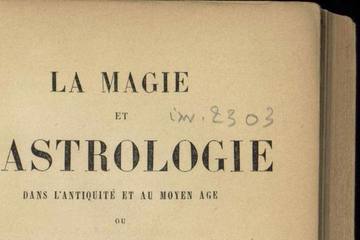
- Maury, La magie et l’astrologieRoman laws against diviners, the first medieval doubters, and the praying heretics
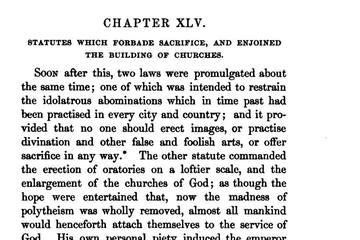
- Eusebius, Life of ConstantineThe emperor’s biographer on the ban on sacrifice: with a translator’s footnote that limits it
- Beugnot, Histoire de la destruction du paganisme en OccidentConstantius and the ‘enemies of the human race’
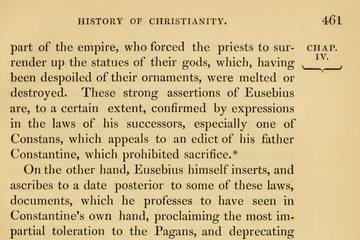
- Milman, The History of ChristianityDid Constantine ban the pagan sacrifices? A dean weighs Eusebius against Constantine
- Palmer, A Treatise on the Church of Christ“Whosoever is separated from the Catholic Church … will not have life”
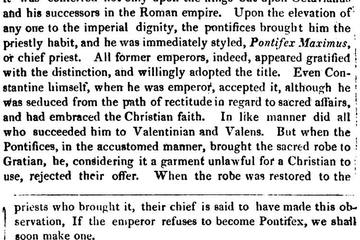
- Zosimus, New History, Book IVThe emperor who refused to be high priest, and the pagan pun that followed

Backlinks
Every place in Rationalism in Europe that links to this page (generated automatically when the site is built).