The Council of Westminster, 1102 (vol. i, p. 10)
English: vol. i p. 10, scan. Eden’s footnote for the quoted law is Eadmer, iii. 68 (as I read it).
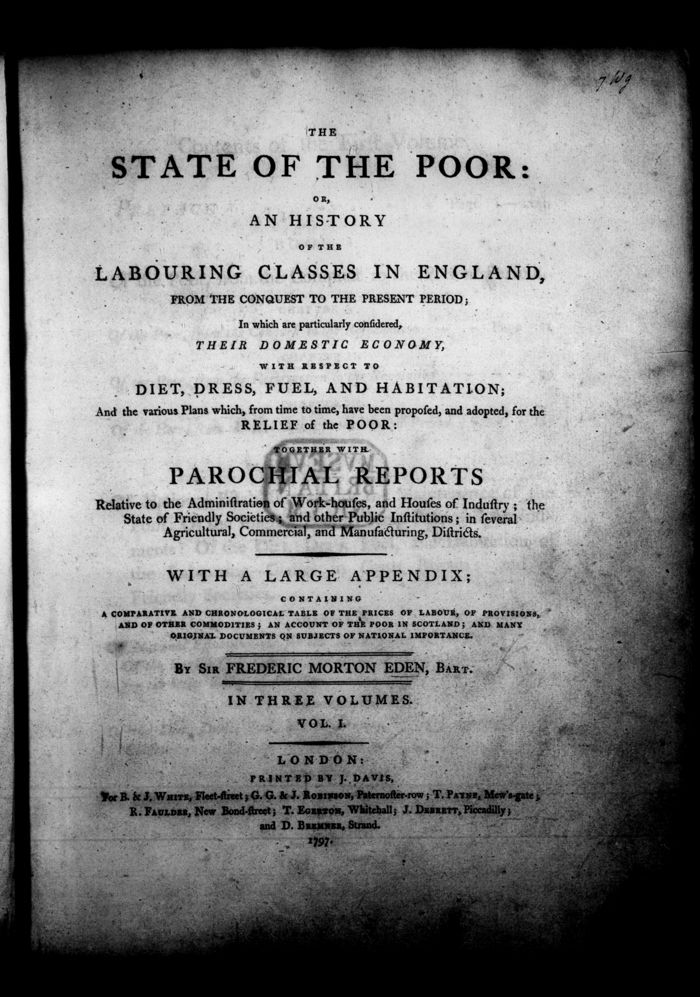
In the eleventh century, a bull was issued at Rome, for the emancipation of slaves; and, in England, a law was made in a great council held at Westminster in the year 1102, which, at the same time that it evinces an improvement in civilization, clearly proves that the sale of slaves was a very common traffic. The words of the law are: “let no man, for the future, presume to carry on the wicked trade of selling men in market, like brute beasts, which hitherto hath been the common custom of England.”
Lecky: “In 1102 a Council of Westminster found it necessary to prohibit the sale of slaves in England (Eden … vol. i. p. 10)”. Accurate.
English slaves exported to Ireland (vol. i, p. 7)
English: vol. i p. 7, scan. The footnote reads “Giraldus Cambrensis Hibern. Expugn. 770.”
They were principally employed in menial services about the house, and were so numerous as to form a considerable branch of English commerce. An author, who lived in the reign of Henry the Second, informs us, that such a number of them was exported to Ireland, that the market there was absolutely glutted; and another declares, that from the reign of King William the First to that of King John, there was scarcely a cottage in Scotland that did not possess an English slave.
Lecky’s “the English were accustomed to sell slaves to the Irish” is a fair summary; his further sentence that Giraldus says the Irish bishops enjoined emancipation at Strongbow’s invasion is not on this page (Eden’s footnote gives only the page of Giraldus’s Expugnatio Hibernica).
Becket labouring in the fields (vol. i, p. 50)
English: vol. i p. 50, scan.
… The clergy, we are informed by the canons of the council of Lateran, held in 1179, assisted in the cultivation of their lands. The Archbishop of Canterbury, Becket, when he visited a monastery in harvest, did not disdain to labour in the fields. The trades, necessary for agriculture, seem likewise to have been practised by the monks. …
Lecky (note 11): “it is related of no less a person than Becket that he was in the habit of labouring during harvest time in the fields with the monks at the monasteries which he visited.” Eden’s sentence is the basis, but “in the habit of”, “with the monks” and “monasteries” (plural) are Lecky’s additions; Eden gives no source on the page for the Becket story.
Editor’s notes on this page
The 1102 law, the export of English slaves to Ireland and Becket’s labour are all on the pages Lecky cites or near them. Two points of difference: Eden gives the Becket story in one sentence (“when he visited a monastery in harvest, did not disdain to labour in the fields”), while Lecky’s note says Becket “was in the habit of labouring during harvest time in the fields with the monks at the monasteries which he visited”; and the sale of English slaves to Ireland, which Lecky does not footnote separately, is on p. 7, not on p. 10, the page he cites for the 1102 law. Lecky’s statement about the Irish bishops’ emancipation of English slaves on Strongbow’s invasion is not on these pages.
Further down the rabbit hole
Sources that Lecky cites in the notes next to the ones that cite this page.
- Hallam, View of the State of Europe during the Middle Ages, vol. 1Hallam quoted, with three small changes
- Champagny, La Charité chrétienne“Senators labouring in the cells, artisans at rest!”: the early Church in defence of work
- M’Culloch, Principles of Political Economy and the Wealth of NationsFoundlings, Calvin on interest, and Scotland’s last serfs, in a Victorian economist’s footnotes
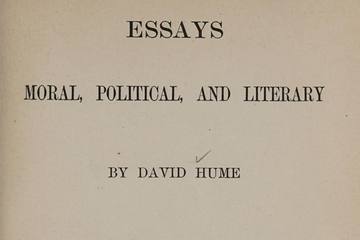
- Hume, Of the Populousness of Ancient NationsHow exposing children might have raised population
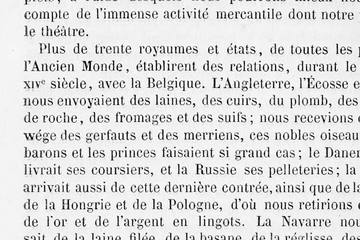
- Van Bruyssel, Histoire du commerce et de la marine en BelgiqueThirty kingdoms trading with Flanders, and a friar who called murder ‘meritorious’
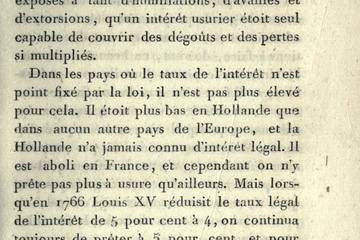
- Storch, Cours d’économie politiqueA tutor to the Russian grand dukes on usury laws that backfire
Backlinks
Every place in Rationalism in Europe that links to this page (generated automatically when the site is built).