“The barbarous practice of the ancients might rather render those times more populous”
English: p. 396, scan. Highlighted: the argument Lecky summarises.
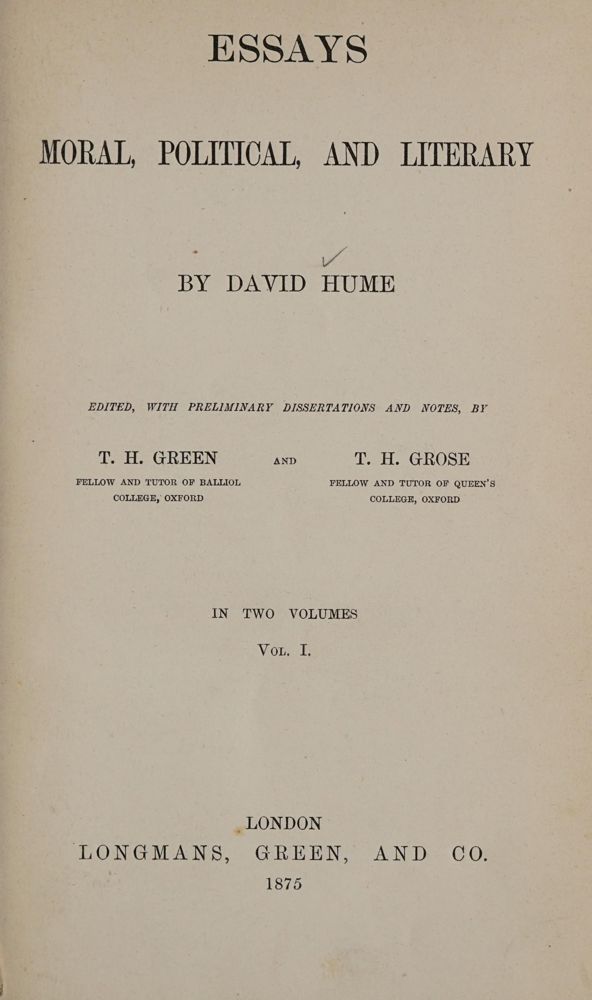
… The common reason why any parent thrusts his daughters into nunneries is, that he may not be overburthened with too numerous a family; but the ancients had a method almost as innocent, and more effectual to that purpose, to wit, exposing their children in early infancy. This practice was very common; and is not spoken of by any author of those times with the horror it deserves, or scarcely even with disapprobation. … Shall we then allow these two circumstances to compensate each other, to wit, monastic vows, and the exposing of children, and to be unfavourable, in equal degrees, to the propagation of mankind? I doubt the advantage is here on the side of antiquity. Perhaps, by an odd connexion of causes, the barbarous practice of the ancients might rather render those times more populous. By removing the terrors of too numerous a family it would engage many people in marriage; and such is the force of natural affection, that very few, in comparison, would have resolution enough, when it came to the push, to carry into execution their former intentions.
Lecky (ch. VI, note 13): “… the ancient permission of infanticide had on the whole a tendency to multiply rather than to diminish population, for, by removing the fear of a numerous family, it induced the poor to marry recklessly; while, once the children were born, natural affection would struggle to the last to sustain them.” Hume says nothing of the poor or of recklessness; “recklessly” is Lecky’s (or Malthus’s) gloss.
Editor’s notes on this page
Lecky’s summary is accurate: Hume asks whether monastic vows and the exposure of children are equally unfavourable to population, doubts that antiquity loses, and suggests that “by removing the terrors of too numerous a family it would engage many people in marriage”, while natural affection would prevent most parents from carrying their intentions out. Hume’s phrases are close to Lecky’s “removing the fear of a numerous family” and “natural affection would struggle to the last”; Lecky’s “once the children were born” is his own gloss of “when it came to the push”.
Further down the rabbit hole
Sources that Lecky cites in the notes next to the ones that cite this page.
- Champagny, La Charité chrétienne“Senators labouring in the cells, artisans at rest!”: the early Church in defence of work
- Eden, The State of the PoorBecket’s harvest labour, the 1102 law and Irish slaves
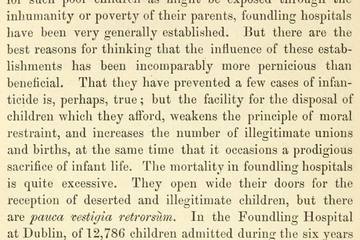
- M’Culloch, Principles of Political Economy and the Wealth of NationsFoundlings, Calvin on interest, and Scotland’s last serfs, in a Victorian economist’s footnotes
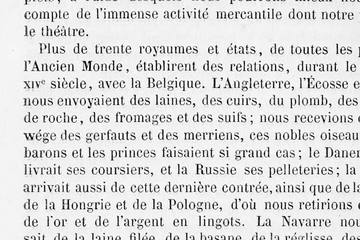
- Van Bruyssel, Histoire du commerce et de la marine en BelgiqueThirty kingdoms trading with Flanders, and a friar who called murder ‘meritorious’
- Augustine, Enarratio in Psalmum XXXVI, sermo 3, § 6More than given, even in wheat or wine, is usury
- Bayle, Dictionnaire historique et critiqueWhat Bayle really said about Augustine and Socinus
Backlinks
Every place in Rationalism in Europe that links to this page (generated automatically when the site is built).
- Chapter VI: note 13