“A man who had served seven years as a door-keeper” (section X, part II)
English: Enquiry concerning Human Understanding, section X, part II, from the Gutenberg text.
There is also a memorable story related by Cardinal de Retz, which may well deserve our consideration. When that intriguing politician fled into Spain, to avoid the persecution of his enemies, he passed through Saragossa, the capital of Arragon, where he was shewn, in the cathedral, a man, who had served seven years as a door-keeper, and was well known to every body in town, that had ever paid his devotions at that church. He had been seen, for so long a time, wanting a leg; but recovered that limb by the rubbing of holy oil upon the stump; and the cardinal assures us that he saw him with two legs. This miracle was vouched by all the canons of the church; and the whole company in town were appealed to for a confirmation of the fact; whom the cardinal found, by their zealous devotion, to be thorough believers of the miracle. Here the relater was also cotemporary to the supposed prodigy, of an incredulous and libertine character, as well as of great genius; the miracle of so singular a nature as could scarcely admit of a counterfeit, and the witnesses very numerous, and all of them, in a manner, spectators of the fact, to which they gave their testimony. And what adds mightily to the force of the evidence, and may double our surprise on this occasion, is, that the cardinal himself, who relates the story, seems not to give any credit to it, and consequently cannot be suspected of any concurrence in the holy fraud. He considered justly, that it was not requisite, in order to reject a fact of this nature, to be able accurately to disprove the testimony, and to trace its falsehood, through all the circumstances of knavery and credulity which produced it. … He therefore concluded, like a just reasoner, that such an evidence carried falsehood upon the very face of it, and that a miracle, supported by any human testimony, was more properly a subject of derision than of argument.
Lecky’s note describes a picture in the cathedral of angels fitting on a ready-made leg, and adds that “the more approved story is that the leg gradually grew”; in Hume’s version, from de Retz, the leg returned “by the rubbing of holy oil upon the stump”.
Further down the rabbit hole
Sources that Lecky cites in the notes next to the ones that cite this page.
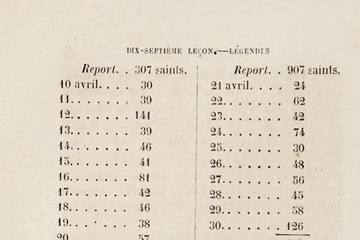
- Guizot, Histoire de la civilisation en FranceHow many saints’ lives are there? Guizot counted April
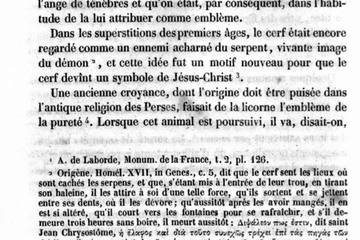
- Maury, Essai sur les légendes pieuses du moyen âgeThe stag that sucks serpents out of their holes, and the angel who carried the star of Bethlehem
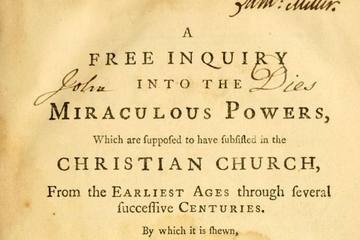
- Middleton, A Free Inquiry into the Miraculous PowersMiddleton’s exorcists and what Lecky altered in quoting him
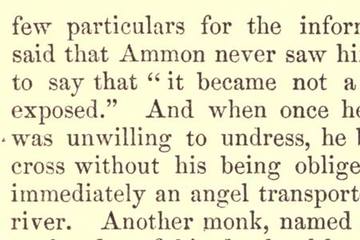
- Socrates, Ecclesiastical HistoryThe monk who would not undress to cross a river, and the eighty priests burnt at sea
- Sprat, History of the Royal Society of LondonLecky adds ‘a’ to Sprat on miracles
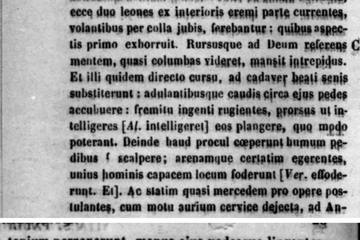
- Jerome, Life of Paul the First HermitA raven’s loaf, doubled for a guest, and two lions at the graveside

Backlinks
Every place in Rationalism in Europe that links to this page (generated automatically when the site is built).
- Chapter II: note 4