“The dark and ignorant Ages, wherein to work Miracles”
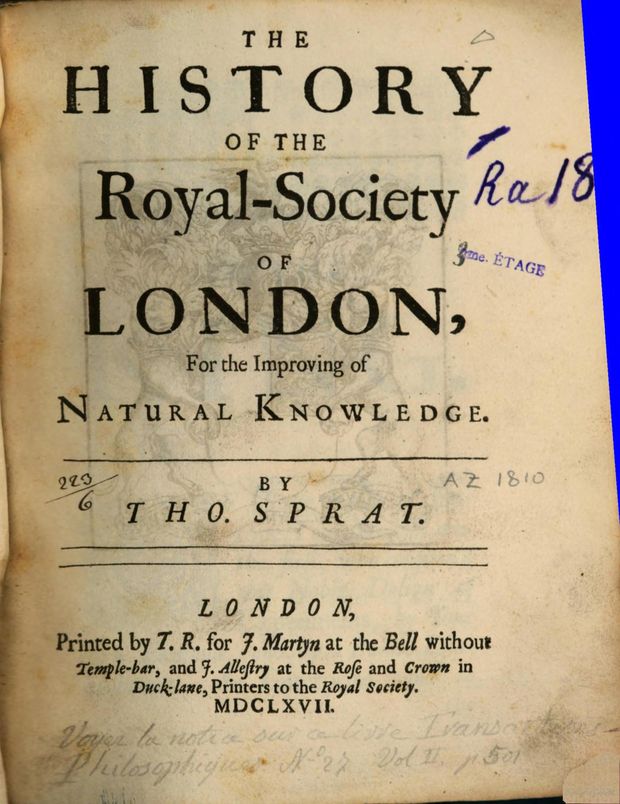
English: p. 350, scan. The long s is printed as s. Highlighted: Lecky’s quotation.
… if any devout man shall reject all Natural Philosophy, he may blot Genesis, and Job, and the Psalms, and some other Books, out of the Canon of the Bible. God never yet left himself without witness in the World: And it is observable, that he has commonly chosen the dark and ignorant Ages, wherein to work Miracles; but seldom or never the times when Natural Knowledge prevail’d: For he knew there was not so much need to make use of extraordinary signs, when men were diligent in the works of his hands, and attentive on the impressions of his footsteps in his Creatures.
It is almost a proverbial speech, That the most Learned Ages are still the most Atheistical, and the ignorant most devout. …
| Lecky (ch. II, note 6) | Sprat, 1667, p. 350 |
|---|---|
| left Himself without a witness in the world | left himself without witness in the World |
| the dark and ignorant ages | the dark and ignorant Ages |
| when natural knowledge prevailed | when Natural Knowledge prevail’d |
| extraordinary signs when men were diligent in the works of His hands and attentive to the impressions of His footsteps in His creatures | extraordinary signs, when men were diligent in the works of his hands, and attentive on the impressions of his footsteps in his Creatures |
Besides the inserted “a” and “to” for “on”, the differences are capitalisation and punctuation.
Editor’s notes on this page
Lecky’s quotation is accurate to the word except for one inserted “a” (“without a witness”, where Sprat has “without witness”) and modern spelling and punctuation. Lecky calls the observation “extremely ingenious”; in Sprat’s page it comes in the course of a defence of natural philosophy against devout men who would reject it: he adds that it is “almost a proverbial speech” that the most learned ages are the most atheistical and the ignorant the most devout, and says the true piety is “little beholden” to whoever devised that distinction.
Further down the rabbit hole
Sources that Lecky cites in the notes next to the ones that cite this page.
- Guizot, Histoire de la civilisation en FranceHow many saints’ lives are there? Guizot counted April
- Muzzarelli, Dell’InquisizioneWhen God stopped striking heretics dead, the Inquisition had to do it
- Middleton, A Free Inquiry into the Miraculous PowersMiddleton’s exorcists and what Lecky altered in quoting him
- Brewster, Memoirs of the Life, Writings, and Discoveries of Sir Isaac NewtonLecky’s Newton quote and the missing last sentence
- Hume, Of MiraclesThe doorkeeper of Saragossa who grew a new leg
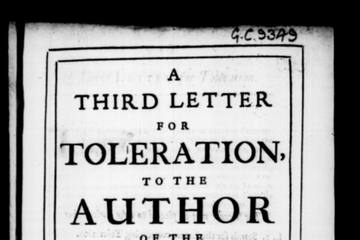
- Locke, A Third Letter for TolerationLecky quotes Locke correctly on miracles after Constantine
Backlinks
Every place in Rationalism in Europe that links to this page (generated automatically when the site is built).
- Chapter II: note 6