“Miracles of good credit continued in the Church for about two or three hundred years”
English: 1860 ed., vol. 2, p. 252, scan, with Newton’s next letter on p. 253, scan.
It is obvious from these facts, that Locke and Newton had corresponded on the prophecies of Daniel so early as 1691, and that these subjects were discussed by them when they met. In replying to some questions of Locke on the subject of miracles, Newton tells him2 that “miracles of good credit continued in the Church for about two or three hundred years. Gregorius Thaumaturgus had his name from them, and was one of the latest who was eminent for that gift, but of their number and frequency I am not able to give you a just account;” and he resumes the subject in the following interesting letter:— …
² Cambridge, Feb. 16, 1691–2.
“Cambridge, May 3, 1692. … I am glad the edition is stopped, but do not perceive that you had mine, and therefore have sent you a transcript of what concerned miracles, if it come not now too late … Concerning miracles, there is a notable passage or two in Irenaeus, L. 22, c. 56, recited by Eusebius, l. 5, c. 17. … Concerning Gregory Thaumaturgus, see Gregory Nystra in ejus vita, and Basil, de Spiritu Sancto, c. 29. …”
Lecky’s sentence adds “The history of those ages is very imperfect”, which I did not find here. Lecky introduces Newton’s words with “He appears to have consulted Sir Isaac Newton; for, in one of Newton’s letters, we find a somewhat hesitating passage upon the subject”; Brewster’s text says that Newton was answering “some questions of Locke on the subject of miracles”, which supports it. Lecky says Locke wrote the passage in his Third Letter on Toleration in reply to the Oxford argument (note 9); that work is not on the site.
Editor’s notes on this page
Lecky quotes Newton as writing: “Miracles of good credit continued in the Church for about two or three hundred years. Gregorius Thaumaturgus had his name from thence, and was one of the latest who was eminent for that gift; but of their number and frequency I am not able to give you a just account. The history of those ages is very imperfect.” In Brewster, the first part is there, nearly word for word (“had his name from them”, not “from thence”), as Brewster’s quotation from Newton’s letter of 16 February 1691–2. The final sentence is not in Brewster’s quotation, which ends “… a just account”, nor in Newton’s next letter, 3 May 1692 (pp. 252–253), which sends Locke a transcript on miracles and cites Irenaeus, Eusebius, Tertullian and Gregory of Nyssa. Lecky may be quoting the full letter from King’s Life of Locke or the 1855 edition; I could not check.
Further down the rabbit hole
Sources that Lecky cites in the notes next to the ones that cite this page.
- Middleton, A Free Inquiry into the Miraculous PowersMiddleton’s exorcists and what Lecky altered in quoting him
- Locke, A Third Letter for TolerationLecky quotes Locke correctly on miracles after Constantine
- Muzzarelli, Dell’InquisizioneWhen God stopped striking heretics dead, the Inquisition had to do it
- Sprat, History of the Royal Society of LondonLecky adds ‘a’ to Sprat on miracles
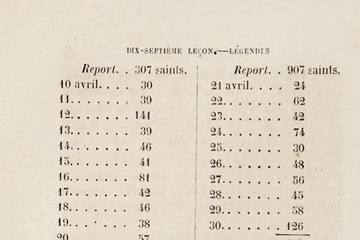
- Guizot, Histoire de la civilisation en FranceHow many saints’ lives are there? Guizot counted April
- Hume, Of MiraclesThe doorkeeper of Saragossa who grew a new leg
Backlinks
Every place in Rationalism in Europe that links to this page (generated automatically when the site is built).
- Chapter II: note 8