Mariana and Bernáldez (tom. i, pp. 273)
French: tom. i p. 273, scan. Highlighted: the figures Lecky uses.
III. Juan de Mariana maintains, on the faith of old manuscripts, that in the first year of the Inquisition two thousand persons were burnt at Seville; that as many were burnt in effigy, and that seventeen thousand underwent public penance. […]
IV. Andrés Bernáldez, a historian of that age, says that from the beginning of 1482 to 1489 inclusive there were at Seville seven hundred persons given to the flames, and more than five thousand who underwent penances, not counting those executed in effigy: I shall suppose the number of these last to have been only half of the other […].
Original French
III. Jean de Mariana prétend, sur la foi des anciens manuscrits, que pendant la première année de l’Inquisition, on brûla à Séville deux mille personnes ; qu’un pareil nombre fut brûlé en effigie, et qu’il y en eut dix-sept mille qui subirent une pénitence publique. […]
IV. André Bernaldez, historien de cet âge, dit que depuis le commencement de 1482 jusqu’en 1489 inclusivement, il y eut à Séville sept cents personnes livrées aux flammes, et plus de cinq mille qui subirent des pénitences, sans compter celles qui furent exécutées en effigie : je supposerai que le nombre de ces dernières ne fut que la moitié de l’autre […].
Llorente’s purpose is to estimate a yearly average (his paragraph V: 88 burnt, 44 in effigy, 625 penanced, 757 victims a year at Seville), so he treats Mariana’s figure as too high and reduces it. Lecky quotes the raw figures, which Llorente presents as a source’s claim, and not Llorente’s own estimate; the note’s phrase “Mariana says” is accurate. Mariana’s own text was not checked for this page.
The inscription of 1524 (tom. i, pp. 273–275)
Latin and French: tom. i pp. 274–275, scan and scan.
VII. In 1524 an inscription was put up at the Inquisition of Seville, from which it appeared that since the expulsion of the Jews, which took place in 1492, up to that time there had been nearly a thousand persons burnt, and more than twenty thousand condemned to penances. Here is the text of the inscription:
… where, after the expulsion of the Jews and Saracens, up to the year 1524, under the divine Charles, Emperor of the Romans … then reigning, and the most reverend lord Alfonso Manrique, Archbishop of Seville, prefect of the office of the faith, twenty thousand heretics and more abjured the abominable crime of heresy; and also “fere millia” of men obstinate in their heresies were afterwards, after due process of law, handed over to the fires and burnt …
“… where, from the expulsion of the Jews and Saracens down to the year 1524, under the reign of Charles, Emperor of the Romans … more than twenty thousand heretics have abjured their criminal errors, and more than a thousand obstinate in heresy have been given to the flames, after being judged according to law … The licentiate de la Cueva has had this inscription placed here, by order and at the expense of our lord the Emperor; it was composed by Diego de Cortegana, archdeacon of Seville, in the year of the Lord 1524.”
Original French
VII. En 1524, on mit à l’Inquisition de Séville une inscription, de laquelle il résultait que depuis l’expulsion des Juifs, arrivée en 1492, jusqu’à ce temps-là, il y avait eu près de mille personnes brûlées, et plus de vingt mille condamnées à des pénitences. Voici le texte de cette inscription :
… Ubi post Judæorum et Saracenorum expulsionem ad annum usque millesimum quingentessimum vigessimum quartum, divo Carolo Romanorum imperatore … tunc regnante, ac reverendissimo domino Alphonso Manrico archiepiscopo Hispalensi, fidei officio præfecto, viginti millia hereticorum et ultra nefandum hæreseos crimen abjurarunt ; necnon hominum fere millia in suis heresibus obstinatorum postea jure previo ignibus tradita sunt et combusta …
« … où, depuis l’expulsion des Juifs et des Sarrasins jusqu’en l’année 1524, sous le règne de Charles, empereur des Romains … plus de vingt mille hérétiques ont abjuré leurs criminelles erreurs, et plus de mille obstinés dans l’hérésie ont été livrés aux flammes, après avoir été jugés conformément au droit … Le licencié de la Cueva a fait mettre ici, par ordre et aux frais de l’empereur notre maître, cette inscription qui a été composée par Diègue de Cortegana, archidiacre de Séville, l’an du Seigneur 1524. »
Two points. First, Lecky says the inscription was put up “in 1524” and that it declares “nearly 1,000 persons had been burnt since the expulsion of the Jews in 1492”. That follows Llorente’s own prose (“près de mille”). Llorente’s French version of the inscription says “plus de mille”, and the Latin as printed reads “hominum fere millia” (printed with “FERE MILLIA” in small capitals), so “nearly”, “more than” and the plural “millia” do not agree with each other; I do not decide which is meant. Second, Lecky’s note omits the more than twenty thousand penitents.
Llorente’s next paragraph (VIII) takes “a thousand burnt, five hundred in effigy” as his working figures, giving 32 burnt, 16 in effigy and 625 penanced a year, 673 in all, and halves this for the other tribunals. This is where the grand total is built up; Lecky’s note says nothing of the method, but remarks that “Prescott has detected two or three instances of exaggeration” (Prescott is not checked here).
The grand total (tom. iv, p. 271)
Tom. iv p. 271, scan (the “Récapitulation”). Not transcribed; figures only.
| Category | Llorente’s figure | Lecky |
|---|---|---|
| Burnt in person | 31,912 | “more than 31,000” |
| Burnt in effigy | 17,659 | not mentioned |
| Condemned to lesser penalties | 291,450 | “more than 290,000” |
| Total | 341,021 | not given |
Editor’s notes on this page
Lecky’s note gives Llorente’s grand total as “more than 31,000 burnt, more than 290,000 condemned to lesser punishments”. Llorente’s recapitulation on tom. iv p. 271 reads 31,912 burnt in person, 17,659 burnt in effigy, 291,450 penanced, 341,021 in all; Lecky omits the effigies.
The Seville figures in the note come from a different place, tom. i pp. 273–275, where Llorente is estimating the early victims. He is reasoning from three ancient figures to an average, and says so (“je supposerai”, “je me contenterai de supposer”). Lecky’s three instances are fair summaries, with two differences worth knowing: Llorente places Mariana’s 2,000 burnings at Seville in the first year (Lecky says Andalusia), and the inscription of 1524 says that over twenty thousand abjured and that more than a thousand were burnt, which is how Lecky’s “nearly 1,000” should be read: the French prose says “près de mille”, the French rendering of the inscription says “plus de mille”, and the Latin of the inscription as printed has “fere millia” with a small-capital setting, whose sense I have not settled.
Further down the rabbit hole
Sources that Lecky cites in the notes next to the ones that cite this page.
- Madden, PhantasmataAn Irish doctor’s history of delusions, and the witch-burnings in an Alpine valley
- Simancas, De Catholicis InstitutionibusAn inquisitor’s handbook: no faith with heretics, and torture
- Sarpi, Historia dell’origine, forma, leggi ed uso dell’ufficio dell’InquisizioneA Venetian friar on how churchmen changed their tune about princes
- Buckle, History of Civilization in EnglandWeather and credulity, and the Scottish clergy’s Devil who had been studying for five thousand years
- Garinet, Histoire de la Magie en FranceA history of magic in France, from the Frankish kings to the author’s own day
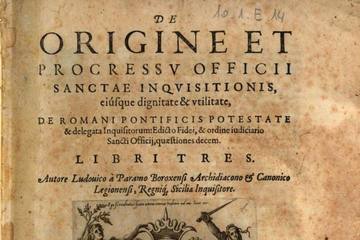
- Paramo, De origine et progressu officii sanctae inquisitionisWhy the dead are tried for heresy

Backlinks
Every place in Rationalism in Europe that links to this page (generated automatically when the site is built).