“Hac impietate quid tandem magis impium” (p. 58)
Latin: p. 58, scan. Beza has just quoted, in italics, a passage of Bellius (that to dispute about the Gospel and the imputed righteousness of Christ is like asking whether the prince will come in a carriage or on horseback, and that we should therefore leave these questions alone). Highlighted: Lecky’s words.
What more impious, or devilish, have even the gates of hell ever breathed out than this impiety! We, then, have learned that the way to God is quite another …
Original Latin
Hac impietate quid tandem magis impium, aut diabolicum ipsæ unquam inferorum portæ exhalarunt! Nos igitur longè aliud iter esse ad Deum didicimus …
| Lecky, 1865 (note 68) | Beza, 1554 | |
|---|---|---|
| Text | Hac impietate quid tandem magis impium aut diabolicum ipsæ unquam inferiorum portæ exhalarunt. | Hac impietate quid tandem magis impium, aut diabolicum ipsæ unquam inferorum portæ exhalarunt! |
Lecky writes “inferiorum” where the print has “inferorum”, and ends with a full stop for Beza’s exclamation mark. Lecky’s sentence is a comment on the quoted Bellius passage, as he says.
Clebergius on the uncertainty of controversies (pp. 65, 93)
Latin: p. 65, scan, and p. 93, scan. Beza prints Clebergius’s words in italics and refutes them.
p. 65: … About the controversies of religion, says Clebergius, it is not yet certainly established: for if it were established, disputing would have ceased, and no one would be so mad as to endure death in order to deny a certain thing. …
p. 93: For Clebergius says plainly: if someone, finding a stray sheep, brought it to your house because he thought the sheep was yours, would you not love him for his good intention, even if the sheep were not yours? But if you, though you are wicked, do this, what will God do? Will he not love those who defend in good faith what they think true? Even if they should perhaps err, will he not grant them pardon? No indeed, Clebergius. For it is a Mahometan doctrine, that each man is saved in his own religion. …
Original Latin
p. 65: … De controversiis religionis, inquit Clebergius, nondum certò constat: si enim constaret, disputari desiisset, nec ullus tam insanus esset qui mori sustineret, quo rem certam negaret. …
p. 93: Sic enim apertè dicit Clebergius: si quis, inquit, errantem ovem nactus, domum tuam adduceret, quia ovem putaret esse tuam: nonne amares eum propter bonam ejus voluntatem, etiamsi ovis tua non esset? Quòd si tu quum sis malus, id facis, quid faciet Deus? Nonne eos amabit qui id quod verum esse putat, defenderint bona fide? etiam si forte erraverint: nonne eis veniam dabit? Minimè verò Clebergi. Nam Mahumetanum hoc dogma est, In sua religione quenque servari. …
| Lecky, 1865 (note 73) | Beza, 1554 | |
|---|---|---|
| p. 65 | De controversiis nondum certo constat; si enim constaret disputari defuisset. | De controversiis religionis, inquit Clebergius, nondum certò constat: si enim constaret, disputari desiisset, nec ullus … |
| p. 93 | Nonne Deus eos amabit qui id quod verum esse putant defenderint bona fide? Etiam si forte erraverint, nonne eis veniam dabit? | Nonne eos amabit qui id quod verum esse putat, defenderint bona fide? etiam si forte erraverint: nonne eis veniam dabit? |
Lecky’s first quotation drops “religionis” and the attribution, and reads “defuisset” where the print has “desiisset” (“would have ceased”; “defuisset” would mean “would have been lacking”). In the second he adds “Deus” to the question and writes “putant” for “putat”. These are small; the sense is unchanged. Lecky says Beza “represents him as objecting absolutely to all forms of persecution” and basing this on “the impossibility of ascertaining certainly religious truths”. The two passages support that, and Beza’s “Minimè verò” shows he rejected the argument.
Editor’s notes on this page
Lecky says that Beza answered Castellio’s plea for toleration with the cry that the very gates of hell had never breathed out anything more impious. The words are Beza’s, on p. 58. In note 73 Lecky says he has never seen the work of “Clebergius”, whom Beza quotes as saying that religious controversies are not yet settled and that God will love those who defend what they think true in good faith. Beza’s book is where these quotations are, and the two Latin sentences Lecky gives from it are accurate.
Further down the rabbit hole
Sources that Lecky cites in the notes next to the ones that cite this page.
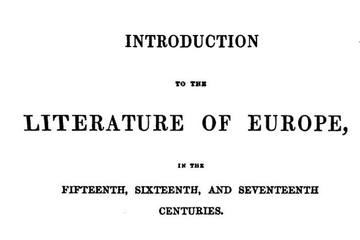
- Hallam, Literature of Europe and Constitutional HistoryHow Lecky quotes Hallam on persecution
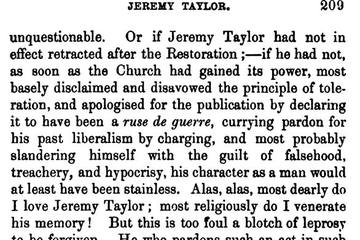
- Coleridge, Notes on English Divines“Most dearly do I love Jeremy Taylor”: Coleridge on a broken principle
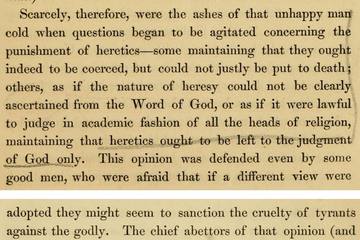
- Castellio, Traité des hérétiquesLecky quotes only the first third of the passage
- Beza, Life of CalvinWho objected to burning Servetus? More people than Lecky says
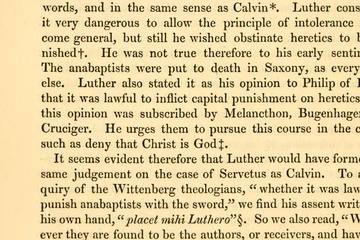
- Henry, The Life and Times of John Calvin, vol. II“Placet mihi Luthero”: Luther signs for the sword
- Montaigne, EssaisLecky cuts Montaigne short and changes a word
Backlinks
Every place in Rationalism in Europe that links to this page (generated automatically when the site is built).