Unbaptised children (c. 27, p. 479)
Latin: p. 479, scan. The long s is printed as s. Spelling regularised. Highlighted: Lecky’s quotation.
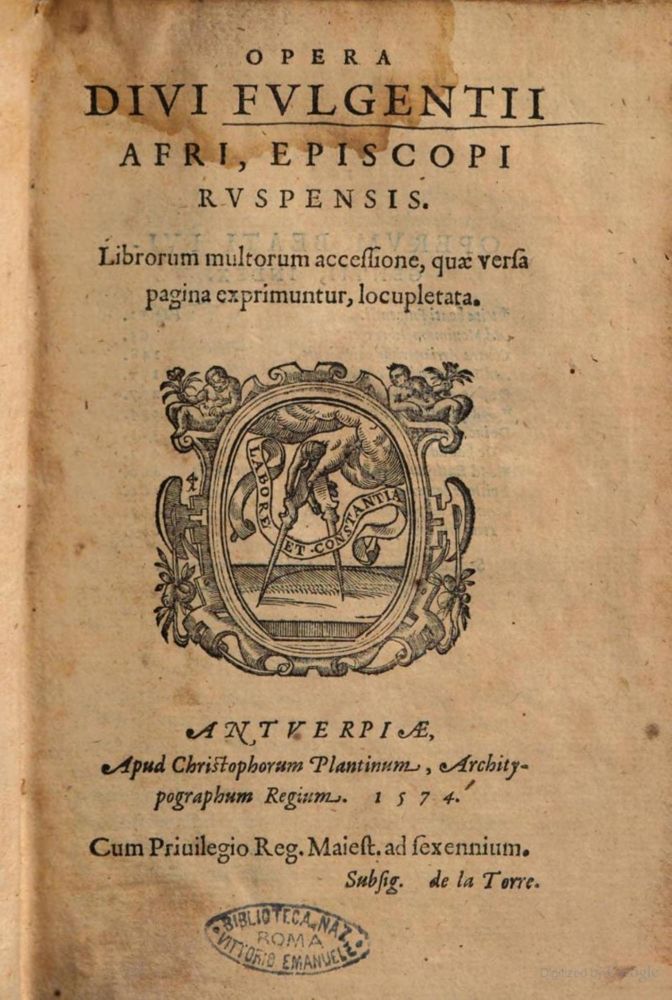
Hold most firmly, and do not doubt at all, that not only men who already have the use of reason, but also little children, who either begin to live in their mothers’ wombs and die there, or, being born of their mothers without the sacrament of holy baptism, which is given in the name of the Father and the Son and the Holy Spirit, pass from this world, are to be punished with the everlasting punishment of eternal fire: because although they had no sin of their own action, yet from carnal conception and birth they have drawn the condemnation of original sin.
Original Latin
Firmissime tene, et nullatenus dubites, non solum homines iam ratione utentes, verum etiam parvulos, qui sive in uteris matrum vivere incipiunt, et ibi moriuntur, sive cum de matribus nati sine sacramento sancti baptismatis, quod datur in nomine Patris et Filii et Spiritus Sancti, de hoc saeculo transeunt, ignis aeterni sempiterno supplicio puniendos: quia etsi propriae actionis peccatum nullum habuerunt, originalis tamen peccati damnationem carnali conceptione et nativitate traxerunt.
No salvation outside the Church (cc. 38–39, p. 483)
Latin: p. 483, scan.
c. 38. Hold most firmly, and do not doubt at all, that not only all pagans, but also all Jews, heretics and schismatics, who end the present life outside the Catholic Church, will go into the eternal fire which is prepared for the devil and his angels.
c. 39. Hold most firmly, and do not doubt at all, that any heretic or schismatic baptised in the name of the Father and of the Son and of the Holy Spirit, if he has not been added to the Catholic Church, however many alms he may have given, even if he has shed his blood for the name of Christ, can in no way be saved. For to every man who does not hold the unity of the Catholic Church, neither baptism, nor alms however plentiful, nor death endured for the name of Christ, can avail for salvation, as long as the heretical or schismatic wickedness that leads to death persists in him.
Original Latin
c. 38. Firmissime tene, et nullatenus dubites, non solum omnes paganos, sed etiam omnes Iudaeos, haereticos atque schismaticos, qui extra Ecclesiam catholicam praesentem finiunt vitam, in ignem aeternum ituros, qui paratus est diabolo et angelis eius.
c. 39. Firmissime tene, et nullatenus dubites, quemlibet haereticum sive schismaticum in nomine Patris et Filii et Spiritus Sancti baptizatum, si Ecclesiae catholicae non fuerit aggregatus, quantascunque eleemosynas fecerit, etsi pro Christi nomine etiam sanguinem fuderit, nullatenus posse salvari. Omni enim homini, qui Ecclesiae catholicae non tenet unitatem, neque baptismus, neque eleemosyna quamlibet copiosa, neque mors pro nomine Christi suscepta proficere poterit ad salutem, quamdiu in eo haeretica vel schismatica pravitas perseverat, quae ducit ad mortem.
Lecky (note 20): “De Fide, § 81; and again, still more explicitly: ‘Omni enim homini qui Ecclesiæ Catholicæ non tenet unitatem, neque baptismus neque eleemosyna quamlibet copiosa, neque mors pro nomine Christi suscepta proficere poterit ad salutem, quamdiu eo vel hæretica vel schismatica pravitas perseverat quæ ducit ad mortem.’ (§ 22.)” See the status line above for the unmatched section numbers.
Editor’s notes on this page
Both Latin quotations are in the work. In note 8, Lecky’s Latin is the full text of the chapter “Firmissime tene…” on children dying unbaptised, with two small differences from the 1574 printing: “sive jam de matribus nati” for “sive cum de matribus nati”, and the clause “peccatum propriae actionis nullum habuerunt” for “propriae actionis peccatum nullum habuerunt”. In note 20, “Omni enim homini …” agrees except for “quamdiu eo vel haeretica vel schismatica pravitas perseverat”, where the printing has “quamdiu in eo haeretica vel schismatica pravitas perseverat”: Lecky’s “vel … vel” is not there.
Further down the rabbit hole
Sources that Lecky cites in the notes next to the ones that cite this page.
- Palmer, A Treatise on the Church of Christ“Whosoever is separated from the Catholic Church … will not have life”
- Thiers, Traité des SuperstitionsThree papal bulls but no rebellion
- Hecker, The Epidemics of the Middle AgesThe dancers’ dislike of pointed shoes, misplaced
- Neander, Lectures on the History of Christian DogmasNeander’s Socinus and Zwingli on original sin
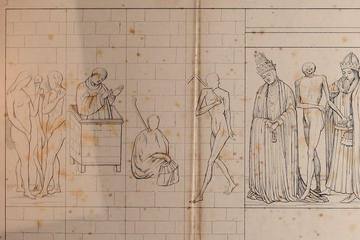
- Jubinal, La Danse des morts de la Chaise-DieuWhy Christian art made death hideous: the Dance of Death
- Bossuet, Histoire des variations des Églises protestantesWhat Lecky leaves out of Bossuet on punishing heretics
Backlinks
Every place in Rationalism in Europe that links to this page (generated automatically when the site is built).