P. 77: The Devil Transfigured into Christ
Latin: Lyon, 1620, vol. II, part 1, p. 77 (scan). Spelling regularised: u/v and æ normalised and abbreviations expanded. The right-hand margin carries the notes “Sancti Patres abhorruerunt a visionibus” (“The holy Fathers shrank from visions”) and “Nemo in terris videre Christum cupiat, in gloria cum videre sufficiat” (“Let no one on earth wish to see Christ, since it suffices to see him in glory”). Highlighted: the anecdotes about the devil as Christ.
Examples are told of holy Fathers who shunned the curiosity for such visions or miracles as most pernicious and deceptive. Augustine, in his Confessions, glories in the Lord that he was freed from it. For this reason the Lord Bonaventure decides that it is to be utterly abhorred and repelled with all one’s effort, sometimes by prayers, sometimes by rebukes or scourgings of one’s own mind and body, after the example of the man who, to be free of the temptation of pride, asked of the Lord and obtained that for three months he should be vexed by demonic possession.
Another of the holy Fathers, when a Demon transfigured into Christ said to him, “I am Christ, visiting you in person, because you are worthy”, at once shut his eyes with both hands, crying out: “I do not wish to see Christ here; it is enough if I see him in glory”, and the Demon at once vanished.
Another, in different words, kept the same humility in such a delusion. “See”, he said, “to whom you have been sent. I am surely not such as to be worthy to see Christ here.”
Another, because he would not enter the church, saying it was enough for him that he had seen Christ with his bodily eyes, was bound with chains by his brethren, and made to break his fast, to eat meat, and to drink both kinds. So, his fear overcome, he was healed.
Original Latin
Enarrantur exempla sanctorum patrum qui curiositatem huiusmodi visionum vel miraculorum, tanquam perniciosissimam fallacissimamque refugerunt. A qua se Augustinus liberatum in suis confessionibus gloriatur in Domino. Quam propterea Dominus Bonaventura abhorrendam nimis esse determinat, totoque conatu repellendam: nunc orationibus, nunc increpationibus seu flagellationibus propriae mentis et corporis: exemplo illius, qui ut tentatione careret superbiae, quaesivit et obtinuit a Domino, ut per tres menses Daemoniaca vexaretur obsessione.
Alter sanctorum Patrum, dum sibi Daemon transfiguratus in Christum diceret, “Ego sum Christus personaliter visitans, quia dignus es”, confestim clausit oculos utraque manu, vociferans: “Nolo hic Christum videre; satis est ipsum in gloria si videro”, moxque disparuit.
Alter sub aliis verbis similem in huiusmodi illusione servavit humilitatem. “Vide”, inquit, “ad quem missus sis. Ego certe talis non sum, quod dignus sim hic videre Christum.”
Alterum, quia nolebat intrare templum, dicens sibi satis esse quod oculis corporeis aspexisset Christum, colligaverunt cathenis, solvere ieiunium, carnibus vesci, utrumque bibere compulerunt. Sicque timore compresso sanatus est.
Reading notes
The last sentence is translated with some doubt: “utrumque bibere” (“to drink both”) is read as wine and water, but the text does not say. The Fathers in the anecdotes are not named, and the sources (Bonaventure, Augustine’s Confessions) have not been traced here. In the scan, two consecutive leaves both carry the page number 77, with different text on the second (it begins “Probatio spirituum considerat causam…”); the leaf used here is the first, whose running title is “De probatione spirituum”.
Lecky’s sentence (p. 41) reads: “Sometimes the devil appeared as a grotesque and hideous animal, sometimes as a black man, sometimes as a beautiful woman, sometimes as a priest haranguing in the pulpit, sometimes as an angel of light, and sometimes in a still holier form.” Note 37 adds: “On the appearances of the devil in the form of Christ, see the tract by Gerson in the Malleus Malef. (vol. ii. p. 77).” Set against the print:
| Lecky, 1865 | Lyon, 1620 | |
|---|---|---|
| Subject | the devil appearing “in the form of Christ” | “Daemon transfiguratus in Christum” (the first anecdote). Confirmed. |
| Reference | “the tract by Gerson … vol. ii. p. 77” | Gerson’s De probatione spirituum, vol. II, part 1, p. 77. Exact. |
| What it shows | an example of how holy the devil’s disguises could be | The passage is about the saints’ refusal to look; the devil’s disguise is the occasion, and the lesson is humility before visions. |
| Scan | vol. I, p. 41 (the sentence) and p. 42 (the note) | p. 77 |
Lecky’s reference is sound. The same note also cites Ignatius Lupus’s Edict. S. Inquisitionis (1603), p. 185, which has not been looked up.
De erroribus, p. 253: Ridiculing Those Who Speak of Demons
Latin: Lyon, 1620, vol. II, part 2, Tractatus de erroribus circa artem magicam, “Primum Dictum”, p. 253 (scan). Spelling regularised and abbreviations expanded. The margin notes read “Daemones sint”, “Daemones sunt et mirabilia operantur ex fide Christiana” and “Spiritus qui negarint”. “[…]” marks a sentence Lecky omits. Highlighted: the words Lecky quotes.
It is probable in natural philosophy, and certain by faith according to the truth, that there are Demons. The first part was held by the most refined of the philosophers, Hermes Trismegistus, Plato, and all the followers of his teaching, Apuleius, Porphyry and the rest. […] Moreover, to deny that Demons exist, or that they are the workers of very many effects, is condemned among Christians as erroneous and impious and contrary to the sacred writings.
In this matter those are to be laughed at, indeed severely corrected, who deride the Theologians as soon as they speak of Demons, as soon as they attribute certain effects to them, as if their answer were fabulous. This error arises among certain learned men, both from lack of faith and from weakness and corruption of reason. They keep the soul so occupied with the body, with sensible things and the anxious care of them, or they are so absorbed in the search for particular and visible causes, that of universals and first beings and spirits they can believe or know nothing, and can think nothing in a thin or lofty way. Plato said that this is the greatest impediment to truth: to refer everything to the senses and not to be turned away from them. Tully said the same, and Augustine in his book On True Religion, and Albert and William of Paris, and indeed experience has taught it.
Original Latin
Probabile in Philosophia naturali, et secundum veritatem fide certum est esse Daemones. Primam partem tenuerunt elegantissimi Philosophorum Hermes Trismegistus, Plato, et omnes doctrinae suae sectatores Apuleius, Porphyrius et caeteri. […] Porro negare Daemones esse, negare eos plurimorum effectuum operatores existere, damnatur apud Christianos, ut erroneum et impium, et sacris litteris adversum.
Qua in re deridendi sunt, immo dure corrigendi, qui Theologos derident, mox ut sermonem de Daemonibus faciunt, mox ut eis effectus quosdam attribuunt, quasi fabulosa sit eorum responsio. Provenit error iste apud quosdam litteratos, tum ex defectu fidei, tum ex debilitate et infectione rationis. Gerunt proprie animam sic occupatam circa corpus, circa res sensibiles, ac earum sollicitas curas, vel ita in causarum particularium et visibilium perscrutatione consistunt, quod de universalibus et primis entibus ac spiritibus nihil credere vel sapere, nihil tenuiter et elevate cogitare possunt. Hoc Plato dixit maximum esse impedimentum veritatis, referre scilicet omnia ad sensus, et non averti ab eis. Hoc idem Tullius, hoc Augustinus lib. de vera religione, hoc Alber. et Guil. Parisiens., immo et experientia docuerunt.
Reading notes
“Infectione” (literally “infection”) is translated “corruption”. “Deridendi sunt” is “are to be laughed at” (Lecky: “treated with scorn”). The sources named (Plato, Cicero, Augustine, Albert, William of Paris) are as printed and have not been traced here.
Lecky’s sentence (p. 91; note 82): “‘Those men,’ wrote Gerson, ‘should be treated with scorn, and, indeed, sternly corrected, who ridicule theologians whenever they speak of demons, or attribute to demons any effects, as if these things were entirely fabulous. This error has arisen among some learned men, partly through want of faith, and partly through weakness and imperfection of intellect . . . . for, as Plato says, to refer everything to the senses, and to be incapable of turning away from them, is the greatest impediment to truth.’” Set against the print:
| Lecky, 1865 | Lyon, 1620 | |
|---|---|---|
| The scorn | “should be treated with scorn, and, indeed, sternly corrected” | “deridendi sunt, immo dure corrigendi” (are to be laughed at, indeed severely corrected). Close. |
| The subject | those “who ridicule theologians whenever they speak of demons, or attribute to demons any effects” | “qui Theologos derident, mox ut sermonem de Daemonibus faciunt, mox ut eis effectus quosdam attribuunt”. Exact in sense. |
| “As if these things were entirely fabulous” | as if “these things” were “entirely fabulous” | “quasi fabulosa sit eorum responsio”: as if their answer (the theologians’) were fabulous. Lecky’s “entirely” and “these things” are his own wording. |
| The cause | “partly through want of faith, and partly through weakness and imperfection of intellect” | “tum ex defectu fidei, tum ex debilitate et infectione rationis”: lack of faith, and weakness and infection of reason. “Imperfection of intellect” softens infectio. |
| The omission | “. . . .” (four dots) | Lecky omits the sentence about souls occupied with the body and with sensible things. The omitted sentence is what leads to the Plato clause. |
| Plato | “as Plato says, to refer everything to the senses, and to be incapable of turning away from them, is the greatest impediment to truth” | “Hoc Plato dixit maximum esse impedimentum veritatis, referre scilicet omnia ad sensus, et non averti ab eis.” Exact, though Lecky reads “non averti” as “to be incapable of turning away” where it is simply “not to turn away”. |
| Reference | “Mall. Mal. vol. ii. p. 253” | Vol. II, part 2, p. 253 (Tractatus de erroribus, “Primum Dictum”). Exact. It is not Spina’s p. 253 in part 1, which is about sleep and being carried through the air. |
| Scan | vol. I, p. 91 | p. 253 |
Editor’s notes on this page
Gerson’s tract tells how to tell a true vision from a diabolical one. Lecky says only that the devil sometimes appeared “in a still holier form” and cites Gerson for “the appearances of the devil in the form of Christ”. The passage is on p. 77: it gives three short anecdotes of holy men who met a devil disguised as Christ and refused to look.
Lecky gives only the reference, so this page checks that the reference lands on the right text.
Further down the rabbit hole
Sources that Lecky cites in the notes next to the ones that cite this page.
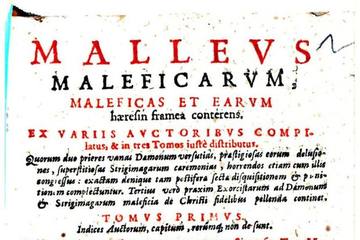
- Sprenger, Malleus MaleficarumThe witch-hunters’ handbook of the fifteenth century
- Garinet, Histoire de la Magie en FranceA history of magic in France, from the Frankish kings to the author’s own day
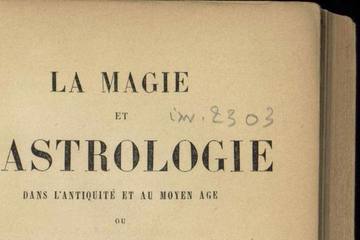
- Maury, La magie et l’astrologieRoman laws against diviners, the first medieval doubters, and the praying heretics
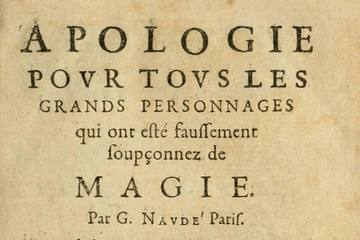
- Naudé, Apologie pour tous les grands personnages qui ont esté faussement soupçonnez de magieA librarian clears the great men of magic: Pope Sylvester, Pietro d’Abano, Agrippa
- Thiers, Traité des SuperstitionsThree papal bulls but no rebellion
- Binsfeld, Tractatus de confessionibus maleficorum et sagarumThe suffragan bishop of Trier on why witches float, and why women fall
Backlinks
Every place in Rationalism in Europe that links to this page (generated automatically when the site is built).