Quaestio III, §12: Treasure-Hunting by Demonic Arts
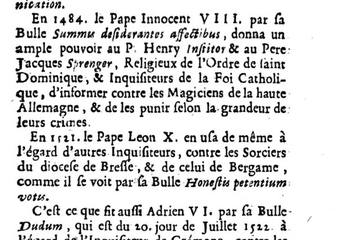
Latin: Frankfurt edition, 1592, pp. 24–25 (scan). Spelling regularised: long s, u/v, and æ normalised; accents and abbreviations dropped or expanded; & printed as et. Highlighted: the words Lecky quotes.
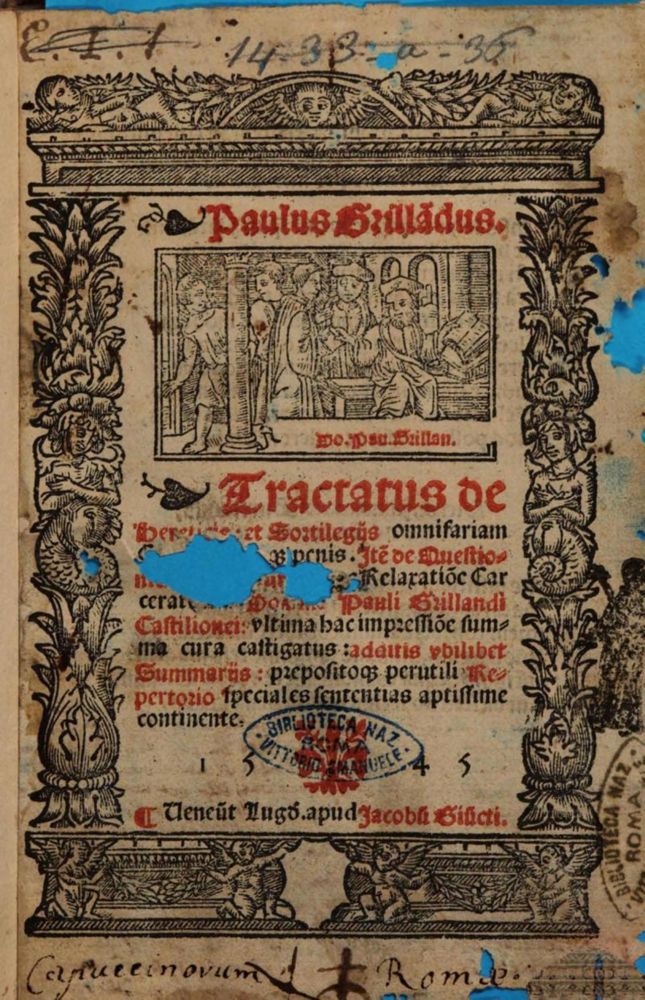
Among these I will not leave out those who boast that by such arts they can find treasures hidden in very remote and underground places, and who sometimes drive men to such madness that they dig enormous pits in search of such treasures. This seems to me one of the more shameful illusions the Demon practises on mankind, for in truth I have never read, seen, or heard of any of these necromancers, magicians, or sorcerers ever having found treasure, or gold or silver by any other means. But I have seen a great many set about this work, striving wonderfully hard to put it to the test, and after much labour and many diabolical observances, they in the end saw and found nothing but earth.
And the reason is that God does not permit, and does not will, that the Demon should be able to amass treasure. Otherwise it would follow that these magicians, necromancers, and other professors of the diabolical faith would be richer and more eminent than the rest of Christ’s faithful, and a great many of Christ’s faithful would be found following them in the hope of growing rich, not caring to cast aside the Christian faith itself so long as they might abound in great treasure and be honoured by all. On the contrary, we see today the very opposite: these sorcerers, magicians, necromancers, and the like are poorer, more squalid, and viler than the rest of Christ’s faithful; in this world, by God’s permission, they commonly lead a wretched life, at last perish by an unhappy death, and are tormented in the burning of eternal fire, as in the chapter Firmissime in the Liber Extra under De haereticis, and Causa 26, quaestio 5, Nec mirum.
And with the same promises with which the Demon cleverly deceives them, and with others like them, they try to deceive us. But they catch no one except people of simple understanding who lack intelligence and reason, or the over-credulous and curious, who with a kind of shameless greed long to know things that they have no reason or honest cause to inquire into (the said chapter Nec mirum, § Auguria, at the words His ergo portentis).
Original Latin
Inter quas non omittam illas, quae arte huiusmodi iactant se posse invenire thesauros in locis valde remotis et subterraneis absconditos, et quandoque inducunt homines ad talem insaniam, ut foveas quam ingentes conficiant pro inveniendis thesauris huiusmodi. Et ista videtur mihi quod sit una ex turpioribus illusionibus quas Daemon homini faciat, quia in rei veritate nunquam legi, vidi, nec audivi quenquam ex Necromanticis, Magis, aut Sortilegis huiusmodi aliquos unquam invenisse thesauros, aut alias aurum vel argentum; sed quamplures vidi huic operi incumbentes, qui mirabiliter conati sunt velle experiri, post multos labores et Diabolicas observantias, demum nihil viderunt nec invenerunt nisi terram.
Et ratio est, quia Deus non permittit nec vult Daemonem posse thesaurizare; quia alias sequeretur quod isti Magici, Necromantici, ac caeteri Diabolicae fidei Professores essent caeteris Christi fidelibus ditiores ac praestantiores, et quamplures reperirentur ex ipsis Christi fidelibus qui animo ditandi prosequerentur illos, nec curarent Christianam ipsam postergare fidem, ut magno thesauro abundarent et venerarentur ab omnibus. Quinimo videmus hodie totum oppositum, quod isti Sortilegi, Magi, Necromantici, et similes sunt caeteris Christi fidelibus pauperiores, sordidiores, et viliores, et in hoc mundo, Deo permittente, calamitosam vitam communiter peragunt, demum vero infelici morte pereunt, et aeterni ignis incendio cruciantur, ut in c. Firmissime, extra De haereticis, et 26 q. 5 Nec mirum.
Et qua Daemon argute illos decipit, eadem et similibus promissionibus ipsi nos decipere student; sed non capiunt nisi aliquos qui sunt simplicis cognitionis et carent intellectu et ratione, vel qui sunt nimium creduli et curiosi, qui aviditate quadam impudentes appetunt scire ea quae nulla ratione aut honesta causa competit sibi investigare (d. c. Nec mirum, § Auguria, vers. His ergo portentis).
Grillandi’s legal citations
Grillandi was a canon lawyer, and his references follow the standard abbreviations of the period. “Extra” is the Liber Extra, the Decretals of Gregory IX (1234), cited by the opening words of a chapter (Firmissime) and the title it stands under (De haereticis, “On heretics”). “26 q. 5” is Gratian’s Decretum, Causa 26, quaestio 5, the part of canon law dealing with sorcerers and diviners; Nec mirum is the opening of a canon there. Neither citation has been traced to its text yet.
Lecky’s Quotation Compared
Lecky quotes this passage in note 1 of Chapter I. Set against the two editions available online, his text differs in two places:
| Lecky, 1865 | Lyon, 1545 | Frankfurt, 1592 | |
|---|---|---|---|
| Adjectives | pauperiores, sordidiores, viliores, et contemptibiliores | pauperiores sordidiores et viliores | pauperiores, sordidiores, et viliores |
| Their death | Deum verum infelici morte perdunt | deum verum in felici morte pereunt | demum vero infelici morte pereunt |
| Scan | vol. I, p. 3 | fo. 19v–20r | pp. 24–25 |
What the readings mean:
- et contemptibiliores (“and more contemptible”) is in neither edition. It may come from an edition not checked here, from an intermediate source Lecky copied, or from Lecky himself.
- demum vero … pereunt (1592) means “at last perish”. The 1545 reading deum verum … pereunt does not construe, because pereunt (“perish”) cannot take an object, so it is very probably a printer’s slip for demum vero.
- Lecky’s perdunt (“they lose”) is the one change that makes the 1545-type reading grammatical: “they lose the true God by an unhappy death”. So Lecky, or his source, seems to have worked from a text with the corrupt deum verum and smoothed it into sense.
This is an inference from the two editions checked, not a settled fact: earlier printings, including the first, have not been compared.
Lecky also calls Grillandus “an Italian inquisitor of the fifteenth century”. Grillandi was born around 1490, judged sorcery cases from 1517, and published in the sixteenth century.
Sorcerers and Physicians (Lyon 1620 reprint, pp. 393–394)
Latin: Malleus maleficarum, Lyon: Claude Landry, 1620, vol. II, part 2, “Tract. de Sortilegijs” by Paulus Grillandus, pp. 393–394 (scan, pp. 393–394). This is the volume Lecky’s “Mall. Mal. vol. ii.” refers to; see below. Spelling regularised as for the first passage; the quaestio number of this passage was not read. Highlighted: the words Lecky quotes.
Sometimes there comes a fever, a cough, madness, consumption, dropsy, or some swelling of the flesh in the body, or an abscess showing on the outside; sometimes, again, an abscess within, among the intestines, is so dreadful and incurable that no body of physicians can heal it and remove it, unless another maleficus, or sorcerer, steps in who, by contrary medicines and remedies, takes away the very sickness that sorcery caused, which he can remove easily and in a short time; while the other physicians, who profess the art of medicine itself, are worth nothing and know not how to bring any remedy. And this is what St. Augustine said, in book 10 of the City of God, and note in the chapter Nec mirum, § Ac haec, Causa 26, quaestio 5, where it is said that these remedies, which are made to take away such sicknesses caused by sorcery, no art of physicians commends, and indeed they are strictly forbidden by canon law, and the Church greatly condemns them (Causa 26, quaestio 7, Admoneant); and we shall say more below, in the same question, in its place.
Original Latin
Quandoque vero provenit febris, tussis, dementia, phisis, hydropisis, aut aliqua tumefactio carnis in corpore, sive apostema extrinsecus apparens: quandoque vero intrinsece apud intestina aliquod apostema sit adeo terribile et incurabile quod nulla pars medicorum id sanare et removere potest, nisi accedat alius maleficus sive sortilegus qui contrariis medelis et remediis aegritudinem ipsam maleficam tollat, quam facile et brevi tempore removere potest, caeteri vero medici, qui artem ipsius medicinae profitentur nihil valent et nesciunt afferre remedium: et hoc est quod dixit S. Aug. in lib. 10. de civ. Dei, et not. in c. nec mirum, § ac haec, aut. xx. vi. q. v., ubi dicitur quod ista remedia, quae fiunt ad tollendum istas maleficas aegritudines, nulla ars commendat medicorum, et imo sunt valde prohibita de iure cano. et Ecclesia multum reprobat illa. xxvi. q. vij. admoneant. et latius dicemus infra ea. q. loco suo.
The legal and patristic references
As in the first passage, these are Gratian’s Decretum (Causa 26, quaestiones 5 and 7) and Augustine’s City of God; none has been traced to its text here. The printed “aut. xx. vi. q. v.” is read as “Causa 26, quaestio 5”, to match the same citation on Quaestio III, §12 above. “Phisis” is the print’s spelling of phthisis (consumption), and “hydropisis” of hydropsis (dropsy).
Lecky quotes the passage in note 71 of Chapter I, as “a striking passage from Grillandus”, to show that witches’ skill with herbs sometimes surpassed that of regular physicians. Set against the 1620 print:
| Lecky, 1865 | Lyon, 1620 | |
|---|---|---|
| The diseases | febris, tussis, dementia, phthisis, hydropsis, aut aliqua tumefactio carnis | febris, tussis, dementia, phisis, hydropisis, aut aliqua tumefactio carnis |
| Punctuation | nisi accedat alius maleficus, sive sortilegus, qui contrariis medelis … | nisi accedat alius maleficus sive sortilegus qui contrariis medelis … |
| The medicine | caeteri vero medici qui artem ipsius medicinae profitentur nihil valent et nesciunt afferre remedium. | caeteri vero medici, qui artem ipsius medicinae profitentur nihil valent et nesciunt afferre remedium: et hoc est quod dixit S. Aug. … |
| Reference | “Mall. Mal. vol. ii. pp. 393, 394” | vol. II, part 2, pp. 393 (foot) – 394 (top) |
| Scan | vol. I, p. 78 | pp. 393–394 |
Lecky’s Latin is the 1620 text, with the two medical words respelt in their classical forms and the punctuation lightened. He stops where the sentence changes subject, before Grillandi’s citations of Augustine and canon law. His page reference is exact: the passage starts at the foot of p. 393 and ends at the top of p. 394.
Which Edition of the Malleus Lecky Used
Lecky cites the Malleus maleficarum collection as “Mall. Mal.” with a volume and page. Checked against page images, his references fit the Lyon edition of 1620 (two of the three volumes carry the imprint of Claude Landry). The Lyon 1669 edition could not be checked for vol. II, because the scans online have no readable text, so it is not ruled out; but nothing found in its vol. I fits better.
| Lecky’s reference | What it is | Where it sits in Lyon, 1620 |
|---|---|---|
| Mall. Mal. vol. ii. pp. 393, 394 | Grillandus on sorcerers and physicians | Vol. II, part 2, pp. 393–394 (scan). Exact. |
| Mall. Mal. vol. i. pp. 460–468 | The Cologne faculty’s documents of 1487 attached to the Malleus | Vol. I (scan, p. 461; imprint not read): p. 459 is in Part III, Quaestio XXXV; pp. 461–467 name the Cologne theologians, include the statement of the dean of the faculty, and end with a letter of the emperor Maximilian. Lecky’s description of what the Cologne doctors condemned was not checked against this text. |
| Mall. Mal. vol. ii. p. 77 | The tract by Gerson on the devil in the form of Christ | Vol. II, part 1: Gerson’s De probatione spirituum begins at p. 77 (scan). The passage on the devil’s appearing as Christ was not read. |
| Mall. Mal. vol. ii. pp. 191, 299, 300, and p. 253 | Spina, and a quotation from Gerson | Vol. II, part 1: Spina’s Quaestio (p. 191) and Apologia (pp. 299–300) are on the Spina page. Lecky’s “p. 253” for Gerson is in vol. II, part 2 (Gerson, De erroribus), not Spina’s p. 253 in part 1: see the Gerson page. |
| Mall. Malif. p. 522 | Nider: the island of Cyprus peopled by incubi’s sons | Not matched. Cyprus and the incubi appear in the Nider material in the Malleus volumes online, but no p. 522 was found that carries it. |
Two cautions. First, the 1620 vol. II is in two parts with separate pagination, so “vol. ii. p. 77” is ambiguous on its face: Gerson’s tract begins at p. 77 of part 1, while part 2 also has a p. 77 (in Laurentius Ananias, De natura daemonum). The Grillandus pages are in part 2; the Gerson and Spina pages are in part 1. Second, the copies online are Google Books scans, with poor OCR and some duplicated pages; the references above were located by reading the page images, not the text layer.
Editor’s notes on this page
A handbook on sorcery by a papal judge who tried sorcery cases in and around Rome from 1517. Lecky’s “cap. iii.” is the third quaestio, on the “profession” sorcerers make to the Devil. In §12, Grillandi argues that demons cannot really give treasure to their followers: if they could, sorcerers would be richer than Christians, and in fact they are poorer, filthier, and viler than everyone else. Lecky quotes the end of that argument as evidence that witches were overwhelmingly poor.
Lecky’s Latin does not match either edition checked here. He adds a word, and has the sorcerers “lose the true God” where the 1592 text has them simply “perish at last”. See the comparison below.
Further down the rabbit hole
Sources that Lecky cites in the notes next to the ones that cite this page.
- Michelet, La SorcièreHow many witches were burnt, and when the last: Michelet gives two answers, and Lecky takes one from each
- Madden, PhantasmataAn Irish doctor’s history of delusions, and the witch-burnings in an Alpine valley
- Bodin, Démonomanie des SorciersThe great lawyer who wrote the witch-hunters’ handbook
- Thiers, Traité des SuperstitionsThree papal bulls but no rebellion
- Buckle, History of Civilization in EnglandWeather and credulity, and the Scottish clergy’s Devil who had been studying for five thousand years
- Garinet, Histoire de la Magie en FranceA history of magic in France, from the Frankish kings to the author’s own day

Backlinks
Every place in Rationalism in Europe that links to this page (generated automatically when the site is built).