Apologia, pp. 299–300: The Doubters, and the Danger to Them
Latin: Lyon, 1620, vol. II, part 1, p. 299 (header “Apologia secunda”) and p. 300 (header “F. Barthol. Spin. in Ponz. de Lam.”) (scan, p. 299). Spelling regularised: u/v and æ normalised and abbreviations expanded. The words are in Spina’s Apologia, not the Quaestio itself. The margin note on p. 300 reads “Persecutio Inquisitorum” (“Persecution of the Inquisitors”). Highlighted: the sentences Lecky translates.
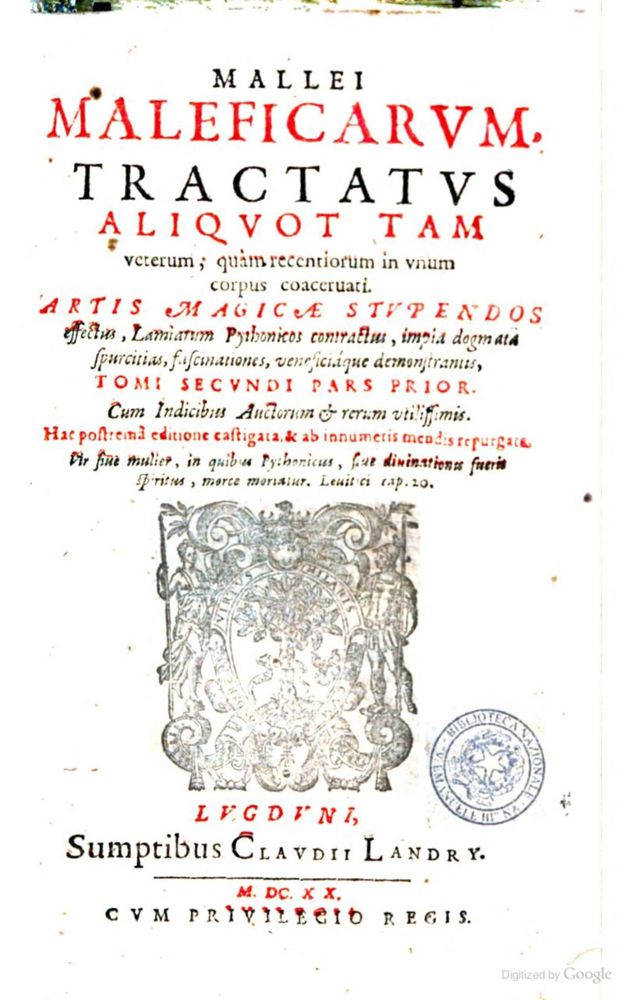
P. 299. […] And, on the other side, they are most imprudent, most undevout, and even unfaithful, because they do not believe what is to be believed. And what is more to be lamented, they set themselves, with bodily force or even with writings, against those who are pursuing the enemies of Christ, exposing themselves (though against their own intention) to the greatest danger of being held to be open supporters of heretics
P. 300. and, as a consequence, of being deservedly troubled by the Inquisitors. And that some are moved not by the devotion they pretend, this is the plainest proof: that many stir up persecution against the Inquisitors for money taken or promised, or out of carnal love, or rivalry and empty vainglory. But the Fathers Inquisitors, if they fear God alone and, moved by zeal for the faith, unconquerably pursue the duty which lies on them by command of Holy Mother Church to be diligently carried out under censures, will keep even these persecutors, who are the chief cause why this plague gains strength and a countless multitude of souls perishes from the fellowship of Christ’s faithful, away from the flock of sheep like wolves.
Original Latin
P. 299. […] Et contra imprudentissimi, indevotissimi vel etiam infideles sunt, quia ea quae credenda sunt non credunt. Et quod magis dolendum est, persequentibus inimicos Christi, viribus corporeis vel etiam literalibus se opponunt, exponentes se (licet contra intentionem suam) maximo periculo, quod censeantur manifesti fautores haereticorum
P. 300. et consequenter quod ab Inquisitoribus merito molestentur. Et quod non moveantur nonnulli ex devotione quam fingunt, hoc est evidentissimum indicium, quod pecuniis acceptis vel promissis, vel amore carnali, aut aemulatione et inani gloria plurimi persecutionem Inquisitoribus excitant. Sed patres Inquisitores, si solum Deum timuerint, fideique zelo acti officium, quod sibi ex praecepto sanctae matris Ecclesiae sub censuris diligenter perficiendum incumbit, invicte prosequentur, etiam hos persecutores, qui potissima causa sunt quod pestis haec invalescat, et innumera multitudo animarum pereat a Christi fidelium consortio, quasi lupos arcebunt ab ovium grege.
Reading notes
“Literalibus” (literally “by letters”) is translated “with writings”; Spina may mean legal or written opposition. The first sentence continues a longer one begun earlier on p. 299 about devout and truly faithful people, and the “contra” (“on the other side”) is read as the turn to the sceptics. The lines before “et contra” were read only in outline.
Lecky’s account (note 84, p. 92): “About thirty years later, Spina mentions that, in some places, the innumerable executions had aroused a spirit of most acrimonious opposition. Indeed, in the north of Italy, a positive rebellion had broken out, accompanied by a tone of incredulity which that theologian piteously laments. ‘Most imprudent, most undevout, and most unfaithful men will not believe the things they ought to believe; and what is still more lamentable, they exert all their influence to obstruct those who are destroying the enemies of Christ.’ Such a conduct, Spina justly observes, was full of danger for those who were guilty of it, as they might themselves be justly punished for conniving at the crime; and it was a distinct reflection upon the Church which was represented by the inquisitors; and upon the Pope, by whom the inquisitors were commissioned.” Set against the print:
| Lecky, 1865 | Lyon, 1620 | |
|---|---|---|
| The lament | “Most imprudent, most undevout, and most unfaithful men will not believe the things they ought to believe” | “imprudentissimi, indevotissimi vel etiam infideles sunt, quia ea quae credenda sunt non credunt”. Close. Lecky drops “vel etiam” (“or even”) and renders infideles as “unfaithful”. |
| The obstruction | “they exert all their influence to obstruct those who are destroying the enemies of Christ” | “persequentibus inimicos Christi, viribus corporeis vel etiam literalibus se opponunt”: they oppose, “with bodily force or even with writings”, those pursuing Christ’s enemies. Lecky’s “exert all their influence” is looser than the Latin. |
| The danger | “full of danger … might themselves be justly punished for conniving at the crime” | “manifesti fautores haereticorum … ab Inquisitoribus merito molestentur” (open supporters of heretics, deservedly troubled by the Inquisitors). Close in sense; “conniving at the crime” is Lecky’s paraphrase. |
| “A positive rebellion in the north of Italy” | “in the north of Italy, a positive rebellion had broken out” | Not in Spina; it comes from Madden (see the note below). I searched the whole of Spina’s text in part 1 (pp. 181–305) for words of revolt or incredulity and read the likeliest pages: nothing describes a rebellion. Spina does complain of sceptics (pp. 299–300, above) and answers them throughout. The nearest description of north Italy is the opposite case: in the diocese of Como and the hills between Italy and Germany, he says, people came turmatim (in crowds) to beg the inquisitors to take them to their villages and denounce neighbours. The OCR is poor, so a missed sentence cannot be ruled out. Lecky’s “rebellion” may come from his own earlier note 5 (“Spina, De Strigibus, cap. xii.; Apol. c. ix.”) or from a source other than these pages. |
| “About thirty years later” | thirty years after 1487 | Spina’s Quaestio is dated 1523 in the usual account; not checked on these pages. |
| Scan | vol. I, p. 92 | p. 299 |
Quaestio, p. 191: Criticising the Inquisitors Is Criticising the Pope
Latin: Lyon, 1620, vol. II, part 1, p. 191 (header “Quaest. de Strigibus”) (scan), conventions as above. Highlighted: the sentences that support Lecky’s remark about the Church and the Pope.
[…] For that would be a mark of the greatest negligence, to taunt the Roman Church; indeed, of the greatest cruelty and injustice, to bring a reproach against it and to slander it, since the inquisitors act in this only as delegates of the supreme Pontiff, on whom principally depends whatever is done by them, justly or unjustly, he especially knowing of it. Wherefore if iniquity were found in this judgement, it would be chiefly to be charged to him, if he were silent or did not forbid it. And because this is nothing but rash, no one can deny that these things happen as the Inquisitors attest, unless he is ignorant or very presumptuous.
Original Latin
[…] Nam id esset de summa negligentia Romanam Ecclesiam sugillare, imo de summa crudelitate et iniustitia reprehensionem reddere et calumniari. Quandoquidem inquisitores non nisi ut delegati summi Pontificis haec efficiant, a quo principaliter pendet quicquid per eos juste, vel inique, ipso praesertim sciente, fit. Propter quod si in hoc iudicio inveniretur iniquitas, ipsi principaliter imputandum esset, si taceret aut non prohiberet. Quod quia non nisi temerarium est, ideo nullus potest nisi ignarus, vel valde praesumptuosus, ista negare sic contingere, prout ab Inquisitoribus comprobantur.
This is the passage behind Lecky’s sentence that opposition “was a distinct reflection upon the Church which was represented by the inquisitors; and upon the Pope, by whom the inquisitors were commissioned.” The sense is right, though in the Latin it is an argument that criticism of the trials is an attack on the Church and Pope, not a description of a rebellion. The words before it on p. 191 (the sentence about the doctors being unanimous that the facts are real and bodily) are summarised, not quoted, by Lecky. The page numbers in note 84 (191, 299, 300) are therefore real and relevant, but taken from two different works of Spina’s, about a hundred pages apart.
Quaestio, p. 193: The Numbers at Como
Latin: Lyon, 1620, vol. II, part 1, p. 193 (header “Quaest. de Strigibus”) (scan), conventions as above. This is in the long chapter that begins on p. 188, which Lecky cites as “cap. xii.” (the chapter heading on p. 188 was read, the number of the chapter at p. 193 was not). The margin note reads “In Episcopatu Comensi singulis annis mille striges incinerantur” (“In the bishopric of Como a thousand witches are burned every year”). Highlighted: the figures.
That the number of those who confess that these things happen bodily is so great is by now very well known to the whole world, from the multitude of those who for these things fall under the judgement of the Inquisitors throughout all Christian lands: so that the multitude of such persons often exceeds a thousand who, in the course of one year, in the diocese of Como alone, are inquired into and examined by the Inquisitor of the time and his Vicars, who are always eight or ten or more, and in almost every year more than a hundred are burned.
Original Latin
Talem autem tantamque esse multitudinem eorum, qui ista fateantur fieri corporaliter, iam universo orbi esse potest exploratissimum, ex multitudine eorum, qui propter haec sub iudicio Inquisitorum per omnem Christianorum regionem cadunt: ita ut millenarium saepe numerum excedat multitudo talium, qui unius anni decursu in sola Comensi dioecesi ab Inquisitore, qui pro tempore est, eiusque Vicariis, qui octo vel decem aut plures semper sunt, inquiruntur et examinantur, et annis pene singulis plus quam centum incinerantur.
Lecky uses this twice. In the main text (p. 5, note 5): “In Italy a thousand persons were executed in a single year in the province of Como; and in other parts of the country, the severity of the inquisitors at last created an absolute rebellion.” And on p. 70 (note 67, “Spina, cap. xii.”): “An old writer who cordially approved of the rigour tells us that, in the province of Como alone, eight or ten inquisitors were constantly employed; and he adds that, in one year, the number of persons they condemned amounted to a thousand; and that during several of the succeeding years, the victims seldom fell below one hundred.” Set against the print:
| Lecky, 1865 | Lyon, 1620 | |
|---|---|---|
| The thousand | “a thousand persons were executed in a single year”; “the number of persons they condemned amounted to a thousand” | The text says more than a thousand were “inquiruntur et examinantur” (inquired into and examined) in a year, and about a hundred were burned. Only the margin note says a thousand were burned. Lecky follows the margin, or conflates the two figures; the text itself does not support “executed”. |
| The inquisitors | “eight or ten inquisitors were constantly employed” | “Inquisitore … eiusque Vicariis, qui octo vel decem aut plures semper sunt”: one Inquisitor and his Vicars, eight or ten or more. Close. |
| Later years | “during several of the succeeding years, the victims seldom fell below one hundred” | “annis pene singulis plus quam centum incinerantur”: more than a hundred burned in almost every year, not in the years after a thousand-burning year. Close. |
| The rebellion | “in other parts of the country, the severity of the inquisitors at last created an absolute rebellion” | Not on this page, and not elsewhere in the pages read. See p. 278 below. |
| Scan | vol. I, p. 5 and p. 70 | p. 193 |
Apologia prima, p. 278 (end of cap. IX): Peter Martyr and the Princes
Latin: Lyon, 1620, vol. II, part 1, p. 278 (header “Fr. Bart. de Spina in Ponz. de Lam.”) (scan), conventions as above; the chapter ends here and “Chap. X” follows. The margin notes read “Diabolus praedicit Maleficorum numerum brevi superaturum Christianorum” (“The Devil predicts that the number of witches will soon exceed the Christians”) and “Tholosani Albigenses Inquisitorum ordinis institutioni ansam praebuerunt” (“The Toulouse Albigensians gave occasion for the founding of the Inquisitors’ order”). One word in the second sentence (“fruentium”, “fluentium”?) is not legible in the scan and is left out of the translation. Highlighted: the words about Peter Martyr.
The Devil best obtains this through the support of the Adversary and of those like him who set themselves against the Fathers Inquisitors, saying that these things are ravings, and so favour these wicked apostates and indirectly strengthen them in their heresies. For unless these troubles of theirs hindered the Fathers Inquisitors, and princes, often swayed as if by the persuasions of wise men, did not deny the help owed to the Inquisition’s office, by now, through the zeal of those same Inquisitors […], this sect would have been utterly destroyed, or at least driven far beyond the borders of Christendom, as all the other heretics, with whom the whole western region of Christendom was once filled, have been expelled from the borders of Italy, by the work of most vigorous followers in the footsteps of the bravest Princes and Dukes, above all the Patriarch Dominic, who was first to perform this most holy office in the parts of Toulouse and of the Albigensians, and of the brave athlete Peter Martyr, first Inquisitor in Italy, upon whom afterwards was poured the light of the clearest and deepest teaching, beyond others, of the angelic doctor St. Thomas Aquinas, by which all the infestation and darkness of heretics have been wholly abolished.
Original Latin
Quod optime Diabolus obtinet suffragio Adversarii, sibique similium, qui se patribus Inquisitoribus opponunt, dicentes haec esse deliramenta, sicque sceleratis his apostatis favent, et in haeresibus suis indirecte confirmant. Nisi enim praepediant patres Inquisitores horum molestiis, quorum saepe principes tanquam sapientum suasionibus inclinati, denegant auxilia Inquisitionis officio debita: iam eorundem […] Inquisitorum zelo secta haec esse penitus deleta, vel certe extra fines Christicolarum procul fugata, sicut omnes alii haeretici, quorum occidentalis omnis plaga Christicolarum plena erat, ex Italiae finibus expulsi sunt, opera strenuissimorum sequentium vestigia fortissimorum Principum, atque Ducum, prae caeteris Patriarchae Dominici, qui primus in partibus Tholosanis et Albigensium sanctissimo hoc officio functus est, et fortissimi athletae Petri Martyris primi Inquisitoris in Italia, super infusa postmodum luce clarissimae ac profundissimae doctrinae prae aliis angelici doctoris S. Tho. de Aquino, qua omnis haereticorum infestatio tenebraeque penitus abolitae sunt.
Note 5 (p. 5) says: “Peter the Martyr, whom Titian has immortalised, seems to have been one of the most strenuous of the persecutors. Spina, Apol. c. ix.” Set against the print:
| Lecky, 1865 | Lyon, 1620 | |
|---|---|---|
| Peter Martyr | “one of the most strenuous of the persecutors” | “fortissimi athletae Petri Martyris primi Inquisitoris in Italia”: the brave athlete Peter Martyr, first Inquisitor in Italy. Fits. Spina praises him as a persecutor of heretics in general, in a chapter on the witch-sect; he is not named in connection with witches here. |
| “Whom Titian has immortalised” | an aside on the painter | Not in Spina. Lecky’s addition. |
| Reference | “Apol. c. ix.” | The passage ends cap. IX of Spina’s Apologia (p. 278). Exact. |
| A revolt against the inquisitors? | “in other parts of the country, the severity of the inquisitors at last created an absolute rebellion” | Not described. What p. 278 does say is that opponents who call the trials “ravings”, and princes who deny the inquisitors their help, are holding back the destruction of the sect. That is obstruction, not an uprising, and it is not tied to “severity”. |
| Scan | vol. I, p. 5 | p. 278 |
Of the two works Lecky cites for the “absolute rebellion” (Quaestio cap. xii and Apologia cap. ix), the first gives the Como figures and the second the Peter Martyr aside, and neither describes a revolt. The other authorities in the same note have now been checked: Madden vol. i. p. 305 is Lecky’s source for both the “thousand” and the “rebellion” (a rising of the people of Venice in 1518, which archival sources do not support: it was the Council of Ten that intervened), and Thiers lists only papal bulls.
Editor’s notes on this page
Lecky says that about thirty years after the Cologne doctors of 1487, Spina recorded “a spirit of most acrimonious opposition” to the trials, including “a positive rebellion” in north Italy, and he quotes a lament in English. Note 84 cites “Vol. ii. pp. 191, 299, 300”.
The lament is on p. 299 and the dangers to the doubters on p. 300; p. 191 supports a different point. Lecky’s figures for Como (notes 5 and 67) are on p. 193 and are overstated against Spina’s own text. No account of a revolt against the inquisitors was found anywhere in the pages Lecky cites; the nearest thing is Spina’s complaint on p. 278 that princes, swayed by sceptics, were denying the inquisitors their help.
Further down the rabbit hole
Sources that Lecky cites in the notes next to the ones that cite this page.
- Madden, PhantasmataAn Irish doctor’s history of delusions, and the witch-burnings in an Alpine valley
- Thiers, Traité des SuperstitionsThree papal bulls but no rebellion
- Naudé, Apologie pour tous les grands personnages qui ont esté faussement soupçonnez de magieA librarian clears the great men of magic: Pope Sylvester, Pietro d’Abano, Agrippa
- Garinet, Histoire de la Magie en FranceA history of magic in France, from the Frankish kings to the author’s own day
- Buckle, History of Civilization in EnglandWeather and credulity, and the Scottish clergy’s Devil who had been studying for five thousand years
- Bodin, Démonomanie des SorciersThe great lawyer who wrote the witch-hunters’ handbook

Backlinks
Every place in Rationalism in Europe that links to this page (generated automatically when the site is built).