“Ut infra sex dies” (Book IV, ch. 41, p. 367)
Latin: Amsterdam 1692, Book IV, ch. 41, p. 367, scan n384. The italic marks the papal texts Limborch quotes; long s modernised. Highlighted: what Lecky’s text reports.
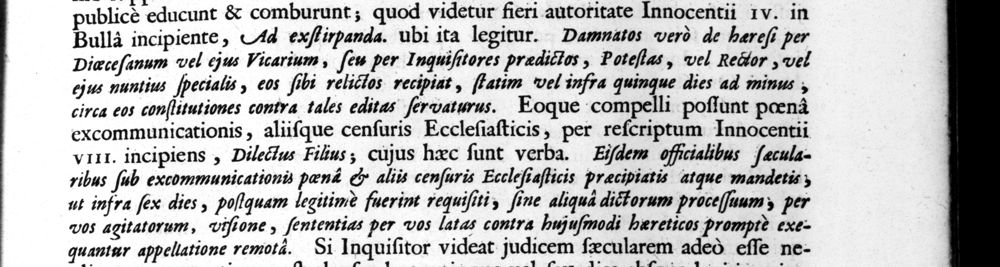
… which seems to be done by the authority of Innocent IV, in the bull beginning Ad exstirpanda, where we read: Those condemned for heresy by the diocesan or his vicar, or by the aforesaid inquisitors, the podestà or rector, or his special messenger, shall receive when they are left to him, immediately or within five days at the least, and shall observe towards them the constitutions published against such persons. And they can be compelled to this by the penalty of excommunication and other ecclesiastical censures, by the rescript of Innocent VIII beginning Dilectus filius, whose words are these: You shall order and command the said secular officials, under pain of excommunication and other ecclesiastical censures, that within six days after they have been lawfully required, without any sight of the said proceedings conducted by you, they promptly carry out the sentences passed by you against such heretics, all appeal being excluded.
Translation: this edition’s draft.
Original Latin
… quod videtur fieri autoritate Innocentii IV. in Bullâ incipiente, Ad exstirpanda. ubi ita legitur. Damnatos verò de hæresi per Diœcesanum vel ejus Vicarium, seu per Inquisitores prædictos, Potestas, vel Rector, vel ejus nuntius specialis, eos sibi relictos recipiat, statim vel infra quinque dies ad minus, circa eos constitutiones contra tales editas servaturus. Eoque compelli possunt pœnâ excommunicationis, aliisque censuris Ecclesiasticis, per rescriptum Innocentii VIII. incipiens, Dilectus Filius; cujus hæc sunt verba. Eisdem officialibus sæcularibus sub excommunicationis pœnâ & aliis censuris Ecclesiasticis præcipiatis atque mandetis, ut infra sex dies, postquam legitimè fuerint requisiti, sine aliquâ dictorum processuum per vos agitatorum visione, sententias per vos latas contra hujusmodi hæreticos promptè exequantur appellatione remotâ.
Limborch goes on to discuss what an inquisitor may do if the judge still delays after the five or six days: some hold that he may then name the penalty of burning, others that he should command the execution only in general terms, to avoid “irregularity”, the canonical bar incurred by a cleric who causes a death (p. 367, from the OCR).
Further down the rabbit hole
Sources that Lecky cites in the notes next to the ones that cite this page.
- Gibbon, Decline and Fall of the Roman EmpireAn Augustine quotation and a stronger claim about Aliturus
- Milman, The History of ChristianityDid Constantine ban the pagan sacrifices? A dean weighs Eusebius against Constantine
- Palmer, A Treatise on the Church of Christ“Whosoever is separated from the Catholic Church … will not have life”
- Augustine, Letters 93 and 185“My opinion at first was that no one should be coerced”: how Augustine changed his mind
- Simancas, De Catholicis InstitutionibusAn inquisitor’s handbook: no faith with heretics, and torture
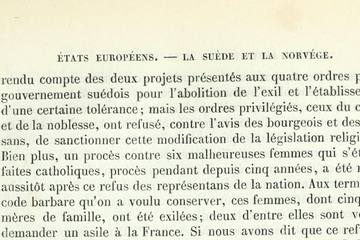
- Annuaire des Deux Mondes, 1857–1858Exiled from Sweden in the 1850s for becoming Catholics

Backlinks
Every place in Rationalism in Europe that links to this page (generated automatically when the site is built).
- Chapter IV, Part II: note 32