Elysium and Tartarus shown to the initiates (pp. 83–84)
French: tome I, Introduction, p. 83 (scan n128) and p. 84 (n129). Magnin’s note numbers omitted. Highlighted: what Lecky’s note refers to.
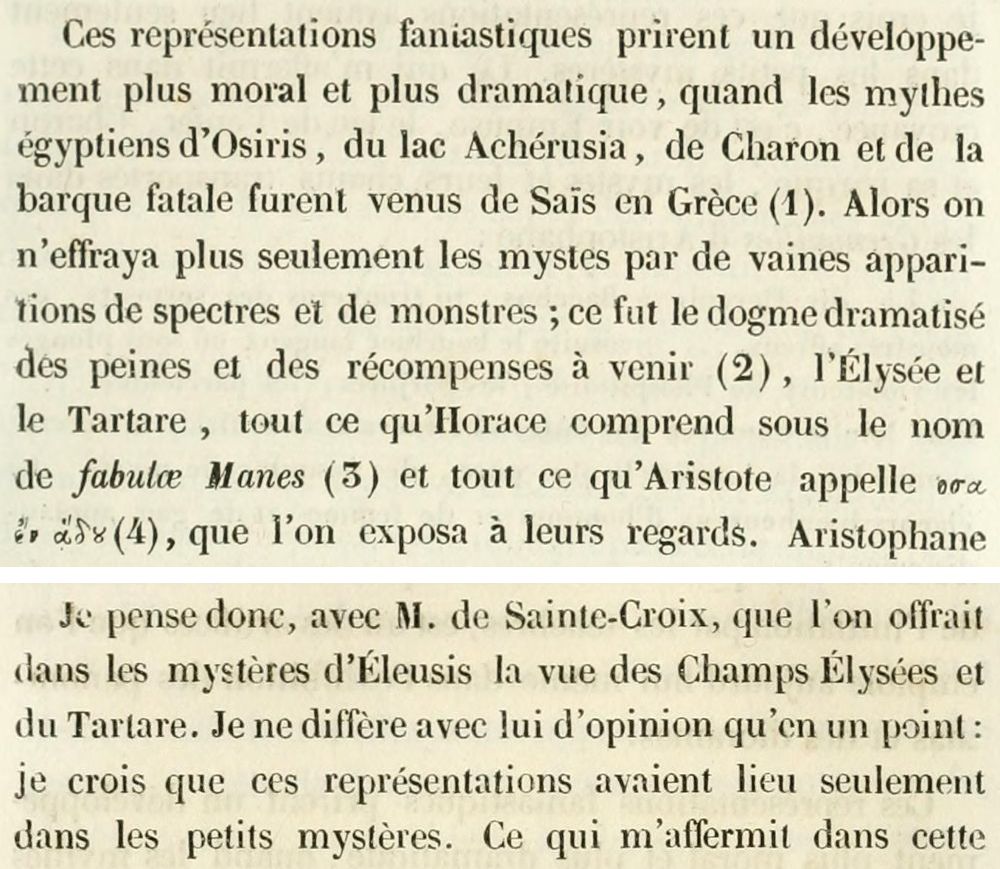
These fantastic shows took on a more moral and more dramatic character when the Egyptian myths of Osiris, of the Acherusian lake, of Charon and the fatal boat had come from Saïs into Greece. Then the initiates were no longer frightened only by empty apparitions of spectres and monsters; it was the dramatised dogma of future punishments and rewards, Elysium and Tartarus, all that Horace includes under the name of fabulae Manes and all that Aristotle calls “the things in Hades”, that was set before their eyes.
I think, then, with M. de Sainte-Croix, that the Eleusinian mysteries offered a view of the Elysian Fields and of Tartarus. I differ from him on one point only: I believe these shows took place only in the Lesser Mysteries.
Translation: this edition’s draft.
Original French
Ces représentations fantastiques prirent un développement plus moral et plus dramatique, quand les mythes égyptiens d’Osiris, du lac Achérusia, de Charon et de la barque fatale furent venus de Saïs en Grèce. Alors on n’effraya plus seulement les mystes par de vaines apparitions de spectres et de monstres; ce fut le dogme dramatisé des peines et des récompenses à venir, l’Élysée et le Tartare, tout ce qu’Horace comprend sous le nom de fabulæ Manes et tout ce qu’Aristote appelle ὅσα ἐν ᾅδου, que l’on exposa à leurs regards.
Je pense donc, avec M. de Sainte-Croix, que l’on offrait dans les mystères d’Éleusis la vue des Champs Élysées et du Tartare. Je ne diffère avec lui d’opinion qu’en un point: je crois que ces représentations avaient lieu seulement dans les petits mystères.
Between the two passages (p. 83, read in the OCR) Magnin cites the Frogs of Aristophanes, set on the road to Eleusis, where Dionysus goes down to Hades and meets a chorus of initiates in Elysium, and an inference from a dialogue ascribed to Plato that the descents of Heracles and Dionysus into Hades were memories of their initiation. His reason for the Lesser Mysteries comes on p. 85: if the sight of Tartarus and Elysium had belonged to the Greater Mysteries, Aristophanes could not have shown it on the public stage of Athens.
Further down the rabbit hole
Sources that Lecky cites in the notes next to the ones that cite this page.
- Denis, Histoire des idées morales dans l’antiquitéA Pythagorean hell, and Plato’s punishment as medicine
- Daillé, De poenis et satisfactionibus humanisWould even the Virgin Mary pass through the fire? A Protestant reads the Fathers on purgatory
- Matthew of Westminster, Flores HistoriarumErigena’s joke at the king’s table, and the magician pope
- Minucius Felix, OctaviusThe subtle fire that burns and restores
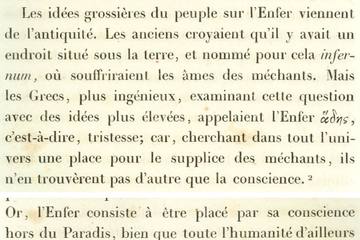
- Saint-René Taillandier, Scot Érigène et la philosophie scholastiqueErigena’s hell: not a place, but a bad conscience
- Agobard, Liber de imaginibusLecky’s five Agobard quotes checked against Baluze
Backlinks
Every place in Rationalism in Europe that links to this page (generated automatically when the site is built).
- Chapter III: note 143