Confessions taken before presbyteries (p. 598)
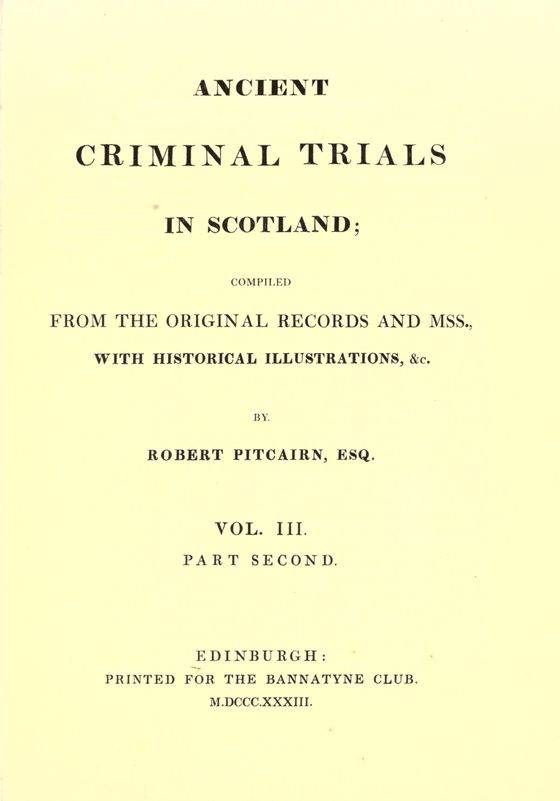
English: Appendix, p. 598, scan. Highlighted: Lecky’s quotation.
… The Editor has been induced, in compliance with the repeated desire of literary friends, contrary to his own private opinion, to annex to this work the Confessions of these unhappy women, and a few other similar Examinations. Such declarations were commonly taken before Presbyteries, or certain Special Commissioners, who usually ranked among their number the leading Clergy of those districts where their hapless victims resided. The details of all such cases, and, in particular, those which are now annexed, are repulsive and shocking to every well-regulated mind; but, as recording the superstitions and crimes common at the period in question to all the civilized …
Lecky (ch. I, note 149): “The confessions were commonly taken before presbyteries, or certain special commissioners, who usually ranked among their number the leading clergy of those districts where their hapless victims resided.” Matches except for the opening words and capitals. On the same page, before this passage, Pitcairn quotes a Scottish chronicle on witches burnt alive and says it is hardly necessary to remind the reader that matters were no better in England.
Editor’s notes on this page
Lecky’s quotation (“The confessions were commonly taken before presbyteries, or certain special commissioners, who usually ranked among their number the leading clergy of those districts where their hapless victims resided”) is Pitcairn’s sentence from the editor’s introduction to the Confessions of Isobel Gowdie and Janet Breadhead, with “Such declarations” changed to “The confessions” and Lecky’s lower-case. The same page also says that matters were “no better in England”, under Charles I, Charles II and the Puritans, with Hopkins the Witch-finder (Pitcairn’s footnote refers to Scott’s Letters on Demonology and Witchcraft, 1830).
Note 162 cites p. 598 for a sentence about the Earl of Mar being “bled to death” (that sentence cites Scott’s Demonology, letter ix.). Nothing about the Earl of Mar is on this page; the note’s “Pitcairn, vol. iii. p. 598” probably belongs to the note that came before it.
Further down the rabbit hole
Sources that Lecky cites in the notes next to the ones that cite this page.
- Dalyell, The Darker Superstitions of ScotlandThe tortures of the Scottish witch-trials
- Burt, Letters from a Gentleman in the North of ScotlandBurt’s 1727 pitch-barrel burning at Dornoch
- Wright, Narratives of Sorcery and MagicWright’s six hundred at Bamberg is on p. 326
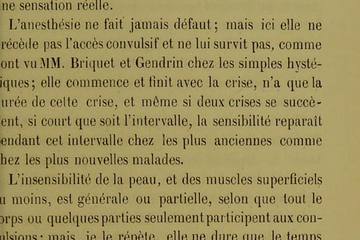
- Constans, Relation sur une épidémie d’hystéro-démonopathie en 1861A village of the “possessed” in 1861, and a doctor’s pin
- Madden, PhantasmataAn Irish doctor’s history of delusions, and the witch-burnings in an Alpine valley
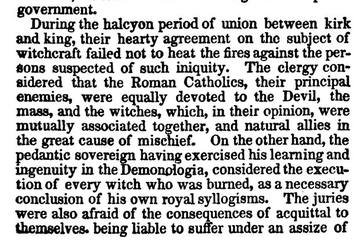
- Scott, Letters on Demonology and WitchcraftKing James, the kirk, and witch-burning as a “royal syllogism”
Backlinks
Every place in Rationalism in Europe that links to this page (generated automatically when the site is built).