“Six hundred” burnt by Bishop John George of Bamberg (p. 326)
English: p. 326, scan. Highlighted: the figure Lecky uses.
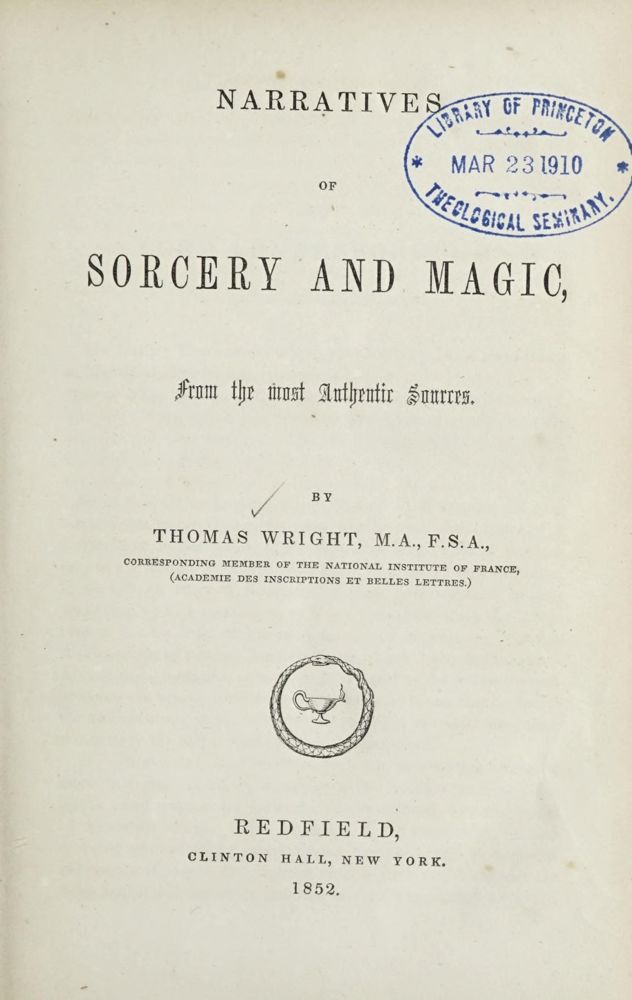
… the statement of the most authentic historians of this city, that between 1625 and 1639, not less than nine hundred trials took place in the two courts of Bamberg and Zeil; and a pamphlet published at Bamberg by authority, in 1659, states the number of persons which Bishop John George had caused to be burnt for sorcery, to have been six hundred.
Among the persons thus sacrificed were the chancellor, his son, Doctor Horn, with his wife and two daughters, and many of the lords and councillors of the bishop’s court … It must be stated that these confessions were made under tortures of the most fearful kind, far more so than anything that was practised in France or other countries. …
Lecky (ch. I, text above note 2): “six hundred by a single bishop of Bamberg”. Matches Wright’s “six hundred” for Bishop John George (Johann Georg II Fuchs von Dornheim). Lecky’s “vol. i. p. 186” is not this page; the page 186 of this edition (“In 1573, a man who was burnt at Drôle, on the charge of having changed himself into a wolf …”) is on werewolves. Wright’s p. 187 gives Remigius’s nine hundred burnt in Lorraine, 1580–95, which is not Lecky’s figure either.
Editor’s notes on this page
Lecky says: “Seven thousand victims are said to have been burned at Treves, six hundred by a single bishop of Bamberg, and eight hundred in a single year in the bishopric of Wurtzburg.” Note 2 cites Wright, vol. i. p. 186. On p. 186 of this edition there is nothing of the kind: it describes French werewolf trials of 1573–88. Wright’s Bamberg figure is on p. 326, in the chapter on the burnings at Würzburg: a pamphlet published at Bamberg in 1659 “states the number of persons which Bishop John George had caused to be burnt for sorcery, to have been six hundred”, and Wright adds that between 1625 and 1639 “not less than nine hundred trials took place in the two courts of Bamberg and Zeil”. So “six hundred by a single bishop of Bamberg” is Wright’s; the Treves and Würzburg figures are not on these pages.
Further down the rabbit hole
Sources that Lecky cites in the notes next to the ones that cite this page.
- Madden, PhantasmataAn Irish doctor’s history of delusions, and the witch-burnings in an Alpine valley
- Garinet, Histoire de la Magie en FranceA history of magic in France, from the Frankish kings to the author’s own day
- Hutchinson, An Historical Essay concerning WitchcraftCounting the English witch-trials, and the last three hanged
- Michelet, La SorcièreHow many witches were burnt, and when the last: Michelet gives two answers, and Lecky takes one from each
- Pitcairn, Ancient Criminal Trials in ScotlandIsobel Gowdie’s confessions, and who took them
- Thiers, Traité des SuperstitionsThree papal bulls but no rebellion

Backlinks
Every place in Rationalism in Europe that links to this page (generated automatically when the site is built).