Chapter I: “We Little Fishes”
Latin: Migne, PL 1, col. 1198 (right column, scan), De baptismo I. The Greek is printed in capitals, ΙΧΘΥΝ (“fish”, also the acrostic for “Jesus Christ, Son of God, Saviour”). Spelling regularised. Highlighted: the clause Lecky quotes in note 15.
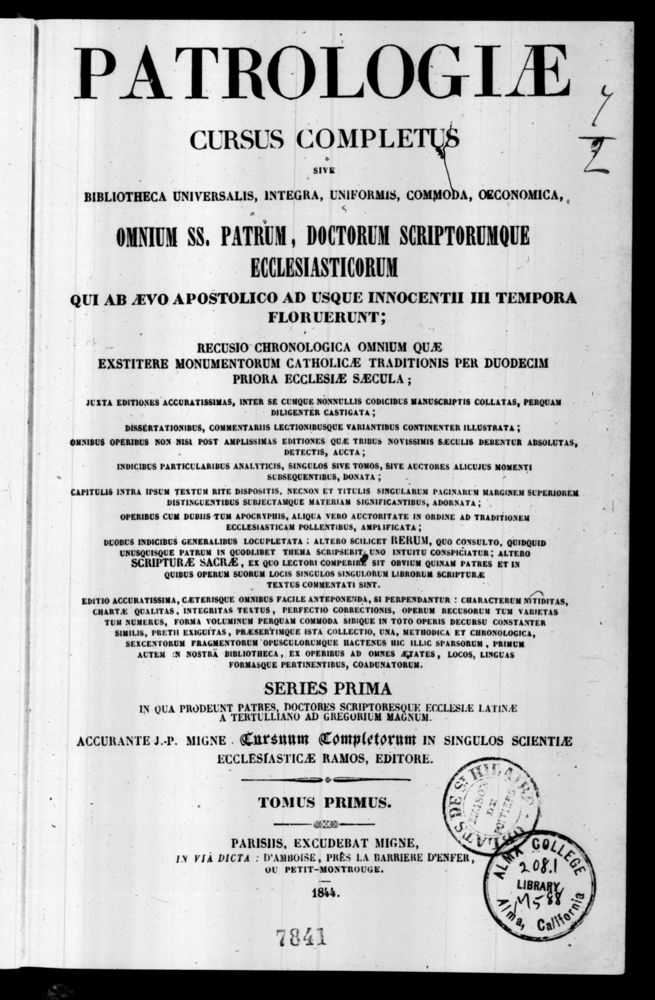
… and indeed a certain viper of the Cainite heresy, lately living in that place, carried off a good many by her most poisonous teaching, destroying baptism above all. Quite naturally: for vipers and asps and the very basilisks seek dry and waterless places. But we little fishes, after our ΙΧΘΥΣ Jesus Christ, are born in water, and are safe only by staying in the water.
Original Latin
… adque adeo nuper conversata istic quaedam de Caiana haeresi vipera venenatissima doctrina sua plerosque rapuit, imprimis Baptismum destruens. Plane secundum naturam: nam fere viperae, et aspides, ipsique reguli serpentes arida et inaquosa sectantur. Sed nos pisciculi secundum ΙΧΘΥΝ nostrum Iesum Christum in aqua nascimur, nec aliter quam in aqua permanendo salvi sumus.
Doubtful readings
Migne’s text prints “in qua nascimur” with the variant “nascamur” (from the Paris edition); I read “qua” as the spelling of “aqua” abbreviated by the compositor, and have given the usual “in aqua”. The closing words “nec aliter quam in aqua permanendo salvi sumus” run onto the next column, which I did not read: they are given from my memory of the text and are unverified here. Lecky does not quote them.
Chapter II: The Making of Man Completed by Water
Latin: Migne, PL 1, col. 1203 (right column, scan), De baptismo II. Conventions as above. Highlighted: Lecky’s note 3.
… The first liquid brought forth what lived: so it should be no wonder, in baptism, if waters know how to give life. For even the work of fashioning man himself was completed with the help of the waters. The material came together from earth, yet it was not workable unless moist and juicy, which the waters, separated before the fourth day into their own place, had tempered with mud from their remaining moisture.
Original Latin
… Primus liquor quod viveret edidit: ne mirum sit, in Baptismo, si aquae animare noverunt. Nam ipsius quoque hominis figurandi opus, sociantibus aquis absolutum est. De terra materia convenit, non tamen habilis nisi humecta et succida, quam scilicet ante quartum diem segregatae aquae in stationem suam, superstite humore, limo temperarant.
Lecky’s Quotations Compared
| Lecky, 1865 | Migne | |
|---|---|---|
| Note 15 (ch. I) | ‘Nos pisciculi secundum Ἰχθύν nostrum Jesum Christum in aquâ nascimur.’ | Sed nos pisciculi secundum ΙΧΘΥΝ nostrum Jesum Christum in qua nascimur, nec aliter … |
| Note 3 (ch. II, which Lecky calls “c. iii.”) | ‘Non enim ipsius quoque hominis figurandi opus sociantibus aquis absolutum est; de terra materia convenit …limo temperant.’ | Nam ipsius quoque hominis figurandi opus, sociantibus aquis absolutum est. De terra materia convenit … limo temperarant. |
Note 15: Lecky drops “Sed” and prints “aquâ” (the usual reading of the Latin; Migne’s page has “qua”, which looks like a misprint or an abbreviation). Note 3: “Non enim” for “Nam” changes only the connective; “temperant” for “temperarant” changes the tense, from “had tempered” (before the fourth day) to “temper”. The chapter is II in Migne, not III; Lecky’s chapter division may follow another edition (I have not checked). “Sociantibus” is as printed. None of the differences changes the argument.
Editor’s notes on this page
Lecky quotes De baptismo twice in Chapter III as evidence of how the early Church read the sanctity of water: the famous line that “we little fishes, after our Ichthys Jesus Christ, are born in water”, and Tertullian’s argument that even the making of man was “completed” by water. In Migne’s edition both are in Chapters I and II. Lecky gives chapter I for the first, which is right, and chapter III for the second, where Migne has chapter II.
The words differ slightly from Migne’s: in the second quotation Lecky begins “Non enim” where Migne has “Nam”, and has the present “temperant” where Migne has “temperarant”. See the table below.
Further down the rabbit hole
Sources that Lecky cites in the notes next to the ones that cite this page.
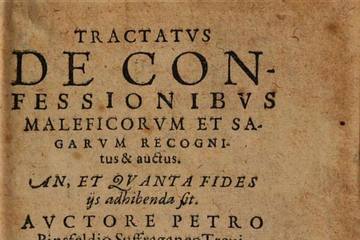
- Binsfeld, Tractatus de confessionibus maleficorum et sagarumThe suffragan bishop of Trier on why witches float, and why women fall
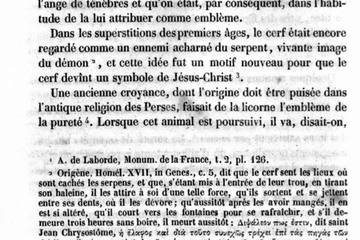
- Maury, Essai sur les légendes pieuses du moyen âgeThe stag that sucks serpents out of their holes, and the angel who carried the star of Bethlehem
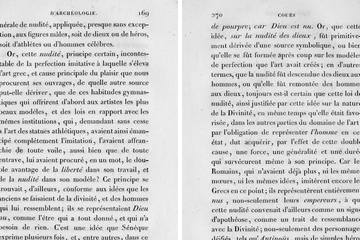
- Raoul-Rochette, Cours d’archéologieWhy Greek statues were naked: “God is naked”, and emperors stripped for apotheosis
- Didron, Iconographie chrétienneHow medieval art pictured Christ the Judge
- Marangoni, Delle cose gentilesche e profaneOrpheus as Christ on p. 45; two other notes not there
- Augustine, De civitate DeiSeventy reports, not miracles, and a town, not a province
Backlinks
Every place in Rationalism in Europe that links to this page (generated automatically when the site is built).